Nvidia Smashes Records with Blackwell-Driven Earnings
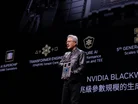
Nvidia has reported record quarterly revenue of US$39.3bn for its fourth quarter ended January 26, representing a 78% increase from the same period last year and a 12% rise from the previous quarter. The results, which cap a fiscal year that saw the company's revenues more than double to US$130.5bn, come amid an unprecedented surge in demand for AI compute infrastructure as businesses and cloud providers race to develop and deploy generative AI applications.
The remarkable growth trajectory has transformed Nvidia from a gaming hardware company into the world's most valuable chip maker, with a market capitalisation that has surpassed that of long-established tech giants. This transformation has been driven by the company’s strategic pivot towards data centre products that power AI workloads, with its GPUs becoming the industry standard for training and running large language models.

The company’s Blackwell architecture, revealed at GTC last year and launched in the quarter, delivered US$11bn in revenue in what Colette Kress, Nvidia’s Executive Vice President and CFO described as “the fastest product ramp in our company’s history.”
“Demand for Blackwell is amazing as reasoning AI adds another scaling law – increasing compute for training makes models smarter and increasing compute for long thinking makes the answer smarter,” says Jensen Huang, Founder and CEO of Nvidia and Technology Magazine’s #1 on its Top 100 Leaders 2025. “We’ve successfully ramped up the massive-scale production of Blackwell AI supercomputers, achieving billions of dollars in sales in its first quarter.”
Nvidia data centre revenue reaches new heights amid cloud provider expansion
The company’s data centre segment continues to be the primary driver of growth, with quarterly revenue of US$35.6bn representing a 93% year-on-year increase and a 16% sequential rise. For the full fiscal year, Nvidia’s data centre revenue reached US$115.2bn, up 142% from the previous year.
Blackwell sales were led by cloud service providers, which represented approximately 50% of Nvidia’s data centre revenue. AWS, CoreWeave, Google Cloud Platform, Microsoft Azure and Oracle Cloud Infrastructure are bringing Nvidia GB200 systems to cloud regions globally to meet customer demand, the company said.
- $130.5 billion: Total revenue for fiscal year 2025, up 114% from the previous year
- $11 billion: Revenue generated by the new Blackwell architecture in its first quarter
- 50%: Proportion of Data Centre revenue coming from cloud service providers
Data centre compute revenue was US$32.6bn, up 116% from a year ago and up 18% sequentially, driven by demand for the Blackwell computing platform and sequential growth from the H200 offering. Networking revenue, meanwhile, was US$3bn: down 9% from a year ago as the company transitions “from small NVLink 8 with Infiniband to large NVLink 72 with Spectrum X,” according to Colette.
Nvidia gaming business faces supply constraints while professional markets grow
While data centre products dominate Nvidia’s business, the gaming segment faced challenges in the quarter. Gaming revenue was US$2.5bn, down 11% from a year earlier, which the company attributed to supply constraints.
“Gaming revenue for the fourth quarter was down 11% from a year ago and down 22% sequentially, due to limited supply for both Blackwell and Ada GPUs,” says Colette.
Despite the quarterly decline, gaming revenue for the full fiscal year rose 9% to US$11.4bn. During the quarter, Nvidia announced new GeForce RTX 50 Series graphics cards and laptops powered by the Blackwell architecture, which the company claims deliver up to a 2x performance improvement over the prior generation.

Professional visualisation revenue increased 10% year-on-year and 5% sequentially to $511 million, driven by “the continued ramp of Ada RTX GPU workstations for use cases such as generative AI-powered design, simulation, and engineering,” according to Colette. Full-year revenue in this segment rose 21% to US$1.9bn.
The automotive segment also showed significant growth, with quarterly revenue of US$570m representing a 103% increase from a year ago and a 27% rise from the previous quarter. This growth was driven by sales of Nvidia's self-driving platforms, with Toyota announced as a major customer that will build its next-generation vehicles on Nvidia DRIVE AGX Orin.
Nvidia market position draws expert commentary amid growth forecasts
Looking ahead, Nvidia expects revenue of US$43bn for the first quarter of fiscal 2026, which would represent another quarterly record if achieved. The company anticipates gross margins to be approximately 71% on a non-GAAP basis, down from the 73.5% achieved in the fourth quarter of fiscal 2025.
This margin compression has caught the attention of market analysts. Kate Leaman, Chief Market Analyst at AvaTrade, notes that while Nvidia continues to post impressive results, there are concerns about profitability.
“The powerful new Blackwell chips are more expensive to produce, and that's putting pressure on Nvidia’s profit margins,” says Kate. “While revenue is soaring, analysts are keeping a close eye on whether this margin squeeze could impact the company's long-term profitability.”
Demand for Blackwell is amazing as reasoning AI adds another scaling law — increasing compute for training makes models smarter and increasing compute for long thinking makes the answer smarter.
She also highlights potential challenges to Nvidia’s dominant position. “DeepSeek’s AI models may reduce the demand for Nvidia’s high-performance chips by making AI more efficient. On the other hand, if these models drive greater adoption of AI technology overall, Nvidia’s sales could remain strong.”
Meanwhile, Nvidia continues to expand its reach, announcing in the quarter that it will serve as a key technology partner for the US$500bn Stargate Project. The company is also establishing new geographical footholds, including its first R&D centre in Vietnam, and forming partnerships across healthcare, genomics and drug discovery with industry leaders including IQVIA, Illumina and Mayo Clinic.
“AI is advancing at light speed as agentic AI and physical AI set the stage for the next wave of AI to revolutionise the largest industries,” says Jensen.
Nevertheless, Kate from AvaTrade cautions that Nvidia's valuation demands continual strong performance. “Nvidia’s valuation remains sky-high, and for good reason. The company has consistently outperformed expectations, but to justify its current stock price, it needs to ensure an annual growth rate of at least 30% for the next decade. Any sign of slowing momentum – or a shift in AI investment trends – could lead to harsh market reactions.”
Explore the latest edition of Technology Magazine and be part of the conversation at our global conference series, Tech & AI LIVE.
Discover all our upcoming events and secure your tickets today.
Technology Magazine is a BizClik brand