
How Google's Project Green Light Slashes Traffic Emissions
In the world of sustainability, there is a concept known as 'low-hanging fruit'.
The term refers to readily achievable, low-cost actions that can lead to positive environmental impacts. Think energy-efficient lightbulbs, recycling points or active travel schemes.
The computing power of AI enables organisations to reach more low-hanging fruit than would otherwise be possible.
Currently, one of the areas in which AI is being deployed with the aim of making simple, cost-effective and sustainable changes, is city management, particularly in traffic optimisation.
Google's Project Green Light is one such initiative. Right now, the project is using AI to optimise traffic flow across 70 intersections in 17 cities around the world.
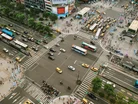
At its core, Project Green Light aims to address high vehicle emissions at urban intersections, known for having pollution levels 29 times those of open roads, by using Google's extensive database of traffic data, amassed over many years, from Google Maps.
The framework employs ML algorithms to scrutinise traffic patterns from this data, offering city traffic engineers precise recommendations on how they can optimise the timing of their traffic lights so that cars are idling for less time.
The system primarily focuses on mitigating stop-and-go traffic, which contributes to half of all emissions at city junctions, by synchronising multiple adjacent signals rather than focusing only on individual lights.
What is Google’s Project Green Light?
This programme emerged from Google Research's 2020 exploration of climate mitigation technologies, which started out by assessing all sorts of areas, from cultivated meats to energy systems.
After the initial research, city management was identified as one of the areas where low-hanging fruit strategies could be most easily implemented, leading Google to focus on traffic flow.
The research team was also helped in a more unconventional way, after Google Software Engineer Dotan Emanuel had a conversation with his partner about the frustration she felt waiting at traffic lights.
"My wife said, ‘Why don't you do something about traffic lights? We stand at them for no good reason’," he recalls.
Yossi Matias, Vice President and Head of Google Research, shares the same sentiments.
"The goal is to reduce frustrating stop-and-go events, thereby cutting fuel waste and lowering emissions at intersections," he explains.
Road transportation accounts for a substantial portion of global greenhouse gas emissions, particularly at intersections where vehicles often accelerate from a standstill.
How does Project Green Light work?
The Google Research team realised that traditional traffic light optimisation typically required costly hardware expenditures or lengthy manual vehicle counts, without giving comprehensive traffic insights necessary for effective signal timing.
"We quickly understood we have a strong advantage that cities could benefit from — over a decade of Google Maps driving trends from across the globe," says Dotan.
The AI model they developed accurately gauges traffic flow through intersections, examining start-stop patterns, wait times and inter-signal coordination. The model then suggests optimisations, like reducing red light durations during quieter times or synchronising previously uncoordinated lights.
"In order to achieve a positive climate impact, we want to be able to deploy high-quality Green Light recommendations to many cities globally and scale fast," says Alon Harris, Green Light Programme Manager.
Importantly, the system is designed to be easy to implement; cities do not need to invest in dedicated software or hardware.
City engineers can swiftly incorporate these suggestions within existing frameworks, often in under five minutes, using current infrastructure and traffic policies. The system also delivers a dashboard featuring city-specific recommendations, supported by traffic trend data and post-implementation impact assessments.
Project Green Light is expanding globally
Since pilot tests in 2021, cities like Rio de Janeiro, Seattle, Bengaluru, Boston, Haifa, Hamburg and Kolkata have adopted Project Green Light. The solution now enhances up to 30 million car rides monthly through optimised intersections.
Initial results show promising reductions of up to 30% in vehicle stops and potential decreases of up to 10% in emissions at serviced junctions. The initiative further synchronises several close intersections, crafting sequences of green lights to further diminish stop-and-go scenarios.
"Green Light has become an essential component of Kolkata Traffic Police. It serves several valuable purposes which contribute to safer, more efficient and organised traffic flow and has helped us to reduce gridlock at busy intersections," says Vineet Kumar Goyal, Kolkata's Commissioner of Police.

In Manchester, England, insights were gleaned for a network of 2,400 signals from the system's analytics.
"Green Light identified opportunities where we previously had no visibility and directed engineers to where there were potential benefits in changing signal timings," explains David Atkin, Analysis and Reporting Manager at Transport for Greater Manchester.
Now, in Boston, ranked eighth globally for traffic delays in 2023, Green Light is implemented at more than 10% of its signalised intersections.
"We offer each city dedicated reports with tangible impact metrics, such as how many stops drivers saved at an intersection over time," Alon explains.
"We think that's going to be a real incentive to not just implement the first recommendations, but also bring Green Light to more intersections."
Explore the latest edition of Technology Magazine and be part of the conversation at our global conference series, Tech & AI LIVE.
Discover all our upcoming events and secure your tickets today.
Technology Magazine is a BizClik brand
