Special Report: Justdiggit, McCain and Tend’s Agritech
Farming’s digital evolution is growing.
More than half (57%) of North American farmers say they will test new yield-increasing technologies by the end of 2026, according to McKinsey & Company’s Global Farmer Insights report.
Meanwhile in Europe, 93% of farmers are already using at least one IT or software tool, reports the European Commission in The State of Digitalisation in EU Agriculture.
Agriculture is an industry defined by its lack of control and growers are actively looking for a digital edge, but data-driven technology can be democratised so that everyone – from a smallholder farmer in Africa to a commercial grower in North America – can directly benefit from the tools they use.
Innovation in this space requires technology that adapts to nature’s unpredictability rather than trying to force it into a rigid algorithm.
By focusing on actionable, ground-level insights, modern agritech empowers farmers to make smarter daily decisions, optimise precious resource inputs, scale their businesses sustainably and ultimately prove their ecological stewardship to an increasingly eco-conscious public.
- 57% - the number of North American farmers that will test new tech by the end of 2026
- 93% - almost all European farmers are already using at least one IT or software tool
This special report explores this grounded tech revolution by profiling three very different organisations: Justdiggit, a non-profit using satellite data to scale landscape regreening across Africa; McCain, a global food retailer which is building digital twins of open-air farms to help farmers protect their crops; and Tend, a specialised software platform provider that is moving farmers away from complex spreadsheets and using AI to manage operations.
While their operational models differ, the organisations are united by the shared goal of leveraging tailored agritech to make farming smarter and more resilient.

What is agritech?
Agricultural technology is the use of tools to grow more food using fewer resources.
Instead of treating an entire farm the same way, modern farmers use a combination of hardware and data to make incredibly precise decisions. For example, drone sensors can scan a field to pinpoint the exact crop row that needs water, while automated tractors drive themselves using GPS to avoid wasting fuel.
Justdiggit
Justdiggit is a non-government organisation focused on regreening degraded landscapes in Africa with AI-driven data analyses from Planet Labs satellites for pre-digging suitability mapping and post-digging monitoring.
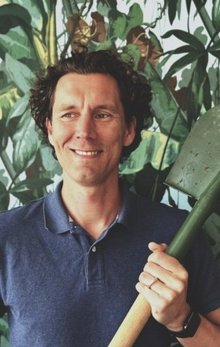
“We encourage the right methods of farming in the right place,” says Carl Lens, Head of Digital Regreening at Justdiggit. “For example, we would only advise digging in areas where the data predicts a high success rate for water retention.
“This data-led approach leads to a significantly higher success rate than that of unmapped action. The technology allows us to verify the regreening of millions of hectares remotely.”
The Justdiggit team launched the Kijani app in 2024 to onboard new farmers for projects like this.
“By introducing a digital element to our outreach, we’ve been able to scale our impact significantly,” Carl says. “This shift has exponentially sped up the onboarding process.
“Farmers can access high-quality training immediately, allowing the spread of regreening techniques to move at the speed of their mobile network.”
The app also allows farmers to feed data – like photos or GPS logs – back to the Justdiggit team to improve the accuracy of the satellite-based suitability maps.
“The ability for farmers to upload photos of their interventions is a critical part of our data ecosystem,” Carl adds. “By combining these photos with the user’s GPS location, we can verify ‘proof of activation’.
“While satellite imagery gives us a macro view of vegetation cover, these ground-level photos allow us to understand exactly where and how farmers are having success with different regreening methods in real time.”
Justdiggit can then produce AI-generated, personalised recommendations for farmers.
McCain
McCain is helping farmers by developing a digital twin platform specifically tailored to the unpredictable, living environment of open-air farming.
Instead of chasing flawless mathematical forecasts, the tool focuses on agility by combining precise modelling with practical, real-world rules of thumb to give farmers real-time visibility into emerging changes in their fields.
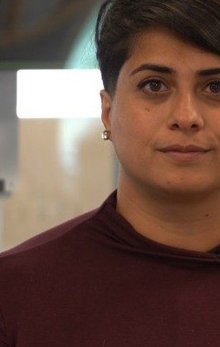
“Our digital twin focuses on actionable insight rather than perfect prediction – combining precise modelling where possible with validated heuristics where it’s not,” explains Dr Michelle Lynn D’Souza, Leader in Research and Innovation of Global Agriculture at McCain.
“The value lies in giving farmers real-time visibility of emerging changes and enabling earlier intervention in a dynamic, living system.”
This live data allows farmers to optimise their resource inputs and intervene much earlier when conditions shift, protecting their crops before major problems occur.
McCain is also working on moving raw on-farm data into a standardised, auditable pipeline that connects sustainable farming practices directly to the supply chain.
This backs up eco-friendly consumer campaigns like Taste Good. Feel Good., allowing farmers to clearly verify their regenerative efforts to an increasingly eco-conscious public.
Our digital twin focuses on actionable insight rather than perfect prediction – combining precise modelling where possible with validated heuristics where it’s not
McCain is also working on moving raw on-farm data into a standardised, auditable pipeline that connects sustainable farming practices directly to the supply chain.
This backs up eco-friendly consumer campaigns like Taste Good. Feel Good., allowing farmers to clearly verify their regenerative efforts to an increasingly eco-conscious public.
Tend
Tend is a company that provides software and an app for farmers to manage crops, flowers, vineyards, orchards, nurseries and microgreens.
The tech aims to simplify every aspect of a farm from crop planning and task management to sales, accounting and inventory – all powered by AI.
Farmers that once used spreadsheets to track figures for yields and recent harvests and compare them to previous years can now input details into Tend to get advice on how to manage crops for the year ahead.
For example, Aslan Organics, a small, first-generation family farm in Camlachie, Ontario, used Tend to double its acreage and revenue in just two seasons with data-driven insights. Owners Emma and Shane used Tend to digitally map permanent crop beds and automate complex planting, transplanting and harvesting schedules for 40 different crops.
In the field, the software streamlines labour by auto-generating specific daily task lists for the crew. Plus, Tend’s mobile tracking simplifies rigorous organic certification by logging exact soil amendments in real time, allowing the sustainable family business to scale efficiently without compromising its values.
Did you know?
Executives
Carl Lens 🌱
Head of Digital Regreening
Dr. Michelle Lynn D’Souza
Leader in Research and Innovation of Global Agriculture