Spotify & OpenAI: Will Gen AI ‘Hollow Out’ Entertainment?
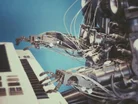
In artistic communities, AI is often regarded with contempt, with its calculations and formulas seen as incompatible with the creative process.
This is especially true of the music industry, where some artists view AI-generated music as a pale imitation of the real thing.
Artists using ML tools to produce music have given rise to concerns about whether AI-generated music — even entirely fake artists — could one day replace human artists.
“Songs arise out of suffering, by which I mean they are predicated upon the complex, internal human struggle of creation and, well, as far as I know, algorithms don’t feel,” says Australian musician Nick Cave.
It isn’t just AI’s poor song writing that has musicians riled.
Many artists are concerned that AI models are being trained on their music, without their consent.
In February 2025, more than 1,000 musicians — including Kate Bush, Damon Albarn and Annie Lennox — recently released a ‘silent album’ in protest against the UK government’s proposal to let AI companies use copyrighted material.
“The government’s proposal would hand the life’s work of the country’s musicians to AI companies, for free, letting those companies exploit musicians’ work to outcompete them,” Ed Newton-Rex, AI campaigner and CEO of Fairly Trained, said.
Spotify, AI and the music industry
In an attempt to quell fears in the music industry, Daniel Ek, Founder and CEO of Spotify, has made a statement suggesting that, rather than snuffing the spirit of artists, AI will enable musicians to be more creative than ever.
Speaking at an Open House event at Spotify's Stockholm headquarters, Daniel expressed profound optimism about AI’s role in music creation.
“I’m mostly optimistic and mostly very excited because we’re just in the beginning of understanding this future of creativity that we’re entering,” the Swedish entrepreneur told reporters.
However, Spotify itself has been at the centre of several AI-related controversies in recent memory, with music journalist Liz Pelley’s bestselling book ‘Mood Machine’ accusing the company of commissioning thousands of AI-generated songs to populate its platform.
In her book, Liz alleges that the AI-generated music Spotify buys is pushed onto the platform’s high-traffic playlists, saving the company money by elbowing out real artists and their higher royalties.
Spotify has categorically denied these allegations, but anxieties about Spotify’s use of AI remain.
During his press session at Spotify HQ, Daniel acknowledged the complexity of defining creativity in an AI-driven future.
“"We want real humans to make it as artists and creators, but what is creativity in the future with AI? I don't know. What is music?,” he said.
Will AI make songwriting more accessible?
Rather than viewing AI as a threat, Daniel sees it as a democratising force in music creation.
“Of course there are very scary potential applications for AI, but the more interesting thing for me is that the amount of creativity that creative people will have available at their fingertips is going to be insane,” he explained.
In defence of AI, Daniel pointed to how technological advancement is continuously lowering barriers to entry for aspiring musicians.
He noted that whilst Mozart had to compose entire symphonies in his head, “now, any one of us can probably create a beat in five or 10 minutes”.
"The tools that we now have in our availability are just staggering,” he added.
Musicians remain unconvinced, though, suggesting that the emergent trends will give way to further problems.
“I understand that ChatGPT is in its infancy but perhaps that is the emerging horror of AI — that it will forever be in its infancy, as it will always have further to go, and the direction is always forward, always faster,” Nick Cave says.
AI’s potential impacts across the entertainment industry
AI anxiety is not just reserved for the music industry, though.
The rise of AI — especially Gen AI — is stoking fears across the film and TV sector too.
When OpenAI’s Sora model — which can produce videos based on user prompts — was unveiled in late 2024, the quality of its output surprised many commentators and industry professionals.
Discussing the impacts that AI applications like Sora might have on the entertainment industry, author and broadcaster Richard Osman said: “I think the industry will be hollowed out, and I use that term very specifically.”

“At the top end, there’s always going to auteurs and artisans. People will pay a premium for humanity, but the people doing that will of course be rich people.
“At the bottom end, there will still be loads of producers and content creators who will do what they always do — have great ideas.
“It’s the stuff in the middle that goes, like linear television. There is absolutely no reason why in two years time a human being should be anywhere near that.”
OpenAI’s message to artists
OpenAI’s CEO, Sam Altman, has spent time considering the dangers of his company’s technologies.
“We try to be a thoughtful company about what we put out into the world, and it doesn’t take much thought to think about the ways this can go badly,” he explained on the Lex Fridman podcast around the time Sora was first released.
“If I was an artist, a) I would like to be able to opt out of people generating art in my style and b) if they do generate art in my style I’d like to have some kind of economic model associated with that.”
“Artists and creators are worried,” points out Lex Fridman, host of the podcast on which Sam appeared at the time.
“Artists were also super worried when photography came out and then photography became a new artform.
“I think things like that will keep happening, people will use the tools in new ways.”
Explore the latest edition of Technology Magazine and be part of the conversation at our global conference series, Tech & AI LIVE.
Discover all our upcoming events and secure your tickets today.
Technology Magazine is a BizClik brand