Starlink Faces New Rivals in Satellite Internet Market
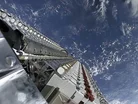
The global satellite internet market, once a niche sector dominated by expensive geostationary systems with limited bandwidth, has transformed into a strategic battleground for technology companies and nations seeking to control digital infrastructure.
Low-Earth orbit (LEO) satellite constellations, which operate much closer to Earth than traditional satellites, have revolutionised space-based connectivity by dramatically reducing transmission delays and increasing data capacity.
This technological transition has positioned satellite internet as a viable solution for bridging the digital divide in regions where terrestrial infrastructure remains limited.
Since 2019, the satellite internet race has been dominated by Elon Musk's Starlink, which gained first-mover advantage by rapidly deploying thousands of satellites.
However, the market is now witnessing restructuring as major global powers recognise the strategic, economic and geopolitical implications of controlling these orbital communications networks themselves.
Starlink’s market position
Starlink has established early market leadership since 2020 by launching more low-Earth orbit (LEO) satellites than all competitors combined.
LEO satellites orbit at altitudes below 2,000 kilometres and provide high-speed internet connectivity with minimal transmission delay, making them valuable for remote communities, maritime vessels and military applications.
However, this dominance in space is viewed as a strategic concern by Beijing, which is investing heavily in rival systems as well as funding military research into tools that can track satellite constellations, according to Chinese corporate filings and academic papers.
SpaceSail and Project Kuiper challenge Starlink's satellite internet supremacy
Space-based internet provision is becoming increasingly competitive as Starlink encounters fresh competition from both Chinese state-backed enterprises and Western technology companies backed by some of the world's wealthiest individuals.
SpaceSail
Shanghai-based SpaceSail, controlled by the municipal government, has begun expanding internationally, signing an agreement to enter Brazil in November and commencing operations in Kazakhstan by January, according to the Kazakh embassy in Beijing.
SpaceSail has also announced plans to deploy 648 LEO satellites this year, eventually building out the "Thousand Sails" (Qianfan) constellation that could include up to 15,000 satellites by 2030.
By comparison, Starlink currently operates approximately 7,000 satellites with plans to expand to 42,000 by decade's end, according to astrophysicist Jonathan McDowell's data analysed by technology consultancy Analysys Mason.
SpaceSail's planned constellation is China's first international push into satellite broadband.
A newspaper controlled by China's telecommunications regulator previously praised the system as "capable of transcending national boundaries, penetrating sovereignty and unconditionally covering the whole world ... a strategic capability that our country must master,” according to Reuters.
Furthermore, China launched a record 263 LEO satellites last year, demonstrating its commitment to space-based communications infrastructure, including SpaceSail and three additional Chinese satellite constellations in development, with Beijing planning to launch 43,000 LEO satellites in coming decades.
"The endgame is to occupy as many orbital slots as possible," says Chaitanya Giri, a space technology expert at India's Observer Research Foundation.
Project Kuiper
Simultaneously, the Brazilian government is in discussions with Amazon Founder and Chief Executive Officer Jeff Bezos's Project Kuiper internet service and Canadian satellite operator Telesat, according to a Brazilian official involved in negotiations who requested anonymity to discuss ongoing talks.
Officials seek high-speed internet for communities in remote areas but have previously experienced friction with Musk over commercial and political matters.
Chinese investment grows amid military interest in satellite technologies
The accelerated development of satellite networks in China has attracted substantial state funding.
Hongqing Technology, a company developing a 10,000-satellite constellation, recently secured 340 million yuan (approximately US$47m) from predominantly state-affiliated investors.
SpaceSail itself raised 6.7 billion yuan (approximately US$922m) last year in a financing round led by a state-owned investment fund focused on upgrading China's manufacturing capabilities.
Starlink’s application in military defence
Starlink's rapid expansion and its application in the Ukraine conflict have also drawn particular attention from military researchers at institutions like China's National University of Defence Technology, prompting government investment in competitive satellite networks.

As a result, Chinese researchers, including many with connections to the People's Liberation Army, have intensified their focus on satellite technology.
China additionally published 2,449 patents related to LEO satellite technology in 2023, compared to just 162 in 2019, according to data from Anaqua's AcclaimIP database – and many any of these patents concentrate on cost-efficient satellite networks and low-latency communication systems, underscoring China's determination to close existing technology gaps with Western providers.
One patent application linked to the People's Liberation Army describes the American system as critical to reconnaissance and military communications while posing "threats to network, data and military security”, according to Reuters.
How China is using Starlink
Some Chinese research appears specifically targeted at understanding and potentially countering Starlink's capabilities.
"The space world is moving fast and busy experimenting," Antoine Grenier, global head of space at the Analysys Mason consultancy, told Reuters.
"Pioneers are enjoying this relative freedom and are shaping it to their advantage to claim key positions before rules become more stringent – like the wild west."
Therefore, Beijing is also developing systems to track and monitor Starlink's constellation.
Researchers from two PLA-affiliated institutes detailed in a January study that they had designed a tracking system and algorithm for monitoring megaconstellations like Starlink's, inspired by how humpback whales trap prey by creating spiralling bubbles.
Western concerns
Western policymakers have expressed concern that China's rapid expansion into lower-Earth orbit could extend the reach of Beijing's internet censorship regime. Researchers at the American Foreign Policy Council described China's Qianfan constellation as a crucial element of the space component within China's Belt and Road Initiative, the US$874bn global infrastructure development programme championed by President of the People’s Republic of China, Xi Jinping.
"With the growing trend of space militarisation, developing tools to monitor and track these megaconstellations is critically important," write researchers from two PLA-affiliated institutes in a January study published in a Chinese engineering journal.
Explore the latest edition of Technology Magazine and be part of the conversation at our global conference series, Tech & AI LIVE.
Discover all our upcoming events and secure your tickets today.
Technology Magazine is a BizClik brand