Why Tesla Might Be in Trouble After Erratic Robotaxi Debut
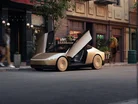
The US National Highway Traffic Safety Administration has been in contact with Tesla following the emergence of social media footage that appears to show the company’s newly-launched 'robotaxis' violating several traffic regulations.
The EV manufacturer’s long-awaited autonomous taxi service made its public debut on Sunday in Austin, Texas, in a moment that was touted as a significant milestone in CEO Elon Musk’s vision for Tesla's future.
However, videos circulating online suggest that the vehicles — which operated with safety drivers in passenger seats — were exhibiting erratic driving behaviours during their inaugural runs.
“The NHTSA is aware of the referenced incidents and is in contact with the manufacturer to gather additional information,” the safety regulator said in a statement.
A rocky start
Sunday’s launch was intended to be a deliberately modest beginning for Tesla’s robotaxi ambitions.
A handful of vehicles were tested and they were only boarded by a small group of attendees made up of analysts, influencers and shareholders.
Elon Musk celebrated the milestone on X, describing it as the “culmination of a decade of hard work”, congratulating Tesla’s AI and chip design teams.
Despite the optimism, though, footage has since emerged suggesting that the vehicles struggled with simple, real-world driving scenarios that human drivers can navigate routinely.
One widely-shared video appears to show a robotaxi stopping abruptly while passing by a parked police car.
A number of additional incidents were reported in TechCrunch, including instances of the driverless cars speeding and swerving into the wrong lanes.

A cautious approach
While these failures may be a minor setback for Tesla, the robotaxi technology is still very much in its trial phase.
As such, the company has imposed strict limitations on its initial robotaxi tests, restricting operations to just a dozen vehicles with multiple operational constraints.
The service will not operate during adverse weather conditions, attempt navigation through complex intersections or transport passengers that are under 18 years of age.
This limited-scale launch shows that Tesla has a long way to go if it intends to catch up with the likes of Google and Amazon, which already offer driverless vehicle services in several cities in the US, through their Waymo and Zoox brands respectively.
Already, these companies have accumulated millions of miles of real-world autonomous driving experience, providing them with substantial data advantages over the Tesla programme, which, in relative terms, is still in its infancy.
The US isn’t the first frontier of autonomous vehicles either. In tech hubs like China, the UAE and Singapore, driverless cars have deployed widely.
Tesla’s unique approach to autonomous vehicles
While other companies have achieved impressive successes in the AV game, Tesla's autonomous driving strategy differs quite fundamentally from its competitors.
Firstly, Tesla’s technology relies primarily on in-vehicle cameras, rather than the combination of radar sensors and LiDAR technology employed by market leaders.
The thinking here is that a camera-focused approach will end up being far more cost-effective, which will help the technology to scale faster in the fullness of time.
Be that as it may, Tesla’s singular approach to AV technology has led to scrutiny from regulators and consumers alike.
The NHTSA has stated that it "does not pre-approve new technologies or vehicle systems", instead requiring manufacturers to certify compliance with safety standards whilst the agency investigates potential safety defects.
Naturally, this process requires a great deal of due diligence, performed over an extended period of time.
As Tesla looks to develop its new technology, it will have to contend with public and regulatory scrutiny like this for the foreseeable future.
Explore the latest edition of Technology Magazine and be part of the conversation at our global conference series, Tech & AI LIVE.
Discover all our upcoming events and secure your tickets today.
Technology Magazine is a BizClik brand