MWC25: Nvidia is Strengthening its Telco Industry Position
Nvidia is expanding its presence across the telecommunications sector through AI integration spanning from customer service operations to core network infrastructure.
Showcasing its offerings at MWC Barcelona 2025, the semiconductor leader has positioned itself as a central partner in telco transformation by positioning its products within telecommunications contexts rather than focusing solely on hardware specifications.
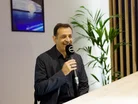
"We're a platform company, but we go to market vertically," says Ronnie Vasishta, Senior Vice President of Telecom at Nvidia. "What that really means is that as our customers and partners look at us, what they want to see are building blocks and solutions that are meaningful to a telecom audience."

Extending the partner ecosystem
The telecommunications sector has demonstrated rapid adoption of AI implementation across multiple operational areas, a trend that predates the emergence of consumer-facing AI applications and has accelerated since.
“Since the ChatGPT moment, MWC has really gravitated towards the fusion of both AI and telecommunications,” he explains. This shift enables new capabilities throughout the telecommunications value chain.
“What we are able to do is work with telecommunications companies or telcos all the way from things like customer experience, customer care, network operations, productivity enhancements within the telecom operator themselves, but also all the way down to infrastructure,” he says.
The infrastructure component presents opportunities for efficiency improvements. “As we look to virtualise the infrastructure, make it software defined, AI lends itself to both the productivity enhancements, the efficiency of the infrastructure, but also the spectral efficiency that’s achieved by adding AI to the infrastructure.”
Nvidia ecosystem expands from edge computing to network core infrastructure
The company is maintaining its relationships with partners throughout its telecommunications value chain. “We are very connected to our ecosystems up and down the stack of offerings," Ronnie says. “In telecommunications, our ecosystem extends from the hardware to the systems, the software, the telcos and the applications that run on top of that. So it’s a full stack of offerings.”
“Since the ChatGPT moment, MWC has really gravitated towards the fusion of both AI and telecommunications.”
For example, are now incorporating Nvidia hardware into their servers, enabling the company's solutions to be deployed from the network edge to central infrastructure.
Software providers represent another key segment of this ecosystem. “Then you have software providers and service providers that are adding OSS and BSS type billing systems, for instance, where they’re using generative AI,” Ronnie explains.
Customer service represents another application area. “You have customer care partners where you’re adding AI in voice assistance in text prompts where you’re using AI for enhanced experience and productivity enhancements,” he adds.
Supporting the AI RAN Alliance
The AI Radio Access Network (RAN) Alliance, which Nvidia co-founded, has experienced membership growth in the past year. "About a year ago we were one of the founding companies within the AI RAN Alliance. What's encouraging to me is how quickly within one year that membership has grown from 10 companies to 75 companies," Ronnie notes.
The Mobile World Congress exhibition floor featured demonstrations of how AI improves spectral efficiency – the amount of data that can be transmitted over a given bandwidth. “That’s got a huge impact on the monetisation capabilities of the industry,” he says.
"About a year ago we were one of the founding companies within the AI RAN Alliance. What’s encouraging to me is how quickly within one year that membership has grown from 10 companies to 75 companies."
The company's AI RAN+ initiative represents one approach to addressing spectral efficiency challenges.
On this, Ronnie says: "all the applications that are now running, AI applications that are now running over the radio access network."
Reflecting on the transformation visible throughout MWC, Ronnie observes a shift within the telecommunications sector: "The obvious is how quickly this industry is gravitating towards AI solutions," he says. "It's hard for you to go around any of the booths here today and not be excited by the prospect of what AI can add to telecommunication."
Explore the latest edition of Technology Magazine and be part of the conversation at our global conference series, Tech & AI LIVE.
Discover all our upcoming events and secure your tickets today.
Technology Magazine is a BizClik brand