AI Model in 70 Countries Drives Wayve to US$8.6bn Valuation

British autonomous vehicle technology company Wayve announced in May 2025 that it has closed a US$1.2bn Series D funding round, bringing its post-money valuation to US$8.6bn. The round was led by Eclipse, Balderton and SoftBank Vision Fund 2, with participation from Microsoft, NVIDIA and Uber, as well as automotive manufacturers Mercedes-Benz, Nissan and Stellantis.
The capital will fund the commercial rollout of Wayve's end-to-end AI Driver platform across consumer vehicles and ride-hailing fleets globally. Alex Kendall, co-founder and CEO of Wayve, says: "With US$1.2bn secured, we are building for a total addressable market that spans every vehicle that moves. This investment accelerates our path to widespread commercial deployment and positions us to build the autonomy layer that will power any vehicle everywhere."
The funding represents a significant milestone for the British artificial intelligence sector. Wayve was founded in 2017 by Alex Kendall and Amar Shah, who were researchers at the University of Cambridge.
End-to-end AI architecture
Wayve pioneered the end-to-end embodied AI approach to autonomous driving in 2017. Its AI Driver is a foundation model trained on globally diverse driving data spanning more than 70 countries, unlike traditional systems that rely on rule-based programming and high-definition maps.
The system runs entirely on onboard vehicle compute and embedded sensors, requiring no location-specific engineering before deployment. This technological approach represents a fundamental shift in how autonomous driving systems are developed and deployed.
In 2025, Wayve conducted its AI-500 Roadshow, becoming the first autonomous vehicle developer to test a single global AI Driver model across more than 500 cities in Europe, North America and Japan. The system performed zero-shot across all cities visited, meaning it drove without city-specific fine-tuning.

In 219 of those cities, it had no prior local data at all. This demonstrated the platform's ability to generalise across diverse driving environments without requiring pre-mapping or location-specific training data.
Commercial deployment with Uber
Uber has invested in the Series D and committed additional milestone-based capital to support multi-year deployments of Wayve-powered robotaxis on the Uber network. The companies plan to launch their first commercial service in London in 2026, with a broader international rollout to follow across more than 10 markets globally.
Under the partnership, Wayve will deploy its AI Driver in L4-capable electric vehicles from participating automakers. L4 refers to high automation, where the vehicle can drive itself in specific conditions without human intervention, whilst L2+ indicates advanced driver assistance that still requires driver supervision.
Uber will own and operate the fleet, creating a scalable model for autonomous ride-hailing using mass-produced EVs rather than bespoke robotaxi hardware.
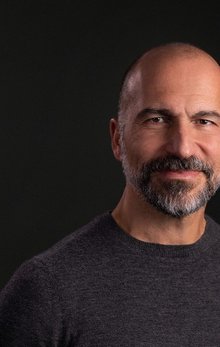
Dara Khosrowshahi, chief executive officer of Uber, says: "We are very proud to continue to deepen our partnership with Wayve, with plans to deploy together in more than 10 markets around the world. Wayve's powerful end-to-end approach is purpose-built for scale, safety and effectiveness."
Technology partnerships and infrastructure
From 2027, consumers will be able to purchase passenger vehicles equipped with Wayve's AI Driver, beginning with L2+ hands-off capability that allows the vehicle to steer, navigate and respond to traffic under driver supervision.
Because the AI Driver runs on onboard compute and native sensors already present in modern electric vehicles, integration does not require automakers to fully redesign their hardware platforms. In 2025, Wayve signed a definitive production partnership with Nissan to integrate its AI Driver into Nissan's next-generation ProPILOT driver-assistance systems.
The first mass-produced vehicles are expected to launch in Japan and other global markets from 2027. This partnership marks a significant step towards bringing autonomous technology to mainstream consumer vehicles.
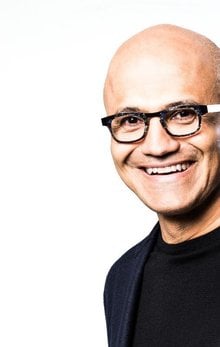
Wayve uses Microsoft Azure's massive cloud computing infrastructure to train its machine learning models at scale. Satya Nadella, chairman and CEO of Microsoft, says: "Wayve is pushing the frontier of embodied AI for autonomous driving, and Azure supports the scale, reliability and safety needed to bring that innovation into the real world."
Technology Secretary Liz Kendall says: "Wayve is a powerful example of the strength, ambition and potential of Britain's innovative firms. This fund raise demonstrates the international confidence in our brilliant AI sector and reaffirms Britain's position as the leading scale-up ecosystem in Europe."








Executives
Alex Kendall
Co-Founder & CEO
Dara Khosrowshahi
CEO
Satya Nadella
Chairman and CEO