
Why are US Data Centres Going Off-Grid?

The global race to scale AI is rapidly reshaping the foundations of digital infrastructure.
As organisations accelerate AI deployment, the limitations of the US power system are becoming increasingly visible, pushing data centre developers to explore off-grid energy models as a practical necessity.
With worldwide data centre investment expected to reach US$6.7tn by 2030, including US$2.7tn in the US, the surge in demand is placing unprecedented pressure on existing networks.
Much of this expansion is heading towards already-constrained regions such as Texas, where digital growth is outpacing grid readiness.
AI is fundamentally altering the technical requirements of data centres. Where traditional server racks once consumed between 5kW and 10kW, AI-optimised systems now require between 50kW and 100kW per rack.
As more advanced chips enter the market, this demand is set to increase further, driving a new era of high-density computing infrastructure.
According to Jon Clark, Associate Director at consultancy Gleeds, the shift is being driven by the technology itself.
He explains: "The chips are driving the power, the cooling, the infrastructure, the sites, where the availability is, where the customers need to be, where the customers are then buying that technology and where they need to be placed."
Bottlenecks slow pace of AI expansion
As AI workloads scale, the challenge is no longer just computational performance but access to reliable power.
In regions like Texas, managed by the Electric Reliability Council of Texas, projections suggest data centre demand could reach 78GW by 2031, representing a significant share of total electricity usage.
This surge is creating a new kind of bottleneck. Interconnection queues, once a routine step in development, are now delaying projects for years as developers wait to secure grid access.
For technology firms racing to deploy AI infrastructure, these delays are increasingly untenable.
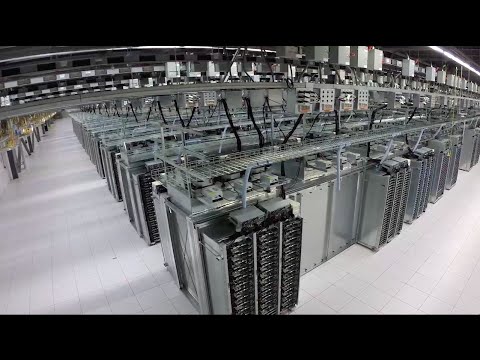
As a result, off-grid or “island-moded” power architectures are gaining traction.
By co-locating data centres with dedicated energy generation, developers can create self-sufficient environments that bypass traditional grid constraints. This approach is becoming an important enabler for hyperscale AI deployments, where speed to market is critical.
Maura Yates of Mothership Energy highlights the growing appeal of this model: “We're seeing this increased demand for it because the grid-tied interconnect queue is congested and this alternative may provide a way to bypass it. We're going to see this demand for off-grid projects because the juice is now worth the squeeze.”
Power Becomes the New Scaling Constraint
While AI innovation is often associated with breakthroughs in silicon and software, the reality is that energy supply is emerging as the defining constraint.
Peter Perri III, Managing Partner at Jupiter Island Capital, notes a fundamental shift in priorities: “What we've seen over the last couple of years is that movement from chips being the primary scaling constraint to power generation being the primary scaling constraint.”
To meet the always-on demands of AI workloads, developers require consistent, high-availability power that can operate around the clock.
This has led many to rely on natural gas as a near-term solution, given its ability to deliver stable output at scale.
However, this approach introduces new complexities. Supply chains for critical infrastructure, including turbines and transformers, are tightening, while access to skilled labour is becoming increasingly competitive.
Whitney Switzer, CEO at Sorellis, underscores the challenge: “Even when you're thinking about gas generation, there are only a couple of companies that produce the equipment that is validated and tried and true to deploy.
“When you're in these big projects, especially in remote areas, everybody on site is dependent on certain processes and timelines in these contracts.”
Technology Strategy Meets Real-World Constraints
As AI continues to scale, the intersection between technology ambition and physical infrastructure is becoming impossible to ignore.
Policymakers are beginning to respond, but regulation is struggling to keep pace with the speed of innovation.
At federal level, US President Donald Trump’s administration has coupled pro‑AI rhetoric with efforts to streamline permitting and shield households from the costs of new digital infrastructure.
At the same time, local communities are playing a growing role in shaping development. Concerns around resource use and environmental impact have delayed billions of dollars’ worth of projects, bringing data centres further into public debate.
For technology leaders, this signals a shift in how AI infrastructure must be planned and delivered.
Emerging models, including modular data centres co-located with renewable energy sources, point towards a more flexible and potentially sustainable future. These approaches also align with broader digital transformation goals, where efficiency and resilience are as important as raw computing power.
Ultimately, the rise of off-grid data centres reflects a deeper change in the technology landscape.
Brandon Lobb, a Partner in Troutman Pepper Locke’s Energy Transactional Practice Group, observes: “AI has shifted the centre of gravity in the energy market. Power availability – not just price – is now the defining variable in digital infrastructure strategy.”
In this new era, access to reliable energy is becoming as critical as access to advanced chips, redefining how and where the next generation of AI systems will be built.





Executives

Brandon Lobb
Partner

Jon Clark
Associate Director

Maura Yates
CEO

Peter Perri III
Managing Partner

Whitney Switzer
CEO