
Apple Crushes Q1 Forecasts with Record Breaking US$111bn

Apple, the Silicon Valley beast, is going into the second quarter of 2026 with a whopping US$111.2bn in revenue, that is a 17% year-on-year jump, blowing past its own modest forecast of 13%-16%.
The company also beat Wall Street’s expectations of US$1.96 in earnings per share (EPS), with the actual figure landing at US$2.01.
The financial report comes after Tim Cook announced he is handing the baton of leading the multi-trillion dollar company to John Ternus in September. John currently serves as the Senior Vice President of Hardware Engineering, a post he took up in 2021.
Continuing the company’s tradition of secrecy, Ternus’ silence on Apple’s new product pipeline was loud and clear.
He said: “We have an incredible roadmap ahead. And while you are not going to get me to talk about the details of that roadmap, suffice it to say, this is the most exciting time in my 25-year career at Apple Inc. to be building products and services.”
Investors reacted positively to the company’s stability during a quarter that is traditionally known as a period of cooling after the holiday rush. Following the earnings call, Apple stock went up 2.6% in after-hours trading.
Iphone 17 leads the way
The momentum of the March quarter was led by the “extraordinary demand” for the iPhone 17 lineup. The phone business, which remains the company’s primary engine, generated US$56.99bn in revenue
Other hardware segments also showed healthy vitals, like the Mac revenue that hit US$8.40bn, bolstered by the launch of budget-friendly US$599 MacBook Neo. According to Tim, the company “under-called the level of enthusiasm” for this launch.
The iPads generated US$6.91bn, supported by the introduction of the M4-powered iPad Air. Wearables, home and accessories, on the other hand, contributed US$7.90bn to the total.
Moving beyond the hardware, Apple’s services segment continues in popularity, reaching an all-time record of US$30.98bn. The category, which includes App Store, iCloud, Apple Music and Apple TV+, now accounts for nearly 28% of total revenue.
According to Kevan Parekh, CFO of Apple, this massive ecosystem provides a reliable buffer of recurring revenue, even when hardware cycles fluctuate. He said: “Continued strong customer demand for our products and services once again helped us achieve a new all-time high for our installed base of active devices across all major product categories and geographic segments.”
‘AI tax’ on hardware
While tech giants like Amazon, Meta, Microsoft and Alphabet are collectively pouring over US$500bn annually into AI infrastructure, Apple has not joined the race.
Tim has maintained that Apple’s AI is not a “standalone feature” but an essential, intuitive part of the experience.
Instead of spending billions to build its own AI ‘engine’ from scratch, Apple is partnering with giants like OpenAI and Google to put their tech inside Siri.
By doing this, the iPhone company lets its rivals pay the massive R&D bills and then simply delivers that high-tech experience to its 2.2 billion users with virtually zero overhead.
In January, it struck a deal to use Google’s models and is expected to unveil a new AI-powered Siri voice assistant at its developer conference in June after long delays.
However, Apple is still facing the brunt of the AI boom via its supply chain. As rivals scramble to outfit those massive data centres, the demand for high-performance memory chips has skyrocketed.

The hidden operational costs of adopting fragmented AI tools has created an ‘AI tax’ on hardware manufacturers. Talking about the same, Tim warned that these rising memory costs would have a “significantly higher” impact on margins starting in the third quarter.
Nevertheless, defying this pressure, Apple signalled its financial might by authorising a US$100bn share buyback and its 14th consecutive annual dividend increase.
This confidence is mirrored globally as revenue in Greater China surged 28%. Tim also noted being “over-the-moon excited” about the massive growth potential in India.
As John prepares to take the helm this September, he inherits a financial fortress seasoned by Tim for over a decade that transformed Apple into a US$4tn global powerhouse.
Company portals

Executives

John Ternus
CEO
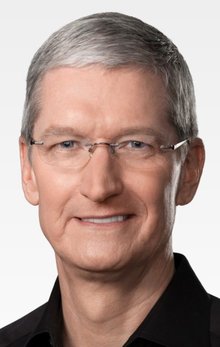
Tim Cook
Executive Chairman