Apple Puts iPhone AI Hardware, Not Features, in Focus
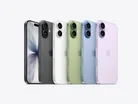
For many, Apple's annual September event at Apple Park is the tech highlight of their year.
As always, this year’s installment was framed around new iPhones and updated accessories – but beneath the consumer spectacle were clearly defined signals about Apple’s enterprise strategy.
For businesses, network operators and the wider technology ecosystem, the latest iPhone portfolio reinforces Apple’s role as both a hardware innovator and a central player in the gradual adoption of AI-capable smartphones.
The enterprise angle
On 9 September, Apple unveiled the new iPhone 17 Air, Apple’s thinnest-ever smartphone at just 5.6mm.

While early commentary focused on aesthetics and consumer resale appeal, analysts argue its significance reaches beyond style.
Ben Wood, Chief Analyst at CCS Insight, says: “It has been a few years since Apple has had new iPhones that you could put on the table in a coffee shop, meeting room or pub, and people would ask, ‘Is that the new iPhone?’
“With the iPhone 17 Air and the redesigned iPhone 17 Pro models, particularly the bright orange variant, Apple is delivering products that will create renewed interest.”

For operators and enterprise mobility providers, that interest matters.
Ben says that the Air “feels differentiated enough that people would consider visiting a store to see it in person”, presenting new opportunities for upsell, trade-ins and contract upgrades at a time when device refresh cycles are growing longer.
“With more than 40% of iPhone users in mature markets opting for Pro models, according to CCS Insight, the corporate fleet segment is likely to see further migration toward premium devices that promise greater longevity and higher performance,” he adds.
On pricing, Apple has selectively increased costs on Pro editions alone, a tactic Ben says “likely reflects the ongoing competitive intensity of the smartphone market and Apple’s desire to keep the pressure on rivals, most notably Samsung”.
For enterprises managing large device fleets, this signals limited cost escalation on base models while premium upgrades climb to reflect demand.
Accelerating eSIM momentum
Perhaps the most significant enterprise-relevant story to come out of the 9 September event was Apple’s global push on eSIM.
Having already made eSIM-only iPhones the default in the US, Apple is now bringing this approach worldwide with the iPhone 17 Air.
Ben says: “As we’ve seen numerous times in the past, when Apple embraces a new approach, others follow.
“In the case of eSIM, network operators need to support the technology. Apple claims there are already at least 500 networks that support eSIM.”
That number is set to rise rapidly. CCS Insight predicts eSIM smartphones will more than double shipments to 843 million devices by 2030.
For enterprises running international mobile workforces, the phasing out of physical SIM cards translates to easier provisioning, faster onboarding and streamlined mobile device management, with fewer logistics tied to regional carrier partnerships.
The AI narrative
AI is the feature of the moment in the smartphone domain, but for Apple, it was mentioned and downplayed compared to its focus on durability, battery life and display upgrades.
Ranjit Atwal, Senior Director Analyst at Gartner, says: “Apple’s iPhones already include Neural Processing Units (NPUs), which enable the hardware foundation for Gen AI capabilities. The bigger question is whether there will be enough good AI apps and features – like a better Siri – to really drive people and companies to spend more on AI software.”

He believes if Apple “can get developers on board and show off some cool new uses, it could push more investment and help the Gen AI market grow through 2026”.
Is Apple playing the long game here by building hardware capacity for AI while protecting its premium position?
Ranjit adds: “What matters is how Apple actually uses it.
“Google’s Pixel 10 has already shown some interesting stuff here,” adding that although Apple is thinking further ahead, it still needs to “deliver some quick wins to prove they’re moving in the right direction and to keep people interested”.
He continues: “Apple could do a better job of showing people what its AI is really capable of.
“To really stand out from other premium brands, Apple needs to roll out bold, attention-grabbing AI features – things that make people stop and think, ‘Oh, so that’s what AI can do’.”
Apple accessories are more than just accessories, they’re data platforms
The event was not just about the iPhone.

Apple’s new wearables and accessories continue to advance into health tech and edge compute.
For example, the AirPods Pro 3 now include live translation and heart rate tracking, while the Apple Watch SE 3 boasts skin temperature sensing, longer battery life and blood pressure alerts.
Ben says: “Being able to alert people to possible symptoms and encourage them to visit their doctor will almost undoubtedly save lives.”
For enterprise healthcare, insurance and corporate wellness schemes, these features push Apple deeper into regulated care environments.
With AI-enhanced sensing and proactive alerts, Apple’s wearables are increasingly positioned as frontline devices in health data generation, potentially feeding into predictive analytics platforms.
Remaining competitive
The overarching sentiment from Apple is that it is working on a balancing act: prioritising durable, commercially compelling features while cautiously preparing AI foundations for the future.
For enterprises, the message was clear: the iPhone and its ecosystem are not just status symbols but strategic endpoints, now embedded with advanced NPUs, eSIM capability and biometric sensors that support a broadening digital workplace.
To solidify this position, Apple is shifting AI from reactive to proactive experiences.
For Ranjit, there are two critical factors: “First, new AI features – like Google’s Storybook and Banana – can show people what’s possible. Second, AI can start to feel more proactive when it personalises things for you, based on what it knows about you.”
However, Ranjit says, for this to succeed, “people have to trust that their data is safe”.
“Apple’s focus on privacy, both on the device and in the cloud, will help win that trust over time.”