Can SpaceX's Starship Shrug Off Struggles And Reach Mars?
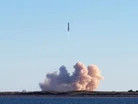
In the sort of last-minute drama one might expect of a science fiction movie, SpaceX decided to scrub its tenth Starship test flight on Monday evening, with just 40 seconds remaining on the mission's countdown clock.
Elon Musk's company, the technology of which has so often drawn parallels with depictions of space travel in Hollywood, has had a more difficult year than it either wanted or anticipated.
This eleventh-hour pull out was just the latest in a series of frustrating setbacks for Musk and co., whose desire to reach Mars within the not-so-distant future is looking more and more uncertain as 2025 rolls on.
The launch director cited poor weather conditions at the company's Starbase facility in southern Texas as the primary reason for aborting the test flight.
It was the second consecutive failed launch attempt, following Sunday's postponement due to "an issue with ground systems" at the facility.
The company has rescheduled another launch attempt for Tuesday evening at 6:30pm local time.
A disastrous year for the world's most powerful rocket
The latest setback represents the fourth flight test of 2025, with all three previous attempts ending in failure for the upper stage rocket.
Starship, which measures in at more than 120 metres tall when fully stacked, is the largest and most powerful rocket ever constructed, anywhere in the world.
Musk has described the vehicle as "alien-level technology" during Monday's live stream. The billionaire has had to concede defeat on numerous occasions this year, but his ambitions for the rocket remain lofty.
"We want to be a multi-planet species to extend consciousness beyond Earth, I think for two main reasons. One is to ensure the long-term survival and prosperity of life as we know it," he explained during a broadcast of the attempted launch.
The Mars mission is under time pressure
Musk previously announced that he planned to launch Starship to Mars by the end of 2026, carrying Tesla's humanoid robot Optimus onboard. Following that, he planned for human missions to begin in 2029.
However, this recent string of failures has raised some difficult questions for the SpaceX team. It remains to be seen whether this timeline is still practical.
Despite all the setbacks, SpaceX is maintaining that each test provides valuable data for future launches and iterations of the technology.
"Flight tests continue to provide valuable learnings to inform the design of the next generation Starship and Super Heavy vehicles," the company stated in its launch notes.
The firm also reemphasised its belief in the importance of real-world testing.
"There also needs to be things that are inspiring and exciting and that give you reason to live," Musk said during his livestream.
"A future where we're a space-faring civilisation is infinitely more exciting than one where we are not."

Production is ramping up despite repeated failures
SpaceX is expanding production capabilities at its Starfactory facility within Starbase alongside new launch infrastructure in Texas and Florida.
The company positions these investments as preparation for achieving "a rapidly and fully reusable launch system" despite current operational challenges.
Manufacturing scale-up suggests SpaceX remains confident in eventually overcoming current technical obstacles.
The next launch attempt will be broadcast live on the company's website, providing another opportunity to demonstrate how ready – or not – the company is to take a mission all the way to Mars.