Equinix's Petrina Steele Takes on AI and Quantum Computing

Petrina Steele, Global Lead – Emerging Technologies at Equinix, uses a layer cake metaphor to explain how AI and quantum computing will work together in future computing environments.
Petrina spoke at Data Centre LIVE: The London Summit, where she compared adding emerging technologies to existing digital infrastructure as tiers to scale the technology.
Prior disruptive technologies build the foundational base – ISPs, CDNs – content delivery provider, then cloud technologies. AI is being added as the next layer and quantum will be added on top.
Quantum computing has not reached full maturity, but its development is becoming more tangible each year.
For Petrina and Equinix, the question is no longer whether quantum technology will deliver on its promise. The question is how it can be integrated with existing systems.
"The real magic comes around how we provide access to this converged infrastructure," she says. "These kinds of infrastructures have to live together."
Quantum computing timelines shift
The timeline for quantum computing has changed considerably in the past 18 months. Why? One may ask outside of the organic advancements within the industry.
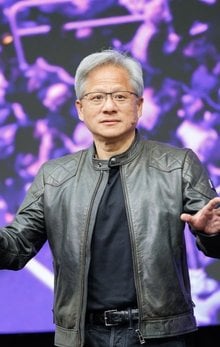
Until 2025, NVIDIA CEO Jensen Huang, perhaps the most influential voice in the global tech sector, was publicly sceptical about the short-term potential of quantum technology.
"It's incredibly promising," he said in 2025, "but still far away." He said he thought quantum computing was still 15 to 30 years away from being useful to companies.
"He wiped around US$8bn off the market," Petrina recalls.
Huang appears to have changed his position more recently. Later in 2025, he began developing NVQLink as an interconnect between NVIDIA processors and quantum processing units.
He also started buildings AI models like Ising to work together with quantum technology. Petrina calls this the "Jensen Huang effect." She describes it as a catalyst for the sector.
Sovereignty reshapes AI infrastructure
Data sovereignty is reshaping where AI infrastructure is built and by whom in 2026.
Petrina believes that this trend is being driven by two forces. The first is the shifting geopolitical landscape. The second is tightening regulation.
Together they are producing what she calls a "private AI play." Enterprises are retaining core infrastructure for themselves whilst using public cloud for what Petrina describes as "burstability" or on-demand AI models.
This pattern is most pronounced in Europe.
BT's partnership with NScale – a UK-based neo cloud provider – is emblematic of this pattern. Deutsche Telekom is mirroring this approach in Germany. For Equinix and similar companies, these are strategic issues that require a rethink of the operating model.
Cooling demands exceed AI
Quantum computers are more demanding than AI when it comes to cooling. Ironically though, less demanding on the power consumption side compared to AI.
Quantum could even help optimise AI training for certain use cases, which has a broader impact on compute cycles and power.
AI GPUs are already pushing the limits of conventional cooling, while quantum computers must be maintained at temperatures close to absolute zero.
According to IBM, a producer of quantum computers, this hardware must be kept at around minus 273 degrees Celsius. This is colder than deep space.
Equinix has proof that the two technologies can coexist though.
The company operates a quantum computer at its Tokyo TY11 facility. The deployment was done in partnership with Oxford Quantum Circuits. The arrangement has helped Equinix learn lessons around cryogenic equipment handling.
It has also shown how to place vibration-sensitive superconducting systems away from neighbouring workloads. More importantly, it has taught them that they can integrate their existing interconnection platform for cloud, ISPs, networks and enterprises to offer QCaaS – Quantum Computing as a Service – instantly.
Early adopters report returns
Petrina says that early adopters are already recording gains of 30% to 35% over classical computing baselines.
HSBC's trial with IBM on bond market operations yielded improvements of around 34%. Qubit Pharmaceuticals is applying quantum-ready AI to molecular simulation for oncology and anti-inflammatory drug discovery. The company is achieving around 30% improvements in the process.

When asked which industries stand to benefit most from quantum computing right now, Petrina identified financial services and life sciences. She also mentioned any sector engaged in simulation like design.
Governments are emerging as major investors of late. Applying quantum to existing compute to analyse large national datasets could prove a material advantage. Petrina adds that understanding quantum will also help governments protect against them.
Interconnection presents overlooked challenge
Asked what challenge the industry is most underestimating, Petrina does not hesitate – it is interconnection.
As AI scales to the edge and autonomous agents make real-time decisions, they will increasingly rely on models and data sources distributed across multiple locations. Yet the underlying network infrastructure is still too often treated as an assumption rather than a strategic priority.
"AI is going to go wherever the data is," she says. "That ability to have this flow of data moving around, together with access to the emerging AI provider ecosystem - Neos, AI models, sovereign providers and agentic platforms – it's going to be really important."
For IT leaders focused solely on their AI roadmap, her advice is straightforward – be curious about quantum companies, monitor emerging quantum-safe communications regulations and assess whether quantum could give your business a competitive edge.






Executives
Jensen Huang
Founder and CEO

Petrina Anne Steele
Global Lead - Emerging Technologies