Hitachi Energy CTO on AI Data Centres Becoming Good Citizens

The rise of AI data centres has triggered an unprecedented challenge in our energy infrastructure.
While a conventional data centre can pull as much power as 100,000 homes, the International Energy Agency (IEA) estimates AI campuses currently under construction demanding up to 20 times that amount.
Unlike conventional data centres, which pull a predictable, well-managed continuous load from the power grid, AI data centres operate in vastly different phases.
The heavy computational training phase requires radically different energy profiles than the deployment phase.
This erratic power demand forces tricky new questions onto the table: Where do we position these facilities to get the power they need? What type of storage do we put into the data centre itself versus the utility connection? How do we guarantee power quality without injecting dangerous disturbances back into the public grid?
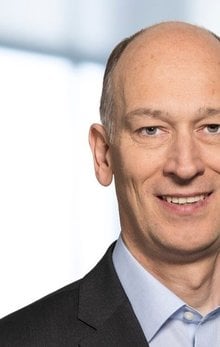
“Technology providers like us with system experience can help data centres not only by supplying the technology but also to build a trustful relationship in between developers, operators and utilities,” explains Gerhard Salge, Chief Technology Officer at Hitachi Energy.
Originally from Germany and now based in Switzerland, Gerhard brings a background in electrical engineering and three decades of industry experience to his role.
When reflecting on his tenure, he brings a touch of humour to the sheer scale of the challenge: “The nice thing is you learn a lot in that time, the bad thing is you’re old.”
That wealth of system experience is desperately needed right now.
Becoming better grid citizens
The overarching goal is for tech companies to become “better grid citizens”, a concept that requires open collaboration with utilities to actively manage data centre demand profiles.
“When you connect a small home to the power grid, the utility company barely notices,” Gerhard explains. “But a data centre uses so much power that it can easily stress the grid, especially when its power needs suddenly spike or drop.”
To mitigate this, developers must engage with power companies long before ground is broken.
“To be a ‘good citizen’ and a good partner, data centres need to work closely with power companies from day one," Gerhard says.
“They need to plan how to manage these big changes in energy use so they don't disrupt the grid. Because we understand what utility companies need, we can work with NVIDIA and others to build smarter data centers that are better for the power grid.”
This collaboration is directly tied to what the industry calls the energy triangle, the delicate balancing act between sustainability, affordability and security of supply.
AI computing strains the security corner of this triangle. To keep the grid from collapsing under the weight of this new demand, utilities enforce strict grid codes, which dictate exactly how much power a facility can pull and when.
Gerhard emphasises that data centres must work hand-in-hand with energy providers to balance this triangle, ensuring that the relentless push for AI advancement doesn’t compromise the stability of the public power grid.
The NVIDIA partnership
To meet the immense power requirements of next-generation AI chips, Hitachi Energy is collaborating closely with NVIDIA on a new 800-volt architecture for future data centres.
While this high-voltage architecture can technically be supported by today’s equipment, deploying it at the scale and density required for modern AI demands a completely new wave of innovation.
“With today’s available products and solutions, you can supply an 800-volt architecture,” Gerhard explains.
“There are transformers, converters and UPS [uninterruptible power supply] systems available where you can connect an 800-volt system into an existing, conventional set of solutions. But where innovation is required and being evaluated is when you hit space constraints – specifically when you want to build it more dense and concentrated.”
Designing a more compact data centre always introduces engineering trade-offs. Increasing energy density often forces compromises on either upfront costs or the immediate availability of the technology.
To overcome these physical limitations, Hitachi Energy and NVIDIA are rethinking core hardware components from the ground up.
“This is what we are discussing with NVIDIA – looking into which types of concepts you can use in order to shrink converter sizes,” Gerhard says.
“One of the very popular discussions these days is what you can achieve with solid-state transformer concepts, and that is also something we are looking at together with NVIDIA and others.”
- While a conventional data centre can pull as much power as 100,000 homes, the International Energy Agency estimates AI campuses currently under construction demanding up to 20 times that amount.
“This is what we are discussing with NVIDIA – looking into which types of concepts you can use in order to shrink converter sizes,” Gerhard says.
“One of the very popular discussions these days is what you can achieve with solid-state transformer concepts, and that is also something we are looking at together with NVIDIA and others.”
Hitachi Energy is actively working with multiple hyperscalers and data centre developers to solve how to make data centres of the future more compact.
The answer won’t be a one-size-fits-all product, but rather a customisable ecosystem of technologies tailored to individual project needs.

How tech tames the AI energy demand
As AI infrastructure continues its global expansion, the strain on local power grids is becoming a critical technical challenge.
Managing the surge requires advanced power electronics – specifically technologies like STATCOMs (Static Synchronous Compensators) and High-Voltage Direct Current (HVDC) systems – which act as a buffer between data centres and the public grid.
“What you do in this power electronics is you are going from an AC voltage to a DC voltage or the other way around or both,” Gerhard explains.
By converting the electricity back and forth, these systems allow data centres to completely isolate their operations from the main power grid. This isolation is crucial for handling the erratic power demands of AI infrastructure.
Gerhard notes that these systems can seamlessly handle the “potential bursts of AI GPUs which are coming”. By combining advanced power electronics with localised energy storage, data centres can absorb or deploy power rapidly to smooth out sudden spikes.
“The energy storage can either absorb or feed such a burst and then the other side of the power electronics converter doesn't see that disturbance anymore,” Gerhard says.
This filtering function is exactly how technologies like STATCOM protect grid stability.
While STATCOMs manage localised power quality, HVDC systems solve a different piece of the puzzle by transporting large amounts of electricity over huge distances with almost no energy loss.
As the data centre footprint expands globally, regions will need to rely on a combination of both technologies to keep up with demand.
Instead of focusing solely on traditional tech hubs like the US, Gerhard points to India as a prime example of this shifting strategy.
India plans to build vast amounts of solar infrastructure and use HVDC lines to transport that clean energy straight into high-demand regions and data centres.
By integrating these solutions, future projects can achieve the best of both worlds.
“You have then both,” Gerhard says. “You have the transport over long distances with best optimised low losses and also the power electronics to filter out disturbances. So that is what these grid-enhancing technologies are.”
The power of interconnection and storage
Achieving a constant, around-the-clock power supply for data centres using renewable energy is one of the industry’s biggest hurdles. Because wind and solar power are naturally intermittent, grid operators must find a way to bridge the gap when the sun sets or the wind stops blowing.
According to Gerhard, solving this puzzle relies on two main pillars: complementary energy sources and flexibility.
Instead of relying on a single clean energy source, grids must combine multiple types – like solar, wind and hydro – that naturally balance each other out over time.
“The wider the area, the more complementary your sources, the better you can balance changes out,” Gerhard notes.
The second pillar of this strategy is modern energy storage, which introduces a level of flexibility that traditional fossil fuels couldn't achieve.
While fossil fuels acted as a one-way storage system that could only be depleted, modern grids use batteries and pumped hydro systems that can be filled and emptied as needed.
Gerhard explains that this flexibility is what keeps the grid stable: “The security part of the triangle is securing the supply at any point in time, which is done by the flexibility, which helps you to secure at any point in time that demand and supply are fitting each other.”
This approach completely solves the energy triangle by uniting grid security, environmental sustainability and cost-efficiency. Because wind and solar are currently the most cost-effective power generation technologies available, integrating them effectively lowers costs across the board.
Ultimately, the key to unlocking this potential is larger, interconnected power grids.
By linking different regions together, operators can share excess power across vast distances.
Gerhard points out that if you connect the varying energy profiles of major nations like the UK, France and Germany through strong interconnections, “you gain a lot of efficiency and a lot of cost effectiveness”.
He argues that a similar, untapped opportunity exists to build a much more interconnected transmission system across North America.
This regional approach is already rewriting the global tech map. When asked if these energy strategies will drive data centre growth in new regions, Gerhard points directly to southern Asia.
“The Indian government and Indian companies are planning a lot of new data centres,” he says, highlighting the country’s state-backed solar initiatives.
Driven by these clean energy goals, Gerhard concludes with a bold prediction: “India is on the way to become an electrostate.”