How AI Is Powering McDonald’s Global Supply Chain
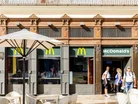
What’s the first thing that springs to mind when someone mentions McDonald’s? The golden arches? Happy Meals? Big Macs? The tech behind its procurement and supply chain operations..?
All jokes aside, beneath the iconic brand lies one of the largest and most complex supply chains in the world. Operating across more than 40,000 restaurants in 120 countries, McDonald’s daily orchestrates a global consortium of suppliers, distributors, warehouses and retail outlets.
Feeding nearly 70 million customers each day requires not just operational scale but technological precision.
This precision is being delivered through predictive analytics. Thanks to its advanced blend of statistical modelling, AI and ML that allows the fast food giant to not just respond to supply and demand shifts – but anticipate them.
Through its partnership with Google Cloud, McDonald’s is embedding analytics-driven intelligence into every layer of its procurement operations, from forecasting and sourcing to warehousing and delivery.
The result? Leaner costs, lower risks and smarter, more resilient operations on a global scale.
Putting a twist on procurement
Traditionally a reactive function, production typically involves monitoring spend, negotiating contracts and ensuring the timely supply of goods and services. However, thanks to the strategic injection of tech, it has evolved to become a data-driven strategic engine.
The driving force of this is predictive analytics.
By sifting through supplier performance data, historical demand patterns, procurement spend and inventory flows, predictive models at McDonald’s forecast future demand curves with striking accuracy.
These forecasts impact everything from the daily number of burger patties shipped to restaurants in São Paulo to anticipating potential shortages of French fries in Europe caused by poor potato harvests.

More importantly, predictive systems flag supply chain risks early – whether those risks stem from pricing volatility in raw ingredients, extreme weather events or geopolitical disruption. Instead of reacting when a problem occurs, McDonald’s increasingly adapts its sourcing and inventory strategies days or weeks ahead of the curve.
This level of foresight becomes a form of strategic agility.
“Connecting our restaurants worldwide to millions of datapoints across our digital ecosystem means tools get sharper, models get smarter, restaurants become easier to operate and, most importantly, the overall experience for our customers and crew gets even better,” says McDonald’s Global CIO, Brian Rice.
How data informs decisions
McDonald’s commitment to analytics-driven decision-making is rooted in its Accelerating the Arches growth strategy, launched in 2020. Introduced at a time when COVID-19 was reshaping consumer habits at the blink of an eye, the strategy emphasises digital evolution as central to both customer experience and internal efficiency.
Then, in 2023, McDonald’s announced a multi-year partnership with Google Cloud. The collaboration aims to modernise how data flows through restaurants around the world.
Connecting our restaurants worldwide to millions of datapoints across our digital ecosystem means tools get sharper, models get smarter, restaurants become easier to operate and, most importantly, the overall experience for our customers and crew gets even better.
In practice, this means that McDonald’s point-of-sale data – from every order placed – feeds directly into a continuously learning set of ML models. These models power automatic demand forecasting, guiding everything from restaurant staff scheduling to inventory replenishment cycles.
“Through this wide-ranging partnership, Google Cloud will help McDonald’s seize on new opportunities to transform its business and customer experiences, empowering restaurants worldwide with the latest technologies for near-term impact,” says Thomas Kurian, CEO at Google Cloud.
“Pairing the iconic brand, size and scale of McDonald’s with Google Cloud’s deep history in AI and technology innovation will redefine how this industry works and what people expect when they dine out.”
Predicting risk, not responding to it
One of McDonald’s most important use cases for predictive analytics is risk management. The company’s global enterprise risk framework now explicitly calls out AI-driven technology as a way to anticipate disruptions ahead of time.
That might mean rerouting ingredient shipments away from weather-affected regions, identifying alternative suppliers based on real-time compliance data, or even reformulating menus when specific ingredients face long-term shortages.
Pairing the iconic brand, size and scale of McDonald’s with Google Cloud’s deep history in AI and technology innovation will redefine how this industry works and what people expect when they dine out.
For example, during the post-pandemic years of 2021–2023 – a volatile time with shipping bottlenecks and sudden demand surges hitting headlines, causing chaos across global supply networks – analytics tools allowed McDonald’s to stay ahead of the chaos.
Orders could be redirected, alternative suppliers onboarded and logistics recalibrated – days faster than would have been possible with traditional manual planning.
McDonald’s CFO Ian Borden says: “We’re going to continue to invest in the areas where we think we have strategic opportunities to drive greater efficiency. A lot of that work is going to be led by the Global Business Services organisation that we stood up and is driving these transformation efforts in areas like HR, finance, tech and getting after spend opportunities in areas like indirect sourcing.”
Curating a tech-fuelled, future-ready, predictive supply network
McDonald’s ultimate ambition is to engineer a future-ready, AI-driven supply chain where vulnerabilities are not just detected but precisely forecasted – enabling automated, pre-emptive interventions well before any customer impact arises.
Harnessing advanced predictive analytics, ML algorithms and scalable cloud computing infrastructure, McDonald’s achieves near real-time, end-to-end visibility and responsiveness across its global network.
We’re going to continue to invest in the areas where we think we have strategic opportunities to drive greater efficiency.
This convergence of edge computing, IoT-enabled sensor data and cloud-native analytics platforms is redefining operational excellence, not only in fast food restaurants but across the entire landscape of procurement and supply chain ecosystems, showing that deploying cutting-edge technology is essential to supporting complex supply chains.
Company portals


Executives

Brian Rice
Executive Vice President, Global Chief Information Officer
Ian Borden
Executive Vice President and Chief Financial Officer

Thomas Kurian
CEO