How is Amazon Revolutionising SMB Logistics With AI?
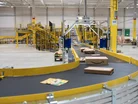
Supply chains worldwide are embracing automation to maintain efficiency and meet growing consumer demand.
As market volatility continues and customer expectations rise, automated technology has emerged as a critical tool for building supply chain resilience and operational efficiency.
Leading this technological transformation is Supply Chain by Amazon, an end-to-end, fully automated suite of supply chain services.
The platform combines advanced AI capabilities with Amazon's extensive logistics network to offer businesses a comprehensive solution for modern supply chain management.
Fully automated logistics technology
Since 1994, Amazon has worked to optimise and simplify fulfilment needs for selling partners and consumers.
The company introduced Supply Chain by Amazon, delivering an end-to-end, fully automated selection of supply chain services to provide sellers with a quick and reliable solution for moving products from manufacturers to customers.

Through this system, sellers can access Amazon's advanced logistics, warehousing, distribution, fulfilment and transportation capabilities.
The platform's global network and technological resources enable sellers to maintain stock levels, ship faster and more reliably at significantly lower costs than managing logistics independently.
The service integrates Amazon Global Logistics, Amazon Global Selling SEND, the Partner Carrier Program, Amazon Warehousing and Distribution (AWD), Fulfillment by Amazon, Multi-Channel Fulfillment and Buy with Prime.
According to Amazon, sellers using these combined services can gain access to optimised inventory placement, automated replenishment and reduced shipping and storage costs.
The platform's advanced capabilities underpin Amazon's delivery performance.
Amazon has recorded more than 13 billion items delivered to Prime members globally on the same or next day, demonstrating the fastest delivery speeds to date.
"A key part of the magic of how we have achieved these super fast speeds is our AI-powered fulfilment network, which continued to get better and better," says Dharmesh Mehta, Vice President, Selling Partner Services at Amazon.
"It drives how we partner with sellers to ensure we have the right quantities of their products and that we have placed inventory closer to customers, providing faster delivery speeds for a broader selection of products while reducing shipping distances and costs."
AI-powered inventory management systems
Through Supply Chain by Amazon, the company has positioned itself as a leading third-party logistics provider, but its digitisation could challenge other logistics providers to compete through data integration capabilities as well as physical transport networks.
Supply Chain by Amazon offers the complete end-to-end operational visibility that global small and medium-sized businesses (SMBs) require to remain competitive.
The integration of global ocean freight, warehousing and last-mile delivery into a single dashboard provides a technological advantage that can be costly for individual businesses to replicate.
Sellers can ship inventory in bulk to Amazon Warehousing and Distribution (AWD), where it is stored.
As soon as the distribution centres receive the products, they become buyable through Amazon's systems and can be stored as long as needed.
The bulk inventory stored by AWD automatically replenishes products in the Amazon fulfilment network through AI-powered systems.
Whether consumers purchase on Amazon or via Buy With Prime, Amazon's technology handles the delivery logistics.
According to Amazon, businesses utilising AWD auto-replenishment can access end-to-end supply chain support, potentially gaining efficiency improvements and cost savings through automated processes.
Technology adoption across global logistics
Logistics companies and supply chains worldwide have increasingly adopted automation technology to navigate geopolitical turbulence and meet consumer demand.
Labour shortages have also proven disruptive to supply chains, with an ageing workforce, growing skills gaps and a lack of clear career progression driving the need for technological solutions.

Distribution centres and warehouses are now looking towards automation and robotics to meet fulfilment demand, or implementing AI solutions across manual tasks so human workers can focus on more complex processes.
According to Walmart, automation across its supply chain has resulted in a reduction in shipping costs by 30%, as well as significant productivity improvements.
Major brands worldwide have been partnering with technology companies to manage their supply chains, with platforms like Kinaxis, SAP, Oracle, o9 and Blue Yonder supporting the automation process.
These technology solutions provide capabilities for planning, transportation management, returns, real-time visibility and scenario modelling.
The logistics industry has demonstrated that companies not investing in supply chain automation technology risk fragmentation, delays and additional expenditure in an increasingly competitive market.
Company portals







Executives
Dharmesh Mehta
Vice President, Selling Partner Services