IEA: Are Grids Struggling to Meet Rising AI and EV Demand?
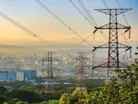
The world is quietly rewiring itself.
Every new electric vehicle on the road, every heat pump replacing a boiler and every AI search adds a drop to the rising tide of electricity demand that is starting to test the limits of the world's ageing, ailing power systems.
The International Energy Agency (IEA) has warned that global demand for electricity is on track to grow by more than 3.5% every year for the next five.
This growth rate means electricity demand will expand at least 2.5 times faster than overall energy demand during the period.
In order to cope, the IEA believes that investments in electricity grids will have to increase by 50% by turn of the next decade.
"At a moment of significant uncertainty across energy markets, one certainty is that global electricity demand is growing much more strongly than it did over the past decade," says Keisuke Sadamori, the IEA's Director of Energy Markets and Security.
"In this Age of Electricity, the increase in global power consumption through 2030 is set to be equivalent to adding more than two European Unions."
The surge in electricity consumption can be attributed to a few major technological developments reshaping the global economy.
The deployment of AI infrastructure, industrial electrification and the uptake of electric vehicles are driving much of the growth.
According to the IEA, data centres alone represent one of the fastest-growing sources of electricity demand, with AI-powered computing requiring substantially more power than traditional data processing.
Elsewhere, the rise in demand for air conditioning in warming climates is also a huge drain on energy.
The United Nations Environment Programme estimates that cooling now accounts for 20% of all the world's electricity demand.
Emerging and developing economies are still the main driving force behind the growth in demand for electricity, but developed markets will contribute to one fifth of the total increase in power demand through to 2030.
Technology bottlenecks stall progress
The transformation of the power sector faces a significant infrastructure challenge that could hinder technological advancement.
More than 2,500GW worth of projects – including renewables, storage and data centres – are currently stalled in connection queues worldwide.
New analysis in the report suggests that deploying grid-enhancing technologies and implementing regulatory reforms could unlock up to 1,600GW of queued projects in the near term.
These measures would enable more flexible grid connections through advanced monitoring systems, dynamic line ratings and power flow control devices.
"Meeting this demand will require annual investment in grids to rise by 50% by 2030," Keisuke says.

"Expanding flexibility will also be crucial as power networks continue to evolve – so will a strong focus on security and resilience."
Battery storage deployment accelerates
Installations of utility-scale battery storage have risen sharply, providing an important source of short-term flexibility for power systems.
Markets including California, Germany, Texas, South Australia and the UK have all experienced strong growth in utility-scale battery capacity deployment in recent years.
According to the IEA, this technological solution represents a critical component in managing the intermittency of renewable energy sources whilst accommodating the variable demands of AI data centres and electric vehicle charging infrastructure.
The report also highlights that electricity affordability remains a key concern for policymakers, with household electricity prices in many countries rising faster than incomes since 2019.
Cybersecurity and resilience concerns
Greater efforts are needed to improve the security and resilience of power systems worldwide, which face rising risks from ageing infrastructure, extreme weather events and cyberthreats.
As power grids become increasingly digitised to support smart technologies, AI-driven demand management and electric vehicle charging networks, they also become more vulnerable to cyberattacks.

Modernising system operations and strengthening the physical protection of critical infrastructure will be essential to countering these threats, according to the IEA.
Meanwhile, the IEA's report finds hope in the rapid growth of renewables.
By 2030, renewables and nuclear are together set to generate 50% of global electricity, up from 42% today.
"This surge in demand and shift in the power mix underscores the urgent need for expanded grid infrastructure and greater system flexibility to integrate capacity and maintain reliable, resilient systems," says Brendan Reidenbach, Energy Analyst at the IEA.
Company portals

Executives

Brendan Reidenbach
Energy Analyst
Fatih Birol
Executive Director
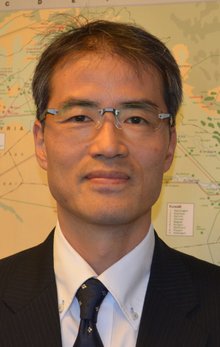
Keisuke Sadamori
Director of Energy Markets & Security