Applied Materials: Semiconductor Firm Ramps Up Net Zero Push
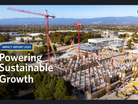
Applied Materials sets out its latest progress on climate commitments in the 2024 Impact Report, exploring both achievements and ongoing challenges.
The US-based semiconductor manufacturer reveals that while it is making strides toward reducing its indirect emissions and sourcing more clean energy, emissions from its own operations remain above its 2019 baseline.
Climate targets face construction challenge
Applied Materials is working toward sourcing all its electricity from renewable energy by 2030.
It currently secures 73% of its global electricity from renewable sources, including 100% in the US.
However, its emissions tied directly to its operations — referred to as Scope 1 and 2 — are 4% higher than they were in 2019.
This is largely due to the construction and ramp-up of new production facilities.
Both are rising despite Applied is attempting to reduce them by 50% by 2030.
Chris Librie, Chief Sustainability Officer, says: “I’m pleased to share that Applied Materials has published our 2024 Impact Report detailing great progress in reducing our Scope 3 emissions (down 24% since 2022), controlling our scopes 1 and 2 emissions in spite of business growth and continuing to invest in the communities where we operate.
“We are transforming the future of technology innovation while we anchor purpose at the heart of our business strategy.”
Scope 3 emissions refer to the indirect emissions throughout a company’s supply chain and product lifecycle. These include the emissions from suppliers and customers, especially from the energy used by Applied’s semiconductor products.
On that front, Applied has managed a 27% decrease in emissions per US$1m of gross profit compared with its 2019 baseline. The firm is aiming for a 55% reduction by 2030.
Energy consumption per wafer pass — a measure of how much energy it takes to produce one unit of product — has improved by 13% so far, with a target to hit 30% by 2030.
That’s one of several goals within what Applied calls its Net Zero 2040 Playbook, a roadmap for eliminating emissions from its business and supply chain over the next 15 years.

Supply chain focus and renewable investment
The report details some notable gains from 2024. Applied expanded its total renewable electricity sources by 11% and saw a 48% jump in on-site solar generation.
At its Tainan site in Taiwan, a 700kW solar array generated more than 228,000kWh of clean electricity between September and November alone.
The company also gathered emissions and target data from 183 suppliers, 109 of which provided site-level emissions information.
Applied says more than half of its respondents now have greenhouse gas (GHG) reduction goals, including 23 with approved science-based targets.
These suppliers represent around 80% of Applied’s procurement spending.
The company points out that its supply chain accounts for roughly 10% of its carbon footprint.
However, because many of these suppliers also serve other firms in the sector, working with them has an inflated impact.
The report states: “Advancing a more energy- and carbon-efficient supply chain reduces the overall impact of the semiconductor industry to enable more sustainable innovation.”
Applied is also in the early stages of one-on-one talks with its key suppliers to discuss their ability to shift to renewable energy and how that aligns with Applied’s own net zero ambitions.
Technology's environmental trade-off
Applied’s growing influence in sectors such as AI and the internet of things raises complex questions about the environmental cost of data-intensive technologies.
- US$3.2bn R&D investment
- US$27.2bn revenue
- 35,700 employees in 207 cities, 24 countries
- More than 20,000 patents
In his foreword to the 2024 Impact Report, Applied’s CEO Gary E. Dickerson addresses these challenges directly.
“Tectonic shifts in technology are reshaping our lives and the global economy,” Gary writes.
“Transformative innovations, like artificial intelligence and the internet of things, have near-infinite potential and we’re only beginning to explore what’s possible.
“Semiconductors are the foundation of these technological megatrends.
“To scale breakthrough innovations, our industry must confront the environmental and social impacts associated with the exponential advancement of these data-intensive applications.
“In short, we must drive sustainable growth across our entire ecosystem. As the world’s leading semiconductor and display equipment company, Applied is uniquely positioned to accelerate our industry’s roadmap and enable more energy-efficient computing.”
Applied closed 2024 with US$27.2bn in revenue, a US$3.2bn investment in research and development and a workforce of 35,700 employees spread across 207 cities and 24 countries.
With more than 20,000 patents to its name, the company’s efforts to reduce its environmental impact continue to unfold alongside its role in shaping tomorrow’s technology.