Meta Breaks its Sama Ties Amid Smart Glasses Privacy Fears

Meta has cancelled a major contract with Sama (formerly Samasource), a training-data company focused on annotating data for AI algorithms.
The companies have worked together since 2017 to assist with data labelling and training AI models.
The drop in contract will result in 1,108 Sama workers, mainly concentrated in Nairobi, Kenya, being made redundant. Workers were only given six days’ notice, which has sparked humanitarian debate in itself as many of the workers were already involved in a US$1.6bn lawsuit against Meta regarding poor working conditions and mental health trauma from previous content moderation work.
The idea was for subcontracted workers to review content, including films and images, captured by the glasses to “improve people’s experience with the glasses, as stated in our Privacy Policy,” a Meta spokesperson told the BBC.
However, an investigation by Swedish newspapers Svenska Dagbladet and Gotesborgs-Posten in February reported that private footage from glasses-wearers, including clips of them having sex or using the toilet, is sometimes viewed by Sama workers.
“Sama has consistently met the operational, security and quality standards required across our client engagements, including with Meta,” reads a company statement.
“At no point were we notified of any failure to meet those standards, and we stand firmly behind the quality and integrity of our work.”
Smart specs and surveillance fears
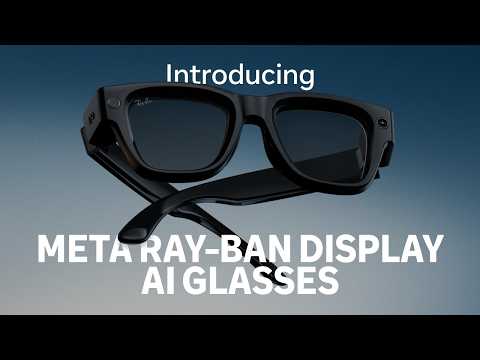
In September, Meta unveiled a line of AI-powered glasses developed in partnership with Ray-Ban and Oakley.
These wearable gadgets use AI to interpret captured images and sounds. The technology enables features such as translating text and providing real-time answers about the user’s surroundings, a function particularly helpful for people who are blind or partially sighted.
The glasses are designed with a transparency feature: the frames include a small indicator light that illuminates whenever the built-in camera is actively recording images or videos.
While Meta users must explicitly start recording, either manually or through a voice command, they may not realise that the resulting videos and images can be reviewed by human contractors.
However, the increasing popularity of these devices has simultaneously fuelled anxieties surrounding their misuse.
Concerns have been raised previously about women being filmed without their consent by users of smart glasses, and a recent investigation by Swedish newspapers reported that private footage from glasses-wearers – including clips of them having sex or using the toilet – is sometimes viewed by Sama workers, who were subcontracted to review content to “improve people’s experience with the glasses”.
How the content reviewing works
Sama workers review the transcripts of interactions with the AI to check it had answered questions adequately.
Meta says that all faces are blurred in content for reviewing purposes but filtering sometimes fails, particularly in low-light settings (like bedrooms) or when the camera is moving quickly, according to reports from Sama staff.
The Information Commissioner’s Office (ICO) told the BBC back in March that “devices processing personal data, including smart glasses, should put users in control and provide for appropriate transparency.
“Service providers must clearly explain what data is collected and how it is used.
ICO wrote to Meta to request information on how it is meeting its obligations under UK data protection law.

Meta said: “Unless users choose to share media they’ve captured with Meta or others, that media stays on the user's device.
“When people share content with Meta AI, we sometimes use contractors to review this data for the purpose of improving people’s experience, as many other companies do.”
As Meta transitions away from its partnership with Sama, the move leaves a wake of displaced workers and unresolved questions about the human cost of perfecting AI privacy.