NVIDIA and Caterpillar Deploy Physical AI in Manufacturing
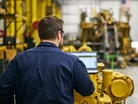
NVIDIA and Caterpillar are expanding a collaboration centred on physical AI to transform manufacturing systems across industrial sectors.
The partnership focuses on deploying advanced computing infrastructure across construction, mining and power equipment facilities worldwide.
By integrating digital twin technology with edge computing capabilities, the companies aim to create factory systems that process sensor data locally while supporting autonomous operations at scale.
Joe Creed, CEO of Caterpillar, says: "As AI moves beyond data to reshape the physical world, it is unlocking new opportunities for innovation.
"Caterpillar is committed to solving our customers' toughest challenges by leading with advanced technology in our machines and every aspect of business."
The collaboration addresses critical challenges in industrial manufacturing, including connectivity limitations in remote environments, workforce skills gaps and the need for resilient supply chain operations.
Through the integration of NVIDIA's computing platforms with Caterpillar's industrial expertise, the partnership creates an ecosystem that spans jobsites, production facilities and global supply networks.
Real-time processing enables autonomous operations
Caterpillar is preparing its industrial assets for automation by deploying the NVIDIA Jetson Thor platform to enable real-time data processing at the edge.
These hardware upgrades provide the computational foundation required for autonomous machinery operations and intelligent in-cab systems that reduce reliance on remote data centres.
According to Caterpillar, machines equipped with these systems process billions of data points in milliseconds.
This processing capability supports equipment operating in variable job-site conditions where latency impacts safety and operational productivity.
By handling sensor data locally, the technology acts as a digital nervous system for industrial worksites.
Processing data at the edge addresses connectivity challenges in remote mining and construction environments, allowing autonomous equipment fleets to remain operational in isolated locations.
This approach means that industrial operations maintain productivity levels even when traditional network infrastructure is unavailable or unreliable.

AI assistants address the industrial skills gap
New operator assistance features leverage generative AI to provide real-time insights and safety alerts within machinery cabins.
These systems offer coaching and productivity guidance to help operators manage complex tasks, directly addressing the growing skills shortage affecting the industrial workforce.
At CES 2026, Caterpillar introduced the Cat AI Assistant, a proactive tool embedded within digital products to help users make informed decisions.
The assistant uses NVIDIA Riva speech models to deliver lifelike voice interactions and accurate recommendations on maintenance schedules and parts management.
Inside equipment cabins, voice activation allows operators to adjust settings and access troubleshooting guides without manual interface navigation.
The tool relies on data stored within the Helios unified data platform, creating a connected ecosystem that links machinery performance with operational decision-making.
The AI assistant technology represents a significant shift in how industrial operators interact with heavy machinery, transforming traditional manual controls into intelligent, responsive systems that adapt to operator needs and environmental conditions.
Digital twins optimise production systems
Caterpillar is using an NVIDIA AI Factory to transform manufacturing and supply chain operations through digital twin technology.
This infrastructure creates more resilient production systems by automating processes, including demand forecasting and production scheduling.
The company leverages its manufacturing digital data platform to build physically accurate digital representations of factory facilities.
These models use NVIDIA Omniverse libraries and OpenUSD standards to mirror real-world operations with high precision, allowing engineering teams to design and optimise production layouts before physical construction begins.
By simulating factory workflows digitally, Caterpillar can identify potential bottlenecks and operational inefficiencies before they impact physical supply chains.
This methodology improves safety and efficiency during facility planning and expansion phases, reducing costs associated with physical prototyping and redesign.
The digital twin approach enables manufacturers to test multiple production scenarios simultaneously, evaluating how changes to layout, equipment placement or workflow processes might affect overall facility performance.
This capability is particularly valuable for complex industrial environments where modifications to existing infrastructure carry significant financial and operational risks.
Caterpillar plans to launch an off-board version of the Cat AI Assistant in March 2026 and says it intends to increase research spending through 2030.
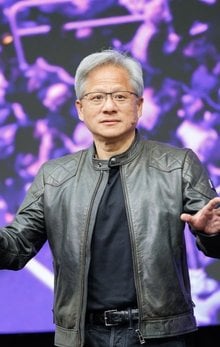
Jensen Huang, Founder and CEO of NVIDIA, says: "For a century, Caterpillar has built the industrial machines that shaped the world.
"In the age of AI, NVIDIA and Caterpillar are partnering across the full spectrum – from autonomous construction fleets to the AI data centres powering the next industrial revolution."
Company portals


Executives
Jensen Huang
Founder and CEO
Joe Creed
Chief Executive Officer