Nvidia CEO Backs Full Automation as Hiring Surges
Technology companies are increasingly encouraging employees to integrate artificial intelligence into their daily work, aiming to show a practical return on substantial infrastructure investments.
Nvidia has emerged with a firm position on this internal AI adoption.
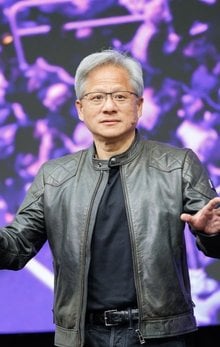
Nvidia's Chief Executive Officer, Jensen Huang, is directing employees to automate all possible tasks using AI and has questioned managers who might restrict its use among their teams.
Following a report of record earnings for Nvidia, Jensen addressed the topic of internal AI usage during a meeting. In response to a query about managers telling their staff to lessen their AI use, he made his position clear.
“My understanding is that Nvidia has some managers who are telling their people to use less AI,” he said, as reported by Business Insider.
“I want every task that is possible to be automated with AI to be automated with AI. I promise you, you will have work to do.”
“If AI does not work for a specific task, use it until it does”
AI automation and workforce expansion
Despite this strong push for automation, Nvidia is undergoing a period of considerable workforce growth.
The CEO noted that Nvidia hired “several thousand” people in the last quarter alone.
Nvidia's employee numbers have expanded from 29,600 at the close of fiscal 2024 to 36,000 at the end of fiscal 2025.
This net increase of 6,400 employees comes at a time when other technology firms have been conducting layoffs.
The expansion is set to continue. “Frankly, I think we’re probably still about 10,000 short,” Jensen says, “but the pace at which we hire should be consistent with the pace at which we can integrate and harmonise the new employees.”
This growth is also reflected in Nvidia's physical footprint with new offices in Taipei and Shanghai and two more sites currently under construction in the US.

Improving AI through persistent use
A key part of the directive is not just to use AI but to improve it through persistent application.
Jensen highlighted that Nvidia’s software engineers are users of Cursor, an AI-powered coding assistant that has seen adoption across the technology industry.
He stressed that employees should not be deterred when these tools are not perfect.
His message is one of continuous improvement achieved through practical use.
“Use it until it does,” he says.
“Jump in and help make it better, because we have the power to do so.”
This approach suggests that internal adoption is also a strategy for product development, refining AI capabilities through real-world application within Nvidia itself.
- Nvidia plans to hire around 10,000 additional people, despite its automation push
- Nvidia’s workforce has grown from 29,600 employees at the end of fiscal 2024 to 36,000 employees at the end of fiscal 2025
- Net headcount increase over that period is 6,400 employees (36,000 minus 29,600)
- Nvidia’s quarterly revenue represents a 62% increase compared with the same period a year earlier
Wider tech sector AI evaluation
Nvidia’s strategy is reflective of a broader trend within the technology sector.
Other major players are also formalising the role of AI in their work environments.
Both Microsoft and Meta have indicated plans to evaluate their employees partly based on their use of AI tools, while Google has instructed its engineers to use AI for coding tasks.
This trend extends to the adoption of specific tools like Cursor.
According to reporting from Business Insider, Amazon has been in discussions to adopt the coding assistant after its employees requested access.
This shows a growing demand from within tech companies for advanced AI tools to be integrated into their workflows.
Nvidia's financial performance has been noteworthy, with the chipmaker becoming the world’s most valuable company with a market capitalisation of more than US$4tn.
Nvidia reported quarterly revenue of US$57.01bn, a 62% increase compared with the same period a year earlier.
Jensen’s directive to persevere with AI tools, even when they fall short, acknowledges their current limitations while framing their use as essential for future improvement.
His message to the workforce is unambiguous: “If AI does not work for a specific task, use it until it does.”
Company portals
Executives
Jensen Huang
Founder and CEO