
Schneider Electric Powers NFL’s New US$2.1bn Titans Stadium
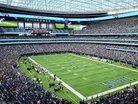
While the Tennessee Titans' NFL form may not have been the best of late, the Nashville-based franchise will soon have one of the world's most technologically advanced stadiums to call home. At the heart of this transformation is Schneider Electric, whose sophisticated power management systems could redefine what modern sporting venues are capable of achieving.
Construction on the team's new Nissan Stadium, which sits in the heart of Nashville on the banks of the Cumberland River, first began in February 2024. Costing an estimated US$2.1bn, it is set to be one of the most expensive sporting arenas ever built. However, the true innovation lies beneath the surface, where Schneider Electric's technology infrastructure is being deployed.
Advanced electrical infrastructure takes shape
When the Titans move into their new home in February 2027, the building's ability to stay powered through a grid outage will rest on a system of four electrical substation vaults, one positioned at field level in each quadrant of the structure. Each vault can hold around five megawatts of capacity, creating a distributed power architecture that ensures resilience across the approximately 2.1-million-square-foot facility.
Kellen DeCoursey, Project Executive on the Titans' Nissan Stadium development, has provided a fresh look at how that infrastructure is taking shape. In a video published from the stadium, he gives some of the most specific detail yet on Schneider Electric's contribution to the build.
"Thanks to these switch gears and our transfer switches provided by Schneider Electric, the stadium is able to deliver uninterrupted power supply to the building," Kellen says. Should the mains supply fail, automatic transfer switches will activate three generators per quadrant to maintain continuity – a contingency arrangement that reflects the scale of what the stadium is expected to host, from NFL fixtures to concerts.
The distributed nature of the power infrastructure means that even if one quadrant experiences issues, the other three can continue to operate independently, ensuring that critical systems remain functional throughout the facility.
Early collaboration addresses procurement challenges
One of the less-discussed challenges in projects of this size is procurement timing, and Kellen indicates that collaborating with Schneider early on was central to keeping things on track. "Working with Schneider Electric as a partner on the project, we were able to coordinate early on in the design phase to ensure that we had the right equipment in order to make sure that we avoided heavy lead times that hinder projects of this size," he says.

By engaging Schneider Electric during the design phase rather than procurement, the project team could mitigate supply chain risks that have plagued similar developments.
The early partnership approach allowed the construction team to lock in equipment specifications and delivery schedules well before typical procurement timelines would have allowed, providing greater certainty in a market where lead times for specialised electrical equipment can extend beyond 12 months.
This strategic coordination has proven particularly valuable given the scale and complexity of the electrical systems being installed across the 2.1-million-square-foot facility.
Comprehensive technology deployment targets efficiency
When Schneider was formally announced as the stadium's energy management partner in March 2025, the French firm committed to a five-year engagement beginning with the venue's opening. Beyond the substation infrastructure, Schneider's remit covers electrical power distribution and control systems, IT physical infrastructure, clean uninterruptible backup power and an integrated building management system.
The targets set out were a 20% reduction in energy consumption and a 30% reduction in operational downtime – figures that, if achieved, would represent a meaningful step for a venue of this scale. The facility is projected to generate over US$33.7bn in economic impact for the Nashville economy over the next 30 years.
Schneider Electric has emphasised that several of the technologies being deployed in the stadium are manufactured in Tennessee, where the company operates facilities in Franklin, Smyrna and Mt. Juliet, as well as a global research and development centre. Tennessee Governor Bill Lee welcomed that dimension of the partnership.
"I'm proud that Schneider Electric will serve as the Official Energy Management Partner of the new Nissan Stadium using several innovative technologies manufactured right here in Tennessee," Governor Lee says.
Michelle Hix, Vice President of Strategic Customers at Schneider Electric, sees the company's contribution in terms of the fan experience. "It takes reliable, safe, energy efficient power to deliver outstanding fan experiences all season long," Michelle says. "Titan up!"
The stadium is scheduled for completion in February 2027, with the five-year partnership set to run from opening day.
Company portals



Executives

Kellen DeCoursey
Project Executive

Michelle Hix
Vice President of Strategic Customers