SK Hynix Eyes US$1tn as South Korea Leads AI Boom
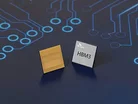
SK Hynix is accelerating towards the US$1tn mark, powered by global investment in AI infrastructure and a decisive shift in memory demand.
About a year ago the company was valued at less than US$100bn following a strategic transformation which laid the groundwork for today’s surge.
Its growth is being driven by AI-linked demand for conventional memory and, critically, high-bandwidth memory used in AI servers, a trend reshaping priorities across data centres and cloud providers.

Shares in SK Hynix have risen more than 200% so far this year, on top of a 274% surge in 2025. That momentum has pushed the company to the brink of the trillion-dollar club.
In mid May 2026, SK Hynix closed with a market value of about US$948bn, placing it within reach of the milestone. The valuation has since dipped by more than 7% at the time of writing, yet the stock remains sharply higher year to date.
The company now ranks 16th among the world’s largest by market value as investor appetite for AI infrastructure continues to intensify.
South Korea’s role in Asia’s AI boom
If SK Hynix reaches US$1tn, South Korea would become the first country outside the US to host more than one trillion-dollar company. That would underscore the country’s growing influence in AI hardware and memory.
Taiwan and Saudi Arabia each have one trillion-dollar company, with Taiwan’s TSMC remaining Asia’s largest by market value at more than US$1.622tn.
The comparison highlights how central cutting-edge semiconductors have become in the global market narrative.
In May 2026, the Korea Composite Stock Price Index (KOSPI) crossed 7,000 for the first time after Samsung Electronics surpassed US$1tn on 6 May 2026. This symbolic threshold has drawn fresh global attention to Seoul’s markets.
Fabien Yip, Market Analyst at IG in Sydney, says the rally is being driven by FOMO around AI-linked stocks across Japan and Korea.
Samsung’s labour dispute
A dispute over bonus pay between Samsung and its main union has led to plans for an 18-day strike from 21 May 2026 if demands are not met. The union is angry over a perceived bonus gap with SK Hynix.
Samsung Electronics’ shares fell as much as 9.3% on 15 May 2026 after the union reaffirmed the strike plan, despite management offering to resume talks without conditions. The company has urged a return to negotiations to avoid disruption.
With no agreement so far, South Korea’s Labour Commission has called for government-mediated talks on Saturday. The timeline raises the risk of short-term uncertainty for parts of the chip supply chain.
Analysts say prolonged disruption could push some spillover demand to rivals including SK Hynix, Micron and TSMC. They also caution that any advantage for competitors may be short lived if talks progress.
High-bandwidth memory strengthens the lead SK Hynix currently commands the lion’s share of the high-bandwidth memory market, a specialised type of DRAM which stacks dies vertically and sits close to GPUs to maximise bandwidth.
This architecture enables the ultra-fast data transfer essential for training large language models.
Without sufficient HBM, advanced accelerators from NVIDIA, Google and AMD face severe performance bottlenecks. Memory availability has therefore become as strategic as compute in large-scale AI deployments.
In October 2025, the SK Hynix’s CFO confirmed the company’s entire 2026 HBM capacity was sold out, signalling a structural shift as major tech firms secure supply years in advance. The order backlog underscores how procurement strategies are adapting to AI roadmaps.
Executives expect tight supply to persist into 2027 as demand outpaces manufacturing yields and capacity additions.
By leveraging its HBM leadership and potential near-term shifts in the competitive landscape, SK Hynix aims to consolidate its position at the top of the AI memory market.
If execution remains strong and AI infrastructure spending continues to accelerate, entry into the trillion-dollar league may be only a matter of time.