
Why is OpenAI's Video App Sora Sparking Copyright Concerns?
The AI sector has entered a new stage, marked by a surge in consumer-facing products that create images, text, and video on demand.
As this shift accelerates, developers face growing scrutiny over how their models use copyrighted content and replicate public likenesses – issues now driving a wave of expensive legal disputes across the industry.
OpenAI reports that its Sora video generation application has surpassed one million downloads in just five days – outpacing the initial uptake of ChatGPT when it debuted in November 2022 – despite Sora’s limited availability to invited users in North America.
Powered by ML models trained on extensive visual datasets, the platform converts written descriptions into 10-second video clips and has claimed the top spot on Apple’s US App Store charts.
Bill Peebles, Head of Sora at OpenAI, revealed the download figures in a post on X, noting that the “team [is] working hard to keep up with surging growth.”
But how has this release intensified the global debate over AI and copyright?
How AI generation of deceased celebrities and IP violations are sparking controversy
Sora’s architecture enables users to publish generated videos directly to social media, prompting a wave of AI-crafted clips that depict copyrighted characters and even resurrect the likenesses of deceased public figures.
“[OpenAI will] give rights holders more granular control over generation of characters”.
Some of the most viral Sora-generated clips have featured musicians Michael Jackson and Tupac Shakur, while prior to the app’s download milestone, Zelda Williams publicly urged users to stop sharing AI-generated videos of her father, actor Robin Williams, who passed away in 2014.
OpenAI told Axios that “strong free speech interests” apply to portrayals of historical figures.
For individuals considered “recently deceased,” the company stated that authorised representatives may request the removal of such likenesses – though OpenAI has not clarified what duration constitutes “recent”.
Sora-generated videos often feature characters drawn from major film, television and gaming franchises.
One widely shared clip features Sam Altman, OpenAI’s CEO, appearing alongside Pokémon characters and joking, “I hope Nintendo doesn’t sue us,” according to CNBC.
Another shows him cooking and eating Pikachu, the franchise’s iconic mascot.
While Nintendo has not taken legal action, the videos underscore escalating tensions between AI-generated content and established copyright protections.
Sam Altman’s response to Sora’s criticism
OpenAI and rival AI developers are increasingly entangled in lawsuits from creators and rights holders challenging how training data is sourced.
Anthropic agreed to a US$1.5bn settlement to resolve a class action by authors who claimed their copyrighted material was used without permission.

The settlement underscores the financial risk facing AI companies as courts start to assess the boundaries of fair use and intellectual property in machine learning.
In response to mounting criticism, Sam released a blog post saying the company had been “learning quickly from how people are using Sora and taking feedback from users, rights holders and other interested groups”.
He noted that OpenAI will “give rights holders more granular control over generation of characters” and suggested the firm intends to introduce revenue‑sharing agreements, although no timeline or framework has yet been disclosed.
Whether courts and rights holders accept Sam’s argument that Sora videos constitute a new form of “interactive fan fiction” remains uncertain.
Traditionally, the term refers to written works created by fans using pre‑existing characters and worlds, a practice long debated within copyright and fair use law.
Speaking to reporters at the company’s DevDay event, Sam added that some users have complained Sora feels overly restrictive.
“Please give us some grace,” he says. “The rate of change will be high.”


Executives
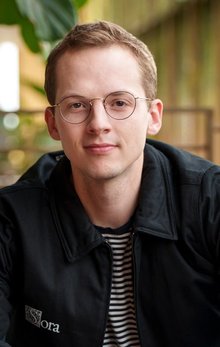
Bill Peebles
Head of Sora at OpenAI

Dario Amodei
CEO and Co-Founder
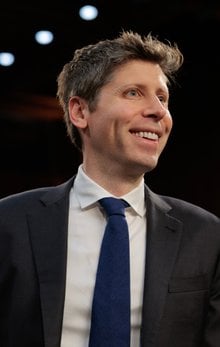
Sam Altman