
Starcloud Hits US$1.1bn to Solve AI’s ‘Brutal’ Power Crisis
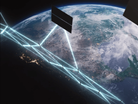
With the demand for AI overpowering our planet’s power grids, tech firms are working towards the next frontier of AI infrastructure being built in low earth orbit.
Starcloud is the latest company to capitalise on this orbital shift.
The orbital AI infrastructure startup has achieved unicorn status, securing US$170m in a new funding round and propelling its total valuation to US$1.1bn.
Led by venture capital titan Benchmark and EQT Ventures – a private equity powerhouse managing more than US$100bn – this capital injection validates the idea that to save the AI revolution, we must look up.
Solving the ‘brutal cost equation’
The move to space isn’t just about novelty – it’s about a cost equation that traditional data centres can no longer solve.
It specifically refers to the crossover point where the plummeting cost of satellite launches – driven by rockets like SpaceX’s Starship – meets the high cost of terrestrial data centre infrastructure.
In recent interviews, including his talk on the Sequoia Capital podcast and features in The Next Web, Starcloud CEO Philip Johnston noted that while orbital infrastructure is simple to describe, it is “brutally difficult to execute”.
He argues that by stripping the satellite down to its bare essentials – chips, solar and cooling – Starcloud can reach the target power cost of approximately US$0.05 per kWh.
On Earth, data centres are limited by land availability, soaring energy costs and the massive environmental toll of cooling thousands of GPUs.
In the vacuum of space, these variables shift.
Without atmospheric interference or the day-night cycle of a fixed location, orbital solar panels can generate significantly more power than their terrestrial counterparts.
While cooling is a challenge in a vacuum, Starcloud uses passive radiators to shed heat as infrared light, eliminating the need for the massive water-cooling systems that strain Earth’s ecosystems.
To execute this vision, Starcloud is moving away from bespoke satellites, such as Blue Origin’s Blue Ring, and scaling up production of its Starcloud-3.
Meet Starcloud-3: the 200-kilowatt stripped-down satellite
The Starcloud-3 is a three-ton, 200kW satellite designed for high-volume manufacturing.
Philip describes the craft as a “stripped-down” satellite, primarily composed of three essential components: solar panels, high-performance chips and optical terminals.
By focusing on a simple, cost-effective design, Starcloud can build these units in-house at new, specialised facilities.
Rather than building a traditional all-in-one communications satellite, the Starcloud-3 acts as a modular compute node that relies on third-party broadband networks for data transit.
This specialisation allows for an easy deployment strategy, which is designed to fit within the cargo bay of SpaceX’s Starship.
An 88,000-satellite vision
The long-term goal is a constellation of up to 88,000 satellites.
The hypercluster would essentially function as a 5GW distributed data centre in the sky.

Starcloud has already demonstrated its technical capabilities through successful orbital deployment.
In November, it launched a satellite equipped with a NVIDIA H100 GPU, demonstrating AI inference and training in orbit.
Future iterations, including the upcoming Starcloud-2, are reported to carry NVIDIA Blackwell chips and AWS server blades, further bridging the gap between orbital hardware and the software ecosystems used by global developers.
Company portals

Executives
Philip Johnston
Co-Founder & CEO
