
Elon Musk: Will Transformative AI Make Money Obsolete?
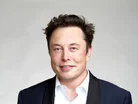
Flipping a thorny sci‑fi chapter, tech luminary Elon Musk has recently doubled down on his prediction that advances in AI and robotics will usher in a future where work becomes optional.
The Tesla and SpaceX chief, who recently signed a pay package for US$1tn, suggested in a recent interview with Nikhil Kamath that we’re headed toward a world of abundance where “if you can think it, you can have it”.
“In a future where anyone can have anything, you no longer need money as a database for labour allocation,” he says.
“If AI and robotics are big enough to satisfy all human needs, then the relevance of money declines rapidly, I’m not sure we will have it.”
Elon’s forecast isn’t pinned to some far‑flung horizon. He thinks this reality could arrive in less than 20 years, with work recast as more of a hobby.
His bet hinges on AI and robotics driving massive output in goods and services, propelling us toward a Universal High‑Income Society
Transformative AI: 'A country of geniuses in a data centre'
A recent National Bureau of Economic Research paper titled A Research Agenda for the Economics of Transformative AI defines Transformative AI (TAI) as “AI that enables a sustained increase in total factor productivity growth of at least 3- 5x of historical averages”.
That tier of AI mirrors Anthropic CEO Dario Amodei’s picture of a “powerful AI” he describes as “a country of geniuses in a data centre”.
And, by Musk’s account, once humanoid robots enter the frame, output of goods and services will spike, ushering in a world of abundance.
With AI surpassing human intelligence, TAI could link innovative dots across disciplines that human specialists, limited to a single field, might miss – significantly accelerating the pace of innovation.
Still, some research cautions that the gains from such automation may accrue to capital owners rather than workers, unless it’s steered to complement labour instead of replace it.
But Elon argues that in an abundant economy, accumulating wealth would be pointless.
“If you are stranded on a desert island with a trillion dollars, it will be pointless because there is no labour to allocate,” he says.
Will money disappear and what stands in the way of Transformative AI?
By Elon’s lights, in an abundant economy where money fades into irrelevance, “energy will be the true currency”.
If AI and robotics begin producing chips and solar panels and mining resources to power more AI and robots, the energy loop closes.
“Once that cycle is complete,” Musk says, “we decouple from the monetary system”.
What may follow, he suggests, is a crisis of purpose: “If AI can do things better than you, what is the point of doing things?”
Utopian as Elon’s vision may be, plenty stands between here and that economic heaven.

We may hit energy and technology bottlenecks as AI scales, slowing the push toward abundance.
IMF research also suggests AI adoption will be uneven across countries with differing infrastructure, favouring advanced economies over developing ones.
That could widen the gulf between haves and have‑nots, exacerbating cross‑border income inequality.
Dario raised this inequality concern in his essay Machines of Loving Grace: “Ideally, powerful AI should help the developing world catch up to the developed world, even as it revolutionises the latter.
“I am not as confident that AI can address inequality and economic growth as I am that it can invent fundamental technologies, because technology has such obvious high returns to intelligence, whereas the economy involves a lot of constraints from humans, as well as a large dose of intrinsic complexity.“
AI regulation, the alignment problem and AI safety are further fronts that demand caution as we edge closer to powerful Artificial General Intelligence.
Musk’s utopia is shaded by his black‑hole analogy for AI – an event horizon beyond which we can’t see.



Executives

Dario Amodei
CEO and Co-Founder

Elon Musk
Tesla CEO