The Countries & Companies Leading the Humanoid Robot Race
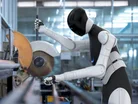
Remember those funny YouTube videos of the first prototypes of humanoid robots falling up stairs? No matter how strong your propensity for clumsiness, it would have been difficult to suggest that those early versions of robots were capable of recreating the mobility of us humans.
Things have moved on quite significantly since the days of the Honda ASIMO, though. Just this week, the World Robot Conference took place in Beijing, showcasing just how advanced humanoid robots are becoming, with many products now available for consumers to buy and use as they please.
The idea of people-like robots being used to fulfil tasks in domestic and commercial settings is a real possibility for the not-so-distant future, though experts are still suggesting that we temper our expectations.
The International Federation of Robotics, the world authority on robot technologies, today published a comprehensive position paper which takes a view of the current state and future prospects of humanoid robotics, offering a measured assessment of a technology that is capturing the attention and imagination of people around the world.
The paper reveals stark differences in how various regions and countries are approaching humanoid development and how global competition is shaping up.
The IFR details how central humanoid robotics is to China's technology strategy right now. According to the paper, the Chinese government has prioritised service sector applications, particularly customer service, whilst viewing manufacturing automation as a secondary step.
Meanwhile, American companies including Tesla, Amazon and Nvidia are focusing on practical applications in logistics and manufacturing rather than social integration.
"There is a strong interest in using humanoids in logistics and manufacturing," the paper says, regarding the approach to the technology in the US.
"These machines are seen as tools for enhancing productivity and efficiency rather than as social companions."
Elsewhere, Japan appears to be maintaining its pioneering position with a companion-focused approach, reflecting some of the pressures coming from the nation's ageing society.
As for Europe, businesses seem to be rather cautious with concerns about ethics and collaboration preventing total buy in.
The technical limitations of today's robots
Despite the technology receiving significant levels of both investment and media attention, the IFR believes that there are still several constraints preventing the widespread adoption of humanoid robots today.
Battery life is one such challenge. Current humanoids can often only operate for one hour before they need recharging. That won't be good enough for consumers, according to the IFR.
"It would need to be increased to at least four to five hours of operation with one hour of fast charging, or a runtime of twenty hours," the paper states.
Then there are also problems with the designs and capabilities of many products on the market today.
"While some humanoid robots have mastered mobility and agile movement, and others can handle cognitive and intellectual challenges, none can do both yet," the IFR suggests.
Traditional industrial robots maintain significant advantages in precision manufacturing environments, where specialised designs prove more efficient than general-purpose humanoids.

Which sectors could robots flourish in?
Early commercial applications are focusing on specific use cases rather than general-purpose deployment. Some automotive companies are already running pilot projects using humanoids for component kitting and machine tending.
In the healthcare sector, some facilities across Europe and Asia are testing units for equipment transport and basic patient care.
In retail and hospitality, some businesses are beginning to experiment with using humanoids as interactive service agents, though the success of the tech in customer-facing positions like this depends hugely on the opinions of the general public, many of whom remain very sceptical.
The paper also finds that the sheer cost of the technology will mean that any future rollouts are slow and incremental.
"The high cost of materials and components, as well as the complexity of the design and programming, makes widespread adoption difficult," the paper says.
Economies of scale remain necessary to achieve commercial viability, with broader industrial adoption expected within five to 10 years.
How soon might humanoid robots be a part of our society?
IFR President Takayuki Ito provides a realistic assessment of humanoid prospects.
"If and when a mass adoption of humanoids will take place remains uncertain," he says.
"Humanoids are not expected to replace the types of robots currently on the market in the future. Instead, they will complement and expand upon existing technology."
The organisation explicitly dismisses near-term prospects for universal household helpers, suggesting such applications remain decades away.
"Mass adoption as universal household helpers will not happen within the near- and medium-term future," the paper concludes.