This Week's Top Five Stories in Technology

Inside Tesla's Bold Shift to AI, Energy and Humanoids
Despite reporting its second consecutive quarterly downturn, with annual revenue dropping to US$94.8bn, CEO Elon Musk remains bullish about Tesla’s long-term vision – even as the company pivots its mission from ‘Sustainable Abundance’ to ‘Amazing Abundance’.
Although profits dropped 61% in the final quarter of 2025, Musk has doubled down on ambitious investment plans spanning AI, related infrastructure and humanoid robots.
"We're making big investments for an epic future," he said during a Q&A call with investors.
The world’s richest man has also confirmed that Tesla will halt production of the Model S and Model X at its California facility, clearing the way for the company’s most ambitious venture yet – the large-scale manufacture of humanoid robots. Musk's own AI firm, xAI, is also set to secure a US$2bn investment.
Reaffirming his belief that AI will bring forth a future of abundance, he revealed that Tesla continues to advance in vehicle autonomy and has now started to "produce Optimus robots at scale".
Why Tech Giant Capgemini is Selling its US Subsidiary
Capgemini, one of France’s largest listed technology firms, has confirmed it will sell its US subsidiary, Capgemini Government Solutions, after it emerges that the unit holds contracts with US Immigration and Customs Enforcement (ICE).
The decision follows mounting pressure from lawmakers, campaign groups and employees after the deaths of two US citizens during immigration operations in Minneapolis.
Capgemini Government Solutions signed a contract worth US$4.8m with ICE in December to provide "skip tracing services for enforcement and removal operations", according to public listings. The contract is scheduled to run until 15 March and is one of 13 agreements the subsidiary holds with ICE.
Skip tracing refers to techniques used to locate individuals whose whereabouts are unknown, often involving data analysis and surveillance.
Although the company operates in 50 countries and employs at least 340,000 people globally, Capgemini states it cannot maintain “appropriate control over certain aspects of this subsidiary’s operations in order to ensure alignment with the Group’s objectives”.

Banking in the AI Era: Oracle's Innovative Agentic Platform
Oracle Financial Services is changing the game for financial institutions with its advancements in AI agents, with intelligent, conversational interfaces.
By creating these applications, financial institutions are equipped better to understand and anticipate the evolving needs of customers and personalise to their liking, whether the customer is banking online, using a mobile device or visiting a physical branch.
At the Oracle Financial Services Summit, Oracle introduced an enterprise suite of AI-infused applications, design tools, frameworks and pre-built AI agents aimed at reshaping retail banking.
The platform brings intelligent, conversational interfaces and autonomous agents to help banks anticipate customer needs and deliver personalised service across online, mobile and branch channels.
Oracle’s agentic platform embeds AI experiences and decisioning into customer engagements and core processes. Its agents orchestrate real-time, tailored interactions while keeping bankers in the loop for oversight and ethical governance.
How Anthropic’s CEO Sees Humanity’s AI Turning Point
Dario Amodei, CEO of Anthropic, has published a 20,000-word blog post describing humanity’s entry into a "rite of passage, both turbulent and inevitable, which will tech who we are as a species".
In the post, shared on his website, Dario writes that society is on the verge of receiving “almost unimaginable power,” while questioning whether our social, political and technological systems are mature enough to handle it.
He characterises “powerful AI” as systems that can outperform humans across disciplines such as biology, mathematics, engineering and writing – models capable of taking and giving instructions and potentially even controlling robots.
Dario suggests this level of AI could emerge in "as little as one to two years away", though he concedes there remains a degree of uncertainty around the timeline.
How Fortinet is Tackling Manufacturing Cyber Threats
The rise in cybersecurity threats – as well as cyber incidents – can be attributed to the upward trend of manufacturers digitising production and connecting more devices across operational technology (OT) networks.
Once isolated factory systems are now linked to corporate IT environments, exposing industrial control systems to cyber threats that can halt production and jeopardise safety.
Fortinet’s 2025 State of Operational Technology and Cybersecurity Report highlights how manufacturers are adjusting to this converged threat landscape – placing OT security under executive oversight and adopting strategies that blend visibility, segmentation and AI-driven detection.
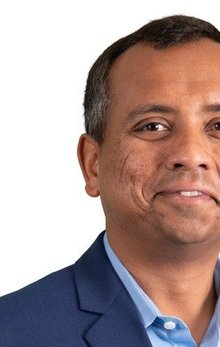
“The seventh instalment of the Fortinet State of Operational Technology and Cybersecurity Report shows that organisations are taking OT security more seriously,” says Nirav Shah, Senior Vice President, Products and Solutions at Fortinet.
“We see this trend reflected in a notable increase in the assignment of responsibility for OT risk to the C-suite, alongside an uptick in organisations self-reporting increased rates of OT security maturity."





Executives

Dario Amodei
CEO and Co-Founder

Elon Musk
Tesla CEO
Nirav Shah
Senior Vice President, Head of Products and Solutions Marketing