Trump Demands Intel CEO Quit Over His Alleged Links to China
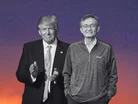
US President Donald Trump has demanded the immediate resignation of Intel's CEO, Lip-Bu Tan, accusing him of maintaining problematic business relationships with China amid geopolitical tensions between Washington and Beijing.
This form of presidential intervention against a private company executive is especially rare.
President Trump has targeted Tan over his alleged investments in Chinese firms with military connections.
"The CEO of INTEL is highly CONFLICTED and must resign, immediately. There is no other solution to this problem," Trump wrote on Truth Social, his own social media platform.
Following Trump’s public attack on the Malaysian-born Singapore executive – who is a US citizen – Intel’s shares have fallen more than 3%.
The background to the controversy
Tan's appointment in March was intended to revitalise Intel, after the company’s semiconductor production had lost ground to other Asian competitors such as TSMC and Samsung.
The company has received billions in US government funding as part of Washington's push to rebuild domestic chip manufacturing capabilities.
Republican Senator Tom Cotton escalated concerns this week, writing to Intel's board about Tan's "associations raise questions about Intel's ability" to serve as a "responsible steward of American taxpayer dollars and to comply with applicable security regulations".
Cotton suggested that Tan's previous role as long-time CEO of Cadence Design Systems, which pleaded guilty in July to US export control violations, makes him unfit to lead Intel.
The firm agreed to pay US$140m over charges that its Chinese subsidiary repeatedly conducted business with China's National University of Defense Technology.
What are the implications for the tech sector?
The confrontation reflects escalating US-China technology tensions that have intensified since Trump's first presidency.
While American investment in Chinese companies remains legal, Washington has implemented increasingly strict restrictions on technology transfers and business relationships.
A 2024 congressional report and Reuters investigation revealed Tan had invested at least US$200m in hundreds of Chinese companies between 2012 and December 2024.
Some of these firms allegedly maintain connections to China's military apparatus.
The response of the tech industry
Since Trump’s attack, Tan has pushed back against the criticism in a staff note, dismissing it as "misinformation".
"I have always operated within the highest legal and ethical standards," he said in the same memo, referencing his four-decade career in the US technology sector.
Intel has also defended its leadership publicly since Trump’s initial statement.
"Intel, the board of directors and Lip-Bu Tan are deeply committed to advancing US national and economic security interests,” the company said in a statement last week.
Intel also emphasised that its large investments in the US tech sector aligned with Trump's "America First agenda", which has centred on bringing the manufacturing of technology back to the US.
Patrick Moorhead, Founder and CEO of Moor Insights & Strategy, has suggested Trump's attack might mask his broader disagreements with Intel's strategic direction.
"It's apparent to me that there was some negotiation amongst the two that Trump didn't like," he suggests.

Challenges await for Intel
The political pressure adds to Intel's existing operational difficulties as it attempts to scale back manufacturing investments to match customer demand.
The company has already eliminated thousands of jobs this year as part of cost-cutting measures.
Janet Egan from the Center for a New American Security warned that leadership instability could hamper America's semiconductor ambitions.
"Intel has been a hope for America to build out more chip capacity and has struggled to do so to date," Janet says.
"It's important that we get continuity of leadership to support that ramping up of capacity."
The White House has defended Trump's intervention, telling the BBC that the president "remains fully committed to safeguarding our country's national and economic security" through ensuring "iconic American companies in cutting-edge sectors are led by men and women who Americans can trust".