UK and China Forge Clean Energy Technology Partnership
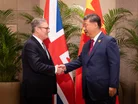
British and Chinese leaders have agreed to collaborate on renewable energy technologies and low-carbon innovation, potentially reshaping the UK's approach to achieving its climate ambitions through strategic technological cooperation.
Prime Minister Sir Keir Starmer's visit to Beijing has opened an important new chapter in UK-China relations, with renewable energy and low-carbon technologies emerging as central pillars of cooperation between the two nations.
The meeting on 29 January 2026 marked the first visit by a British Prime Minister to China in eight years.
During his discussions with President Xi Jinping, Starmer speaks of the UK's willingness to work with China on climate change and global stability.
President Xi proposed that the two countries expand collaboration through joint research and industrial applications in several key technological areas.
Renewable energy and low-carbon technologies featured prominently among these proposals, alongside artificial intelligence and biosciences.

The Chinese President's explicit focus on these sectors reflects Beijing's dominant position in global clean energy supply chains, as well as its ambition to lead the green technology transition.
Technology's role in energy transformation
The timing of this agreement could prove particularly significant for the UK's short to medium-term ambitions for the energy transition.
Britain has committed to several ambitious climate targets, including achieving net zero emissions by 2050 and fully decarbonising the National Grid by 2030.
The country faces substantial challenges in meeting these targets, including scaling up renewable energy infrastructure, reducing dependence on fossil fuels and bolstering energy security.
Making use of China's manufacturing capabilities when it comes to solar panels, wind turbines and battery technology could prove crucial to meeting these goals.
Chinese companies dominate global supply chains for these technologies.
Aside from being the world's largest generator of renewable energy, China also exports more climate tech internationally than any other nation.
Balancing innovation with strategic considerations
Despite China's pre-eminence as an exporter of sustainability technology, cooperation with the People's Republic of China (PRC) will necessitate a delicate balancing act for the UK government.
US President Donald Trump said on 29 January 2026 that Starmer's decision to do business with Beijing was "very dangerous".
That said, Trump himself is expected to visit China in the early spring with a view to establishing an economic accord.
While Chinese technology and investment could accelerate Britain's energy transition, concerns about strategic dependency and supply chain resilience remain prominent among policymakers and security experts.
The UK has already taken steps to reduce Chinese involvement in its critical national infrastructure, including removing Huawei equipment from its 5G networks and restricting Chinese investment in sensitive sectors.
In 2021, China imposed sanctions on several senior British politicians, including former leader of the Conservative Party Iain Duncan Smith, after they criticised China's treatment of Uyghur Muslims in the Xinjiang region.
To facilitate the deal with the UK, Beijing has lifted its sanctions on this group, though the MPs remain defiant in their criticism.
"We would rather remain under sanction indefinitely than have our status used as a bargaining chip to justify lifting British sanctions on those officials responsible for the genocide in Xinjiang," the group said in a joint statement.
The Prime Minister's approach appears to be one of selective engagement, looking to benefit from Chinese expertise in manufacturing and deployment while maintaining safeguards around critical infrastructure and sensitive technologies.
Technology cooperation within broader engagement
The energy and technology discussions formed part of a broader economic mission, with Starmer leading a delegation of nearly 60 British business and cultural leaders to China.
The Prime Minister indicated that the UK wants to deepen cooperation across multiple areas, including trade, investment, finance and environmental protection.
The success of this technology-focused energy cooperation will likely depend on translating diplomatic commitments into concrete projects and partnerships.
Joint research initiatives, technology transfer agreements and investment in manufacturing facilities could all flow from these high-level discussions.
However, implementation will require careful oversight to ensure that partnerships deliver tangible benefits while protecting British interests.
The government will need to establish clear frameworks for intellectual property protection, technology sharing and quality standards in any collaborative ventures.
The UK will need to navigate these challenges carefully, maintaining strong relationships with European and transatlantic partners while pursuing pragmatic engagement with Beijing on climate and energy issues.
As the energy transition accelerates globally, the meeting between Starmer and President Xi suggests that climate technology may offer a pathway for constructive engagement between nations that disagree on many other fronts.