White House App: A New Era of Direct-to-Citizen GovTech
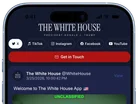
The modern executive branch is increasingly moving toward a direct-to-citizen digital model.
By deploying a dedicated mobile platform, the White House bypasses traditional media intermediaries, describing the shift as delivering “President Donald J. Trump and his Administration directly to the American people like never before".

This strategy treats the executive office as a primary content provider, utilising a proprietary stack to maintain a persistent connection with its user base.
Architecture and distribution channels
The app provides a direct pipeline for unfiltered, real-time updates, allowing the administration to manage its own narrative through several integrated features:
- Real-time push architecture: The White House is using the app to “send alerts on major announcements, executive actions and other priorities,” ensuring mission-critical updates land on home screens without reliance on social media algorithms.
- Live-streaming: The backend supports the ability to “stream live briefings, speeches and historic moments,” creating a sovereign broadcast network.
- Centralised media: A dynamic library serves diverse media types such as high-resolution photos and videos, dedicated policy portals and documents.
- Bi-directional communication: An interactive feedback layer allows users to “send their voice” directly to the White House and effectively “Text President Trump.”
Privacy trade-offs and third-party SDKs
In the enterprise tech space, the deployment of such a high-profile application brings rigorous scrutiny regarding data privacy and the use of third-party software development kits (SDKs).
Currently, the application’s background processes are a point of technical debate.
Reports from the developer community, specifically from software developer @Thereallo1026 on X, suggest the presence of “embedded code that tracks users’ precise GPS coordinates every 4.5 minutes and automatically syncs them to a third-party server”.
Technical analysis of the decompiled code reveals specific configurations that may impact user privacy including Android location permission strings and background location access, with a foreground update cycle set to 4.5 minutes and a background cycle of 10 minutes.
Independent audits by users like @DilligentDenizen on X highlight broad permission requests, including the ability to modify or delete shared storage contents, the use of fingerprint and biometric hardware, network connections, Wi-Fi connections and the ability to prevent the phone from sleeping.
The role of OneSignal in govtech
The inclusion of OneSignal, a popular third-party service for push notifications, explains some of these architectural choices.

In enterprise mobile development, location data is frequently leveraged by OneSignal to push notifications to users for location-based campaigns.
For a government entity, this allows for geo-fencing announcements to specific regions, though it simultaneously raises questions about the collection of granular movement data within an official federal tool.