Why is Sam Altman So Interested in Brain Implant Technology?
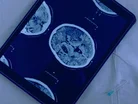
Sam Altman and his company OpenAI are preparing to back a company that can rival Elon Musk's Neuralink, according to an anonymous source close to the firm.
Neuralink has led the market for 'brain implants' in recent years, though it very much remains a nascent technology that requires more research and development.
Just seven people have been fitted with Neuralink chips so far, with the rollout limited to severely disabled people.
The technology aims to help people with mobility issues to control computers with their minds, allowing them to type words, use creative software and play games with nothing more than the power of thought.
The company that Altman and co are interested in is called Merge Labs.
Currently, it is is raising new funds at a US$850m valuation, with much of that new capital expected to come from OpenAI's ventures team.
The OpenAI CEO has reportedly encouraged the investment and will help launch the project alongside Alex Blania, who runs World, an eyeball-scanning digital ID project that he also backs.
It is believed that Altman will co-found the company but not have a day-to-day role in the new project.
The merge of humans and machines
Merge is one of a slate of new companies looking to take advantage of recent advances in AI to build more useful brain-computer interfaces.
Its name comes from what many in Silicon Valley describe as "the merge", a moment when humans and machines come together.
Sam wrote a lengthy blog post on the topic in 2017, speculating that this "merge" moment could come as soon as 2025.
While the technology may not be quite that far ahead, Altman could be about to help push things along.
In another blog post published this year, he suggested that we could soon have "high-bandwidth brain-computer interfaces".
Direct competition with Neuralink
Merge Labs is hoping that OpenAI will contribute US$250m to this funding round, although the talks between the companies are still at an early stage.
Sam Altman himself will not personally invest, according to reports.
The new venture would be in direct competition with Neuralink, which Elon Musk first set up in 2016.
In years gone by Musk and Altman had enjoyed a friendship and a productive working relationship, with both men helping to co-found OpenAI in 2015.
But since Musk left OpenAI's board in 2018 after clashing with Altman, the two have become fierce rivals.
Elon launched his own AI start-up, xAI, in 2023, and has been attempting to block OpenAI's conversion from a non-profit in the courts.
OpenAI's encroachment into Neuralink's market will only intensify the animosity.

Is there a market for brain implant technologies?
Neuralink is leading a pack of so-called brain-computer interface companies, while a number of start-ups, including Precision Neuroscience and Synchron, have been racing to catch up.
Neuralink earlier this year raised US$650m at a US$9bn valuation, and it is backed by investors including Sequoia Capital, Thrive Capital and Vy Capital. Sam Altman himself had previously invested in Neuralink as well.
Brain implants are still often regarded as newfangled, despite the fact that versions of the technology have been in development and use for decades.
Professor Stephen Hawking is perhaps the most high profile beneficiary brain-computer interface tech, which he used to speak the deterioration of his mobility.
Recent leaps forward in AI and in the electronic components used to collect brain signals have opened a new world of possibilities for these technologies, though.
The next step for these systems is finding applications in people without disabilities, though this will take some convincing for many people.
"Brain-computer interfaces are either the next giant leap for humanity or the fastest way to accidentally brick your own consciousness," says Farhan Latif, Account Executive at Ooma.
"Merge Labs and Neuralink are betting on very different versions of that future. Will this be the AI-in-your-head upgrade that makes smartphones look quaint, or the tech equivalent of eating gas station sushi?"