
Neuralink: The Company Accelerating Human Potential

Brain-computer interface technology, which decodes brain signals and converts them into digital commands, is where computing technology intersects with neuroscience and medicine.
This field is accelerating globally, with several firms competing to develop systems that restore and enhance human capabilities.
While companies such as Blackrock Neurotech and Paradromics have been developing these systems for years, backed by substantial venture capital and government research grants, the sector received heightened attention when Elon Musk founded Neuralink in 2016 – particularly after announcing that it had successfully implanting its brain chip in the world’s first human patient in early 2024.
The neurotechnology company, which secured US$280m in its latest funding round, develops implantable brain-computer interfaces designed to treat neurological disorders and potentially enhance cognitive abilities – but what is the company doing now in an increasingly competitive and complex market?
Neuralink: Pioneering neural engineering with Silicon Valley approach
Neuralink operates at the intersection of neuroscience and advanced computing, developing ultra-high bandwidth brain-machine interfaces to connect humans and computers.
The company employs approximately 400 staff across neuroscience, robotics and materials science disciplines.
Its flagship product, the N1 implant, contains 1,024 electrodes distributed across 64 threads thinner than human hair, inserted by a precision surgical robot.
Furthermore, beyond its current focus on mobility restoration for paralysed patients, Neuralink aims to address conditions including blindness, depression and eventually enable enhanced human cognition.
Its manufacturing facilities in Fremont, California, integrate custom chip design, robotics and implant production, demonstrating its vertically integrated approach that distinguishes it from academic research groups and medical device competitors.
Neuralink's breakthrough human trial demonstrates technology capabilities
The company's first human test subject, Noland Arbaugh, a 30-year-old from Arizona who suffered paralysis below the shoulders in a diving accident eight years ago, now navigates computers using thought alone.
- Noland can now control computers using only his thoughts
- The Neuralink device, about the size of a pound coin, is implanted in the skull with microscopic wires to read neuron activity
- Ethical concerns about privacy and data access have been raised by experts, including potential access to thoughts and beliefs
- Neuralink faces competition from companies like Synchron
The implant has restored a measure of independence for Noland, who had previously relied entirely on others for assistance.
“You have to learn that you have to rely on other people for everything,” he told the BBC, describing his experience of paralysis.
The Neuralink device functions by detecting electrical impulses generated when humans think about movement – and these signals are then translated into digital commands, such as moving a cursor across a screen.
While this field has seen research for several decades, Elon's involvement has brought both investment and scrutiny to what remains an invasive medical procedure.
Upon waking from surgery, Noland discovered he could control a cursor by thinking about wiggling his fingers.
“Honestly I didn't know what to expect – it sounds so sci-fi,” he recalled.
After witnessing his neural activity spike on a screen while surrounded by Neuralink staff, he said “it all sort of sunk in” that mental commands could control his computer.
His capabilities with the implant have expanded over time to include chess and video games.
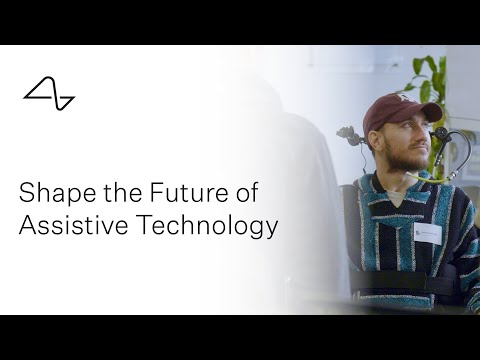
“Now I'm beating my friends at games, which really shouldn't be possible but it is,” Noland explained.
The technical challenges and market competition shaping Neuralink's future
Despite its achievements, Neuralink faces significant technical challenges.
For instance, Noland experienced a partial disconnection between the device and his brain that temporarily caused him to lose computer control entirely.
Engineers subsequently resolved the issue through software adjustments, though the incident highlighted concerns frequently raised by experts regarding the technology's reliability.
Market competition
Neuralink also operates in an increasingly competitive market.
Companies such as Blackrock Neurotech and Paradromics have been developing brain-computer interface systems for years, backed by substantial venture capital and government research grants.
More recently, Synchron has emerged as a direct competitor with its Stentrode device, which targets people with motor neurone disease.
The Stentrode requires less invasive surgery, being implanted through the jugular vein in the neck and then moved to the brain via blood vessels like the Neuralink implant, Stentrode connects to the brain's motor region but with a potentially lower risk profile.
Riki Bannerjee, Synchron's Chief Technology Officer, explains its function: “It picks up when someone is thinking of tapping or not tapping their finger.
“By being able to pick up those differences it can create what we call a digital motor output.”
The output converts to computer signals, with the technology currently used by 10 individuals.
Ethical considerations and future ambitions
Neuralink's technology raises profound ethical questions that may affect its market adoption.
Anil Seth, Professor of Neuroscience at the University of Sussex, highlights privacy concerns: “If we are exporting our brain activity [...] then we are kind of allowing access to not just what we do but potentially what we think, what we believe and what we feel,” he told the BBC.
“Once you've got access to stuff inside your head, there really is no other barrier to personal privacy left.”
However, despite these challenges, Neuralink maintains ambitious goals – aiming to develop its technology to address various neurological conditions and potentially enhance human capabilities further.
Explore the latest edition of Technology Magazine and be part of the conversation at our global conference series, Tech & AI LIVE.
Discover all our upcoming events and secure your tickets today.
Technology Magazine is a BizClik brand