
Xpeng Scales Production for ‘Flying Cars’ and Robotaxis
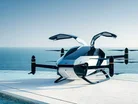
Chinese electric vehicle company Xpeng is positioning itself at the forefront of next-generation mobility technology, planning to launch what it calls “flying cars” alongside autonomous robotaxis in 2027. The company’s ambitious roadmap represents a significant convergence of aerial, autonomous and electric vehicle technologies that could reshape urban transport systems globally.
Vice Chairman and President Brian Gu tells Reuters that large-scale production of the company’s flying vehicles is expected to commence in 2027. This timeline positions Xpeng to capitalise on what McKinsey predicts could be a transformative shift in mobility. According to the consultancy, by 2030, passenger advanced air mobility operators could rival today's largest airlines in daily flights and fleet size.
Xpeng is developing two distinct flying vehicle models: one fully electric and one hybrid. Both vehicles are being built with Aridge, a Xpeng subsidiary, and designed for low-altitude travel. The technology underpinning these vehicles represents a significant engineering challenge, combining aviation-grade systems with the electric powertrain expertise the company has developed in its ground vehicle business.

Electric vertical take-off technology
The Land Aircraft carrier, Xpeng’s fully electric flying vehicle, combines an aerial component with a grounded car element and is designed for individual short-haul flights. The company has received global orders currently exceeding 7,000 units for the vehicle.
The aircraft uses a six-axis, six-propeller dual-ducted configuration. According to Xpeng, this ensures landing capability even in the case of two diagonal rotors failing. It says its safety design covers key systems including power propulsion, power energy, high and low voltage power supply, flight control navigation, flight operation and bus communication.
Xpeng has equipped the Land Aircraft Carrier with what it describes as an “intelligent air cockpit and a four-axis integrated single-stick control system”, which it claims enables “even novices to easily master it through training”. The mass production plant started trial production in November 2025 and successfully rolled out its first aircraft.
The planned annual production capacity is 10,000 units, with an initial annual production capacity of 5,000 units. When operating at full capacity, one aircraft can roll off the production line every 30 minutes.
Hybrid propulsion for extended range
For longer journeys, Xpeng is developing the A868, a hybrid model that adopts a full tilt-rotor configuration. The vehicle uses an aviation-grade hybrid-electric core to provide a continuous energy supply and is expected to achieve a range of 500 km, with a maximum cruising speed expected to reach 360 km per hour.
The A868’s 6-seater cabin is designed to “meet the needs of business travel”, according to the company. This positioning suggests Xpeng is targeting the premium mobility market where executives might choose aerial transport over ground-based alternatives for time-critical journeys.
Autonomous vehicle computing power
Xpeng’s robotaxi technology represents another pillar of its advanced mobility strategy. The company says its robotaxi is China’s first full-stack self-developed and mass-produced autonomous vehicle.
The vehicle is equipped with four Turing AI chips, with on-board computing power reaching up to 3,000 tera operations per second. This computational capacity is essential for processing the vast amounts of sensor data required for autonomous navigation in complex urban environments.
Brian tells Reuters the company would start robotaxi tests in the southern Chinese city of Guangzhou this year and that 2027 will be a “critical year” for "tests around the world with partners". This global testing approach suggests Xpeng is looking beyond the Chinese market for its autonomous technology.
The company is also developing humanoid robots with “a humanoid spine, bionic muscles, and fully covered flexible skin”. Reuters reported that large-scale production is expected in the fourth quarter of 2026.
Xpeng currently has a commercial partnership with Volkswagen. In March 2026, the first jointly developed car rolled off the production line. The ID.UNYX 08 is an all-electric full-size SUV and forms part of Volkswagen’s In China, for China strategy. Brian tells Reuters that there is potential to increase cooperation with the German carmaker and that last year, Xpeng generated about 10% of its sales volume and around 15% of its revenue from overseas sales.
Company portals


Executives

Brian Gu
Vice Chairman and President at XPENG Motors