Top 10: Digital Twin Platforms

Digital twins – virtual replicas of physical systems – have grown from experimental pilots to essential operational backbones.
The convergence of AI, the industrial metaverse and high-fidelity physics simulation have come together to supercharge the sector, with today’s leading platforms not only mirroring reality but predicting it, optimising it and, in some cases, controlling it autonomously.
Here are the top 10 digital twin platforms driving innovation across the likes of manufacturing, energy and the built environment.
10. Bentley Systems’ iTwin
CEO: Nicholas Cumins
HQ: Pennsylvania, USA
Employees: 5,200+

Bentley Systems is a leader in infrastructure engineering software, with its iTwin platform serving as the backbone for some of the world’s most complex construction and civil engineering projects.
Unlike generalist twins, iTwin is purpose-built for the built environment, allowing engineers to visualise assets in their precise geospatial context.
The platform excels at bridging the gap between CAD, BIM and GIS data, creating a ‘live’ 4D model that tracks changes over time.
9. PTC’s ThingWorx
CEO: Neil Barua
HQ: Massachusetts, USA
Employees: 7,500+

PTC’s ThingWorx is a strong force in the Industrial Internet of Things (IIoT) landscape thanks to its focus on connectivity and actionable insights.
Rather than just visualising static models, ThingWorx specialises in the ‘live’ data stream, wrapping digital twins around real-time operational metrics from factory floors.
The platform allows manufacturers to build scalable digital twin solutions without ripping and replacing legacy systems.
By integrating closely with Vuforia (AR) and Creo (CAD), PTC offers a closed-loop lifecycle where real-world performance data directly informs the design of the next generation of products, significantly reducing time-to-market for industrial OEMs.
8. Ansys, part of Synopsys’ Twin Builder
CEO: Sassine Ghazi
HQ: Pennsylvania, USA
Employees: 6,500+

Twin Builder’s strength is in physics-based accuracy.
It doesn’t just show what an asset looks like – it simulates exactly how it will behave under stress, heat and vibration.
This capability is critical for predictive maintenance in high-stakes sectors like aerospace and automotive.
Twin Builder allows engineers to create simulation-based digital twins that run alongside operating assets.
By comparing real-time sensor data against physics predictions, the platform can forecast component failures months in advance.
7. Dassault Systèmes’ 3DEXPERIENCE
CEO: Pascal Daloz
HQ: Vélizy-Villacoublay, France
Employees: 24,000+

Dassault Systèmes prefers the term ‘Virtual Twin Experiences’ to digital twins, emphasising that their models are scientifically accurate enough to replace physical testing.
The 3DEXPERIENCE platform is the gold standard in complex manufacturing sectors like aviation and life sciences – most notably for their Living Heart project, which models human organs for surgical planning.
The platform provides a unified environment for design, simulation and data management.
Dassault’s tech also has a sustainability focus, using its twins to model circular economies and carbon footprints.
6. Autodesk’s Tandem
CEO: Andrew Anagnost
HQ: California, USA
Employees: 15,300+

Autodesk Tandem has transformed the digital twin conversation for the architecture, engineering, and construction (AEC) industry.
Leveraging Autodesk’s dominance in Building Information Modeling (BIM) through Revit, Tandem creates a digital thread that starts at design and continues through facility operations.
The platform focuses on ‘descriptive twins’, giving facility managers deep access to asset data – from HVAC maintenance schedules to energy usage history – embedded directly into the 3D model.
Autodesk has enhanced Tandem with AI-driven operational insights, allowing building owners to optimise energy efficiency automatically – bridging the historical disconnect between the construction phase and the decades-long operational lifecycle of a building.
5. GE Vernova’s Predix
CEO: Scott Strazik
HQ: Massachusetts, USA
Employees: 80,000+

Following its spin-off, GE Vernova has sharpened the focus of the Predix platform specifically for the energy transition.
Predix is a premier digital twin solution for power generation and grid management, monitoring millions of assets ranging from wind turbines to gas-fired power plants.
Predix stands out for its Asset Performance Management (APM) capabilities as it uses distinct ‘blueprints’ to model the degradation curves of specific machinery – helping utilities balance load and maintenance with extreme precision.
As the world’s power grids become more volatile with renewable integration, GE Vernova’s twins provide the grid stability and predictive intelligence required to keep the lights on globally.
4. Siemens’ Xcelerator
CEO: Roland Busch
HQ: Munich, Germany
Employees: 320,000+

Siemens Xcelerator is one of the most comprehensive industrial software portfolios available, connecting the shop floor to the top floor.
Its digital twin strategy is holistic, covering the product, the production and the performance – allowing a factory to simulate an entire production line digitally before commissioning it physically.
Siemens has heavily invested in the ‘Industrial Metaverse’, partnering with major tech players to enable immersive, photorealistic collaboration.
Its Executable Digital Twin (xDT) technology is a standout, embedding simulation models directly into edge devices and controllers – enabling real-time, closed-loop optimisation.
3. IBM’s Maximo Application Suite
CEO: Arvind Krishna
HQ: New York, USA
Employees: 282,000+

IBM Maximo is a heavyweight champion of enterprise asset management.
While it started as a maintenance database, it has evolved into a sophisticated digital twin platform that leverages IBM’s Watson AI to provide cognitive insights.
It is particularly strong in asset-heavy industries like oil and gas, transportation and utilities.
Maximo’s digital twin capabilities focus on visual inspection and health monitoring.
By combining computer vision from drones with IoT sensor data, Maximo can detect rust on a bridge or cracks in a pipeline remotely.
2. Microsoft’s Azure Digital Twins
CEO: Satya Nadella
HQ: Washington, USA
Employees: 220,000+

Microsoft doesn't just sell a digital twin application – it sells the operating system for the world’s connected assets.
Azure Digital Twins is a Platform-as-a-Service (PaaS) offering that allows developers to model the relationships and interactions between people, places and devices using a flexible spatial intelligence graph.
Its strength lies in its openness and integration as it ingests data from virtually any IoT source and pipes it into HoloLens for mixed reality or Synapse for analytics.
The integration of Microsoft Copilot has revolutionised the platform, allowing facility managers to query their digital twins using natural language – asking questions like "Show me all HVAC units operating below peak efficiency" and receiving instant visual answers.
1. Nvidia’s Omniverse
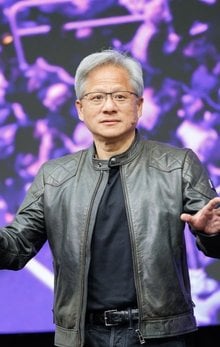
CEO: Jensen Huang
HQ: California, USA
Employees: 30,000+

Nvidia Omniverse takes the top spot by fundamentally redefining what a digital twin can be, as it is a platform that connects all other platforms.
Built on the Universal Scene Description (OpenUSD) standard, Omniverse enables interoperability between disparate software – letting a Siemens factory model, an Autodesk building design and an Ansys simulation coexist in a single, photorealistic virtual world.
Powered by Nvidia’s massive GPU infrastructure, Omniverse offers physically accurate, real-time ray tracing.
It is the engine of the Industrial Metaverse, used by companies like BMW and Amazon Robotics to train AI robots in virtual environments before deployment.








Executives
Andrew Anagnost
President and Chief Executive Officer
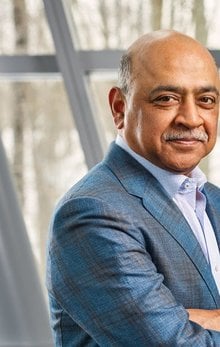
Arvind Krishna
CEO
Jensen Huang
Founder and CEO

Neil Barua
CEO
Nicholas Cumins
Chief Executive Officer

Pascal Daloz
CEO
Roland Busch
President and CEO of Siemens AG
Sassine Ghazi
President and Chief Executive Officer
Satya Nadella
Chairman and CEO
Scott Strazik
Chief Executive Officer