Can Anthropic or OpenAI Help Apple Catch Up in the AI Race?
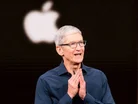
In June, Apple held its flagship annual live event, the Worldwide Developers Conference (WWDC), at its headquarters in Cupertino, California.
In years gone by, Apple has used the WWDC to announce the innovations that it has been working on. It was here that Steve Jobs first announced the launch of Safari, Apple’s own web browser.
But this year’s event felt a little underwhelming to some industry observers.
While other heavyweights in the tech sector have been announcing huge innovations in AI, Apple’s updates were limited to a new operating system and a new design language known as ‘Liquid Glass’.
However, that might be about to change.
This week, Bloomberg reported that Apple is actively exploring partnerships with firms like Anthropic and OpenAI with the aim of producing a reimagined version of Siri.
Siri, launched in 2011, has increasingly fallen behind competitors like Google Assistant and Amazon’s Alexa in terms of conversational ability and query handling.
So while this move could result in a huge boost for Apple’s voice-powered virtual assistant, it also comes with an acknowledgement that Apple is struggling to keep pace with its rivals in the AI economy.

Apple breaks with tradition to explore outsourcing
In the past, Apple has kept the development of its core technologies in-house, so this move is a departure from tradition.
According to Bloomberg, Apple has made contact with the makers of the ChatGPT and Claude chatbots to discuss incorporating their LLMs into Siri’s architecture, as it looks to kickstart a new era for its products.
The iPhone maker has specifically requested that both companies develop customised versions of their AI systems capable of running on Apple's proprietary cloud infrastructure for testing purposes.
This approach would allow Apple to maintain some control over user data whilst leveraging more advanced AI capabilities than its current homegrown models provide.
Is this move a result of Apple’s leadership changes?
The evaluation of external AI models stems from recent leadership changes within Apple's AI division.
Recently, Apple’s AI division has been through a bit of a shake-up.
Mike Rockwell (who was previously heading up the development of Apple's Vision Pro headset) assumed control of Siri engineering in March following a series of reshuffles in Apple’s management team.
Craig Federighi, Apple's Head of Software Engineering, is now sharing the oversight of Siri alongside Mike.
Both execs were given these responsibilities after John Giannandrea, Apple's Chief of AI, was sidelined following lukewarm reception to Apple Intelligence features and persistent delays in Siri improvements.
Is Anthropic favourite for the partnership?
Following a few extensive testing rounds, Apple’s team have concluded that Anthropic's Claude technology shows the most promise for Siri’s requirements thus far.
According to Bloomberg, these assessments prompted Adrian Perica, Apple’s VP of Corporate Development, to initiate formal discussions with Anthropic about licensing Claude.
The preference for Anthropic’s technology could potentially reshape how millions of iPhone users interact with their devices on a daily basis.
However, despite the technical compatibility between Apple and Anthropic’s technologies, the two companies have reportedly been unable to agree financial terms so far.
Anthropic is said to be seeking a multi-billion-dollar annual licensing fee, along with significant yearly increases.
These financial demands have left Apple considering alternative partnerships with OpenAI or other AI providers should negotiations with Anthropic remain at an impasse.
What this says about Apple today
Bloomberg’s report details how Apple’s desire to outsource its AI R&D has created a degree of discomfort among Apple’s internal AI team.
Some engineers within the roughly 100-person foundation models team, led by distinguished engineer Ruoming Pang, are reported to have expressed their concerns about the company's apparent lack of confidence in their work.
Team members have indicated they might seek opportunities elsewhere, with competitors like Meta offering annual packages worth US$11–44m to attract top AI talent.
Aside from Sir Jony Ive, Apple has recently lost Senior Researcher Tom Gunter, who spent eight years with the company, which suggests that retention is becoming a problem for the California-based company.
“Apple wants Siri to be smarter,” says Jess Ahmet, Senior Data Analyst at Immersive, “but it can’t do it alone anymore.”
“Apple built its reputation on control, secrecy and moving at its own pace.
“But the world isn’t waiting. Microsoft, Google, Meta — they’re pushing out updates, grabbing headlines and redefining how we use AI every day.”
It's hard to imagine Apple turning to Anthropic or OpenAI to effectively outsource its AI development, if Steve Jobs was still around,” says Dylan Jones, Managing Partner at Boldsquare.
“Letting someone else’s AI power Siri is more than a product decision - it seems to me more like a window into what Apple now believes it does well, and what it doesn’t.”