What is Apple’s Liquid Glass & Will it Capture Imaginations?
This week, the tech world has descended on Cupertino, California, as Apple hosts its annual Worldwide Developers Conference (WWDC) at Apple Park.
Each year, Apple has techies in a fervour as it announces new products, operating systems, strategies or discoveries – and this year is no different.
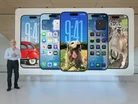
Whilst not the most revolutionary change in Apple’s history, the tech giant has announced the launch of iOS 26, designed to be more beautiful than radical.
Alan Dye, Apple’s Vice President of Human Interface Design, says that iOS 26 will be the company’s “broadest software design update ever”.
Part of the design is an entirely new material and visual language, which Apple is calling ‘Liquid Glass’.
“It combines the optical qualities of glass with a fluidity only Apple can achieve, as it transforms depending on your content or context,” Alan explains.
“It lays the foundation for new experiences in the future and, ultimately, it makes even the simplest of interactions more fun and magical.”

An aesthetic overhaul
The new Liquid Glass material will appear across all of Apple's operating systems, including iOS 26, iPadOS 26, macOS Tahoe 26, watchOS 26 and tvOS 26.
This marks the first time Apple has implemented a truly universal design language that spans every platform whilst maintaining each system's unique characteristics.
The design philosophy centres on creating deeper integration between hardware and software to make technology interactions more intuitive and aesthetically pleasing.
The Liquid Glass material combines the optical qualities of real glass with a fluid, dynamic behaviour that is designed to respond to content and context.
The material is translucent, reflecting and refracting its surroundings. Apple hopes it will contribute to an immersive user experience.
But while the designs are certainly different, some attendees of WWDC — like student Akul Shrivastav — walked away with “mixed feelings”.
“On one hand, Apple continues to do what it does best: polish, integrate, and present existing ideas in a way that feels seamless and magical,” Akul says.
“But let’s be honest—many of these ideas aren’t new.
“Apple is great at curating. But curation isn’t the same as creation.”
With one of the firm's chief innovators, Sir Jony Ive, leaving the Apple to join OpenAI, the iPhone manufacturer is hoping it can retain its market leading reputation.
Beyond visual design
While Liquid Glass has stolen most of the limelight, Apple also announced an array of practical changes that will come into play across its products in the coming months.
For instance, iOS 26 is the first Apple operating system to have live language translation capabilities directly within Messages and phone calls.
Apple Intelligence, the company's AI model, will be further integrated into Apple products with some interesting deployments in creative applications. Apps like Genmoji and Image Playground will be powered by ChatGPT, helping users to create visual content quicker than ever.
And Apple’s Phone app will now also function on Macs, allowing users to call and receive across their devices, which has been a pain point in years gone by.
These features will be welcome additions to Apple’s products, but it’s hard not to compare them with the transformational changes brought about by market leaders in recent memory.
In the past few months, companies like Google, OpenAI and Nvidia have either announced or launched paradigm-shifting technologies that have turned the dial on AI.
Some observers feel as though Apple is falling behind.
“When you look at how the competition is both developing solutions and monetising their AI initiatives, it feels like the clock is ticking faster for Apple every day,” says Thomas Monteiro, Head of Finance Content at Investing.com.
“Particularly as macro risks like tariffs and tensions with China threaten to dampen Apple’s projected hardware sales growth, the software side needs to pick up the slack — offering the company more flexibility on pricing and margins.
“But it still feels like Apple is rolling as if it’s 2021.”
Explore the latest edition of Technology Magazine and be part of the conversation at our global conference series, Tech & AI LIVE.
Discover all our upcoming events and secure your tickets today.
Technology Magazine is a BizClik brand