
Tennis, Tradition & Technology: Inside Wimbledon’s AI Era
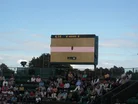
There are few things more quintessentially British than Wimbledon.
At the end of June each year, thousands of tennis fanatics make the pilgrimage to this sunny corner of Southwest London, ready to revel in the world’s oldest tennis tournament.
Throughout its 148-year history, Wimbledon’s organisers have been dedicated to preserving the traditions that have become an integral part of the event’s identity.
Whether it’s the players' all-white uniforms, the strawberries and cream or the Royal Box, the traditions of Wimbledon make it distinct from any other tennis tournament.
Since its inception in 1877, one of the most iconic symbols of Wimbledon has been its sharply-dressed line judges.
The officials — always garbed in striped shirts, white trousers and ties — have populated the perimeters of Wimbledon’s courts right from the start, assisting the umpires with their eagle-eyed judgements.
However, this year’s tournament will break this tradition for the first time, with AI ball tracking replacing line judges from 2025 onwards.
Technology usurps tradition at Wimbledon
While Wimbledon is steeped in tradition, it is no stranger to innovation.
Since the turn of the millennium, SW19 has welcomed a mechanical roof for Centre Court, Hawk-Eye challenges and AI commentary options. Attendees can even consume Wimbledon classic strawberries and cream in sandwich form now.
The All England Club's decision to swap its line judges for AI calls follows the ATP Tour's complete adoption of automated line calling across all events this season.
Meanwhile, the WTA has implemented the technology at numerous tournaments.
The ATP has said that the move to electronic line calling is designed to “optimise accuracy and consistency across tournaments, match courts and surfaces”.
The technology uses cameras, computers and sensors to track ball trajectories, determining whether shots landed in or out without the need for human intervention.
Unlike other tournaments using standardised automated voices, Wimbledon will employ staff members to provide the electronic calls.
“We will use different voices on different courts so there is no confusion across courts that are close together,” says Eloise Tyson, Head of Communications at Wimbledon.
The voices will include tour guides and behind-the-scenes Championship workers, though the tournament has emphasised it will not make individuals the face of electronic line calling.
How will players adapt to the technology?
The transition has created unexpected complications for players as they adjust to automated officiating.
British #1 Jack Draper experienced some confusion at Queen's Club earlier this summer when the automated calls were drowned out by crowd noise during a crucial set point.
“They have used very calm voices — it sort of sounds like the voice isn't sure,” former line judge Pauline Eyre, who worked the lines at Wimbledon for 16 years, told BBC Sport.
“Sort of like it's saying 'out… I think'. It feels a bit awkward.”
Britain’s Sonay Kartal also had difficulties with the tech at the Australian Open earlier in the year, where she could hear automated calls from adjacent courts, leading to confusion and players stopping points unnecessarily.
Nevertheless, the unquestionable accuracy of AI will far outweigh that of human officials, meaning we’re unlikely to hear the ire of players like John McEnroe, who infamously remonstrated with officials at the 1981 tournament.

The future of AI in sport
As of this year, Roland Garros remains the only Grand Slam tennis tournament to retain human line judges, with the organisers citing the preservation of tradition as their primary motivation.
The French Open continues to prohibit electronic replay challenges, maintaining human decision-making throughout matches.
Malgorzata Grzyb, Chair of the Association of British Tennis Officials, says that tennis officials will have to change the way they are trained as AI becomes a larger part of the equation.
“Instead of starting solely as line umpires, new officials now receive training in both line and chair umpiring from the outset, enabling them to progress more rapidly to chair umpire roles,” he explains.
Perhaps unsurprisingly, John McEnroe believes that technology should fully replace umpires and judges when the time is right.
Elsewhere, chair umpire Thomas Sweeney, who oversees matches at tennis's highest level, believes human officials will always be an essential part of the sport.
“There will always be that need to have a human to facilitate at the end of where technology has its limitations,” he says.
“There are aspects to life that can't be prepared for, and you need that human to be able to absorb pressure, provide the opportunity for understanding and empathy for a player.”
Explore the latest edition of Technology Magazine and be part of the conversation at our global conference series, Tech & AI LIVE.
Discover all our upcoming events and secure your tickets today.
Technology Magazine is a BizClik brand