This Week's Top 5 Stories in Technology
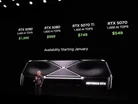
CES: How Physical AI is Transforming Global Industries
The integration of AI into physical systems is developing as companies move beyond chatbots and digital assistants to address real-world challenges in manufacturing, healthcare and transport.
This transition is coming as advances in computing power and robotics enable AI systems to interact with and manipulate physical environments.
The semiconductor industry has responded to this evolution by developing specialised processors that can handle the computational demands of physical AI applications.
In this context, the Consumer Electronics Show in Las Vegas has highlighted the transition in AI from digital applications to physical world implementations, with major technology firms unveiling systems designed to bridge the gap between software capabilities and practical deployment.
Nvidia: Behind DeepSeek's 'Excellent AI Advancement'
The race for AI dominance between China and the US is taking an unexpected turn. While US companies have focused on pushing raw computational power, Chinese startup DeepSeek has emerged with a different approach. The company’s R1 model claims to match leading AI systems while using fewer high-end chips – challenging the assumption that more computing power equals better AI.
The implications hit the market hard. Nvidia, whose chips power most advanced AI systems, saw US$600bn wiped from its value on Monday. It's a particular blow given the US's recent restrictions on chip exports to China, which were meant to slow Chinese AI development.
DeepSeek’s efficient approach raises questions about the future of AI development. If the company’s claims hold up, companies might need to rethink their reliance on increasingly expensive semiconductor hardware. For the global chip market, this shift in thinking could reshape how high-performance computing evolves.
As the AI race hots up, the key question isn’t just about US-China competition – but about whether DeepSeek’s rise signals a phase where efficiency matters more than raw power.
How Google's AI Tools Are Revolutionising Education Tech
Since the global shift to remote learning in 2020 as a result of the Covid-19 pandemic, the global education technology sector has fundamentally changed as major technology companies have intensified their focus on classroom solutions, particularly in areas of AI integration and device management.
For instance, Microsoft's recent expansion of its Teams for Education platform and Apple's classroom management updates have heightened competition in the education technology market.

Now, Google, which maintains a significant share of the US education device market through its Chromebook programme, has responded with an update to its education technology platform.
Meta Plans Record $65bn AI Investment and 2GW Data Centre
The race to build AI infrastructure has entered a new phase as technology companies commit hundreds of billions of dollars to develop the computing capacity needed for next-generation AI systems.
The sector faces unprecedented demand for computing power as companies develop more sophisticated AI models.
Traditional data centres, designed for web hosting and cloud computing, lack the specialised hardware and power supply needed to train and run these systems.
Amid this ever-growing demand, Meta has announced plans to invest US$65bn in AI infrastructure during 2025, including a new data centre with power consumption equivalent to two nuclear power stations.
How Microsoft and Xbox Plan to Transform Sustainable Gaming
Global technology companies face mounting pressure to extend the lifespan of consumer electronics as environmental regulators and customers demand improved repairability of devices.
- Nearly 700 uBreakiFix locations now offer Xbox repairs across the US
- Xbox reduced power consumption by 10% across media applications on Series S consoles
- 1.2 million metric tons of CO2e emissions prevented between 2020-2023
The EU implemented right-to-repair legislation in 2021, while individual US states have enacted similar measures.
Now, Microsoft has responded to these changes by expanding its Xbox console repair programme across the United States through a new partnership with electronics repair chain uBreakiFix by Asurion.
Explore the latest edition of Technology Magazine and be part of the conversation at our global conference series, Tech & AI LIVE.
Discover all our upcoming events and secure your tickets today.
Technology Magazine is a BizClik brand