Why the US Senate Has Voted Down Trump’s AI Moratorium 99-1
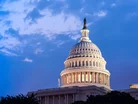
The US Senate has delivered a resounding rejection of proposed regulation restrictions around AI, voting 99-1 to remove a controversial 10-year moratorium from US President Donald Trump’s ‘Big Beautiful Bill’, which focuses on domestic policy.
The moratorium would have effectively barred states from enforcing laws relating to AI for a decade, including regulations addressing sexually explicit deepfakes and political manipulation technologies.
Overwhelming bipartisan opposition to the moratorium
The amendment to strike the moratorium received support from senators across party lines, with co-sponsors including Senators Ed Markey, Maria Cantwell and Marsha Blackburn.
“This 99-1 vote sent a clear message that Congress will not sell out our kids and local communities in order to pad the pockets of Big Tech billionaires,” Ed said following the vote.
The moratorium had previously been tied to federal funding for internet infrastructure deployment by Senate Commerce Committee Republicans earlier this month.
The Senate’s decision has been welcomed by technology regulation specialists, many of whom have been speaking up about the issues surrounding AI governance.
Luiza Jarovsky, Co-Founder of the AI, Tech & Privacy Academy, acknowledges that while the motion is a good start, this is not the end of the road.
“Ideally, the next step would be a comprehensive federal law regulating AI,” she says.
This 99-1 vote sent a clear message that Congress will not sell out our kids and local communities in order to pad the pockets of Big Tech billionaires.
“However, given how things have progressed in the privacy field, I'm not so hopeful.
“At least, US states will be able to continue doing their job and regulating AI, although in a fragmented manner.”
The role of grassroots advocacy in this outcome
According to campaign organisers, the swift mobilisation of advocacy groups played an important role in the Senate’s decision.
Zamaan Qureshi, Senior Campaigns Associate at Accountable Tech, emphasises the collective effort.
“There are countless names to thank for their tireless work to kill the disastrous AI moratorium in the Senate that crashed in a 99-1 vote because of the relentless advocacy of advocates, organisations, parents, Senators and staff,” he says.
“We can move mountains, as we did in a matter of a day or so, to prevent the passage of a significant provision in the reconciliation package that threatened to do a decade of harm.”
Berkeley faculty lecturer Deb Donig highlights the vote’s significance beyond AI policy.
“This is a fascinating and important change in the trajectory of AI regulation, and the failure of the provision may have important implications for both the future of AI regulation, as well as the future of state rights,” she explains.
“It's also important to recognise the work of political and civil rights action groups in this moment.
“Now, perhaps more than ever, we are seeing the importance of grassroots political movements in impacting the future of tech regulation.”
Concerns regarding copyright have been central to the collection opposition of the White House’s proposed AI moratorium.
Many AI models are trained using copyrighted literature, art and music, which has sparked legal conflicts over intellectual property rights.

By freezing the moratorium for a decade, the US Senate has gone some distance towards protecting the IP of American creators.
Sam Altman, CEO of OpenAI and creator of ChatGPT, believes that artists have a right to be concerned and that, if they wish to offer their works to train AI models, they should be fairly compensated.
“If I was an artist, a) I would like to be able to opt out of people generating art in my style and b) if they do generate art in my style I’d like to have some kind of economic model associated with that,” he said in an interview.
The path forward remains uncertain
The domestic policy bill must return to the House of Representatives following Senate modifications, potentially delaying Trump’s target of signing legislation by 4 July, 2025.
Representative Marjorie Taylor Greene had previously threatened to oppose the bill unless the AI moratorium provision was removed.
Ilana Beller from Public Citizen welcomes the outcome.
“State legislatures all across the country have done critical bipartisan work to protect the American people from some of the most dangerous harms of AI technology,” she says.
“The defeat of this moratorium will mean vital protections remain in place for millions of Americans.”