50 Years of Apple: From a Garage to a Global Giant
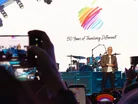
Apple is celebrating its 50th anniversary this week, marking a half-century since its humble beginnings in a suburban garage.
Originally named Apple Computer, the company was founded on 1 April 1976 by Steve Jobs, Steve Wozniak and Ronald Wayne.
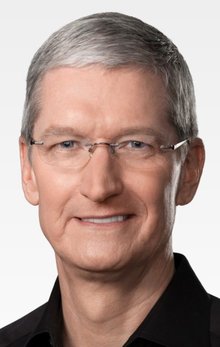
“Thinking different has always been at the heart of Apple,” says Tim Cook, Apple’s CEO.
“It’s what has driven us to create products that empower people to express themselves, to connect and to create something wonderful.
“As we celebrate 50 years, we are deeply grateful to everyone who has been part of this journey and who continues to inspire what comes next.”
To appreciate Apple’s current heights, one must return to the 1970s and the sparked revolution of its founding era.
The early years: personal computing
In 1977, the first mass-market personal computer, Apple II, was launched, establishing the company’s reputation for combining powerful technology with intuitive design.
Then, in 1983, Apple developed the Apple Lisa. This computer was groundbreaking for its graphical user interface and mouse, but its nearly US$10,000 price tag made it a commercial failure.
However, Apple learned from the Lisa’s failure very quickly, bringing the Macintosh to market in 1984 at a more consumer-friendly price of US$2,495.
Arguably, the Macintosh defined the PC industry with its user-friendly interface.
The digital lifestyle revolution
The 2000s presented Apple with an opportunity to redefine the mobile experience by pivoting from a computer manufacturer into a lifestyle and digital services powerhouse.
In 2001, the iPod came to market.
Although it wasn’t the first portable MP3 player – South Korean software companies SaeHan Information Systems and Cowon Systems introduced these as early as 1998 – the sleek design of the iPod and the later introduction of the iTunes Store revolutionised how the world legally consumed digital music.
Then, the iPhone changed the world in 2007, described by Steve Jobs as “an iPod, a phone and an internet communicator” all in one.
Apple now sells roughly seven iPhones every second.
In 2008, Apple launched the App Store, a service that transformed the iPhone from a simple gadget into a versatile platform and sparked a multi-billion-dollar app economy.
This was followed in 2010 by the release of the iPad, a standout hit that successfully carved out a new product category by bridging the gap between the smartphone and the laptop.
The post-Jobs era
iCloud, Apple’s cloud-based storage and synchronisation service, was launched shortly before Steve Jobs’ death in 2011.
iCloud connects all the photos, files and settings across a customer’s devices, making it so convenient that switching to a different brand feels like a chore.

In 2014, the company made a significant move into financial services by launching Apple Pay, which integrated hardware-based security directly into everyday consumer transactions.
The following year marked a prolific turning point under Tim Cook’s leadership with the debut of the Apple Watch, the firm’s first major new product category of the post-Jobs era.

While the Watch became a massive success – eventually generating roughly US$15 bn in annual revenue as the world’s top-selling smartwatch – 2015 also saw the introduction of the ‘butterfly’ keyboard.
This design was ultimately viewed as a rare reliability misstep, with critics accusing the company of prioritising thinness over durability until the mechanism was scrapped in 2019.
Simultaneously, the brand evolved its music legacy by launching Apple Music, transitioning the traditional iTunes model into a streaming powerhouse that now hosts a library of over 100 million songs.
The 2020s
Throughout the decade, Apple maintained its dominance by consistently refining its flagship smartphone, ensuring that each new iteration of the iPhone further cemented its place as the essential hub of the modern digital lifestyle with pro-level camera systems and Apple Intelligence, which automates everyday tasks.
In 2024, the company made a high-stakes bet on spatial computing with the release of the Apple Vision Pro.
Although the headset was considered a technical marvel, many analysts ultimately labelled it a miss because its US$3,500 price and cumbersome design resulted in sluggish consumer demand.
Now, as Apple celebrates its 50th anniversary in 2026, the tech giant enters its next half-century by shifting its primary focus away from pure hardware toward a dream sustained by deep brand loyalty and a sprawling web of integrated services.
Its strategy focuses on a continuous cycle of internal chip design and software aimed at deepening the brand’s presence in the daily lives of its customers.
The company is also framing its future through the lens of corporate responsibility by codifying environmental sustainability, education and global community impact as core benchmarks.
“At Apple, we’re more focused on building tomorrow than remembering yesterday,” Tim says.
“But we couldn’t let this milestone pass without thanking the millions of people who make Apple what it is today – our incredible teams around the world, our developer community and every customer who has joined us on this journey.
“Your ideas inspire our work. Your trust drives us to do better. Your stories remind us of all we can accomplish when we think different.”