
Can Amazon Challenge SpaceX with US$11.6bn Globalstar Deal?
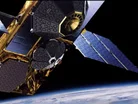
SpaceX’s grip on the satellite market is absolute. With Starlink accounting for two out of every three active satellites, the company’s infrastructure is unparalleled.
Recent reports highlight this massive lead, noting that SpaceX put 650 satellites into LEO in 18 months. In contrast, Amazon has taken seven years to get just 200 satellites off the ground, illustrating the huge scale Starlink has already achieved.
Yet Amazon is positioning itself to challenge that lead. In his annual letter to shareholders last week, CEO Andy Jassy said the company’s LEO broadband service – Amazon Leo – will begin launching in mid-2026.
Crucially, Amazon has confirmed its US$11.57bn acquisition of satellite communications company Globalstar, valued at US$10bn, a move bringing established spectrum rights, ground infrastructure and operational expertise into the fold.
Amazon says the deal will help it add a “few thousand” satellites over the coming years, establishing it as the third-largest LEO network.
A widening but surmountable gap
On paper, Starlink’s head start remains imposing.
Jonathan McDowell, an astronomer at the Harvard-Smithsonian Center for Astrophysics, puts Starlink at roughly two-thirds of all active satellites, and its recent launch rate outpaces Amazon’s by a wide margin.

Nevertheless, Andy said Amazon Leo already had commitments from Delta Air Lines, JetBlue, AT&T, Vodafone, DIRECTV Latin America, Australia’s National Broadband Network and NASA – an early customer roster that spans aviation, telecoms and public sector.
Globalstar adds further momentum. Founded in 1991, the company operates internationally with infrastructure in California and Georgia in the US, as well as Dublin, Rio de Janeiro and Toulouse.
Folding those assets into Amazon’s satellite programme could shorten time-to-market and accelerate service availability once spacecraft are in orbit.

A device-first play with Apple
Amazon has also revealed a long-term agreement with Apple for Amazon Leo to power satellite services on supported iPhone and Apple Watch models.
The aim is to enable features such as texting emergency services, messaging friends and family and requesting roadside assistance, extending connectivity to users when terrestrial coverage falls short.
Apple is already a Globalstar customer, meaning these services would transition to Amazon’s stewardship once the deal closes.
Industry observers say the strategy marks a sharp departure from Starlink’s go-to-market.
“The device-first approach changes the unit economics completely,” says Keith Modzelewski, former Chief Revenue Officer at Confidential Energy Company.
“Starlink went telco-first and is now fighting for carrier relationships in every market. Amazon is going direct to the hardware endpoint through Apple, a fundamentally different distribution motion that bypasses 18 months of carrier negotiation entirely.
“For anyone deploying hardware in remote or low-connectivity environments, the addressable market for always-on compute just got a lot larger.”
Gert Skov Peterson, CEO at Mediathand, adds: “Starlink went telco-first with T-Mobile. Amazon is going device-first with Apple. That’s a much more interesting game and a potentially stronger position long term. Makes the upcoming Starlink IPO much more interesting to follow.”
What’s at stake in the LEO race
Andy ended his letter by expressing confidence that these satellite investments will drive meaningful growth and attractive returns on invested capital, while furthering Amazon’s goal of closing the digital divide for rural communities lacking broadband.
The challenge is formidable: Starlink represents roughly 50–80% of SpaceX’s revenue, according to Reuters, and its scale advantages are real.
But if Amazon executes on the Globalstar integration, delivers on its Apple partnership and hits its 2026 deployment timeline, it is poised to become Starlink’s most credible rival – turning today’s runaway into tomorrow’s two-horse race.