Musk Says TeraFab is the Answer to Powering the AI Future
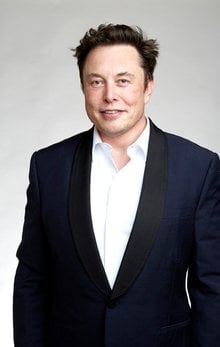
Elon Musk’s TeraFab project is a new initiative that integrates chip design, mask fabrication, manufacturing, testing, packaging and iterative optimisation all under one roof.
Unveiling his plans for the facility on 21 March at the defunct Seaholm Power Plant in Austin, Texas, Musk declared the venture “the most epic chip-building exercise in history so far”.
The TeraFab facility will be a collaborative effort from Tesla, xAI and SpaceX with the goal of producing more than one terawatt (TW) of compute per year.
The project aims to allocate approximately 80% of this massive capacity for space-based operations, reserving the remaining 20% for ground applications.
He compares the project to the best science fiction you’ve ever read. “Let’s turn science fiction into science fact,” he says.

Musk says the expansion is a necessity because existing global semiconductor fabrication plants currently provide only 2% of the total compute required for the TeraFab project.
While expressing appreciation for current supply chain partners – including Samsung, TSMC and Micron – Musk notes the industry’s expansion rate is significantly slower than desired.
“All of the fabs on Earth only provide 2% of what we need for the TeraFab project […] we’re very grateful to our existing supply chain, we would like them to expand as quickly as they can and we will buy all of their chips.”
But the expansion rate is much less than Musk would like so they need to build their own, beginning with the Advanced Technology Fab in Austin. This will provide all the equipment needed to make any trip and make the lithography masks.
This shortfall prompted the decision to build their own capacity, starting with the Advanced Technology Fab in Austin.
The facility, which will integrate all equipment necessary for chip production and lithography mask creation, represents a setup that “doesn’t exist anywhere else in the world”.
Musk says that the Advanced Technology Fab is the start of a scaling effort for humanity to become a “galactic civilisation”, a goal he divides into three stages: harnessing all energy on a planet, all energy from a star, and all energy in a galaxy.
"The way to scale civilisation is to scale power in space," he says, emphasising that Earth captures only a tiny fraction of the sun’s energy.
Musk encourages the audience to embrace the vision, urging them to “turn science fiction to science fact”.
Deploying AI chips in space offers considerable efficiency and cost advantages.
In space, chips can rely on solar power, reducing battery power needs and receiving at least five times the solar energy without atmospheric attenuation, day/night cycles or seasonality.
Musk highlights that while “increasing power on earth has become harder and more expensive over time”, scaling compute power in space proves both easier and cheaper.
The advanced chips will specifically include two types: one optimised for edge and inference applications, intended for Tesla’s Optimus humanoid robots and cars.
Musk projects that humanoid robot production will eventually surpass vehicle volume by 10 to 100 times, expecting production volumes of 1 to 10 billion units per year, with Tesla manufacturing a “very high percentage of those”.