Huawei Cloud Targets 30,000 AI Talents in Malaysia Push
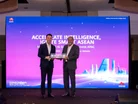
Huawei Cloud has announced plans to develop 30,000 AI professionals in Malaysia over the next three years, alongside nurturing 200 local AI partners through its Malaysia AI Talent Programme.
The initiative, announced at the Huawei Cloud AI Ecosystem Summit APAC 2025 in Kuala Lumpur, forms part of Huawei’s broader APAC AI Ecosystem Initiative, designed to build what the company describes as an inclusive AI ecosystem across the region.
“We have set the goal of nurturing 30,000 Malaysian AI talents, comprising students, Government officials, industry leaders, think tanks, associations and others, under this initiative in the coming three years,” says Chief Executive Officer of Huawei Technologies (Malaysia) Sdn Bhd Simon Sun. “We also plan to nurture 200 local AI partners through engagements, knowledge transfers as well as Cloud and AI solution collaborations with top AI companies.
“Huawei Cloud will also be the bridge to encourage AI investments in Malaysia, spurring homegrown AI innovation and solutions via tie ups with local players as well as through the inception of new Malaysian AI entities,” he adds.
Malaysian Government accelerates AI regulation framework
Malaysia’s National AI Office is completing its AI Technology Action Plan 2026–2030 as the country pushes to establish AI adoption frameworks across key sectors. Minister of Digital Malaysia Gobind Singh Deo attended the summit and outlined the government’s approach to AI development.

“Our National AI Office (NAIO) has been speeding up the completion of the AI Technology Action Plan 2026–2030 and relevant regulatory frameworks to ensure the adoption of AI technology in key sectors in the country are ethical, sustainable and of high value,” he says.
The minister linked Malaysia’s AI strategy to the Digital Economy Blueprint and Malaysia Digital initiative. He positioned the work as part of regional development rather than purely national progress.
Singh Deo adds: “Central to this ambition is Malaysia’s Digital Economy Blueprint, powered by initiatives like Malaysia Digital (MD). These efforts are amplified through strategic collaborations with technology leaders like Huawei. Every step we take is action-driven, grounded in strong public-private collaborations, to shape Malaysia's digital economy.”
- Huawei Cloud targets 30,000 AI talents in Malaysia push Company unveils plans to nurture 200 AI partners across ASEAN region as part of broader ecosystem initiative at Kuala Lumpur summit Key Facts
- Company operates five regions and 17 availability zones across ASEAN markets
- Pangu Models deployed across 30 industries and 500 scenarios globally
“Our National AI Office (NAIO) has been speeding up the completion of the AI Technology Action Plan 2026–2030 and relevant regulatory frameworks to ensure the adoption of AI technology in key sectors in the country are ethical, sustainable and of high value,” he says.
The minister linked Malaysia’s AI strategy to the Digital Economy Blueprint and Malaysia Digital initiative. He positioned the work as part of regional development rather than purely national progress.
Singh Deo adds: “Central to this ambition is Malaysia’s Digital Economy Blueprint, powered by initiatives like Malaysia Digital (MD). These efforts are amplified through strategic collaborations with technology leaders like Huawei. Every step we take is action-driven, grounded in strong public-private collaborations, to shape Malaysia's digital economy.”
We have set the goal of nurturing 30,000 Malaysian AI talents, comprising students, Government officials, industry leaders, think tanks, associations and others, under this initiative in the coming three years.
Prime Minister Dato Seri Anwar Ibrahim attended the ASEAN AI Summit opening, where Sun first announced the Huawei Cloud APAC AI Ecosystem Initiative. The Prime Minister’s attendance signals government backing for AI development through public-private partnerships.
Huawei Cloud operates five ASEAN regions
Huawei Cloud runs infrastructure across 34 regions globally, with five regions and 17 availability zones in ASEAN. The company has operated in the region for 26 years, with its cloud services running for seven years.
Aka Dai, VP of Huawei Cloud Marketing, spoke at the summit about ASEAN’s position in global AI development. Dai positioned intelligence as a definitive trend, with cloud and AI as the core engines driving innovation and growth. He says ASEAN countries are building what he calls an “AI region” to capitalise on these trends.
Aka says: “Huawei has invested in ASEAN for 26 years, and Huawei Cloud has served the region for seven years. We will ramp up local investments as well as provide diverse, agile, and inclusive cloud and AI technologies to help boost regional economic growth, enhance competitiveness, and improve social well-being.”
The company’s AI Cloud Service supports over 160 open-source models, with Huawei Cloud providing what it describes as ultra-low latency through its regional infrastructure.
Dai delivered a keynote titled “Accelerate Intelligence, Ignite Smart ASEAN” on the first day of the ASEAN AI Summit, where he emphasised that ASEAN is seizing what he describes as a strategic opportunity in AI development.
Huawei Pangu models target 30 industries across 500 scenarios
Huawei Cloud’s Pangu models work with the company’s ModelArts AI toolchain to help businesses develop custom AI applications. Li Yin, Chief Technology Officer of Huawei Cloud Enterprise Intelligence, says the company has deployed AI across more than 30 industries and 500 scenarios worldwide.

Li spoke about Huawei Cloud’s approach to industry AI applications in a session called “Leap to Cloud, Heading to AI.” She outlined how companies can use their data to build custom models through the Pangu foundational large model and ModelArts AI toolchain.
Li says enterprises can “use their own data assets to rapidly develop customised AI models for high-quality incremental training, fine-tuning and reinforcement learning.”
The Pangu foundational large model enables businesses to develop applications for sectors including smart cities, mining, railways, healthcare and manufacturing. Li outlined three investment priorities for Huawei Cloud: strengthening AI computing foundations, applying ModelArts and Pangu language model to business solutions such as enterprise AI assistants and AI video applications, and working with partners to grow the ecosystem.
The summit included speakers from Malaysia’s National AI Office, iFLYTEK, Zetrix, TrustDecision Malaysia and Multimedia University Malaysia. Head of the National AI Office Shamsul Izhan Abdul Majid spoke alongside William Zhou, Vice President of iFLYTEK Open Platform, Dato Fadzli Shah, Co-founder of Zetrix, Henry Li Nan, Managing Director of TrustDecision Malaysia and Professor Ts. Dr. Ting Choo Yee from Multimedia University Malaysia.
The talent development programme represents a significant commitment to the Malaysian market. Singh Deo says: “Our efforts are not just for national progress but are also critical to the broader ASEAN region.”