Inside Fujitsu’s Five-Pillar Strategy for Future Tech
Fujitsu will hit its 100th anniversary in 2035 and, in preparation for that milestone, it plans to strengthen its AI, quantum, computing and security technologies.
While the tech giant has already fused AI and computing into its overarching strategy, the Fujitsu Technology and Service Vision 2026, published 18 June, maps out the direction and practical application of this technology evolution.
The document outlines the changes needed for organisations to achieve true transformation so they can operate successfully through periods of ongoing volatility.
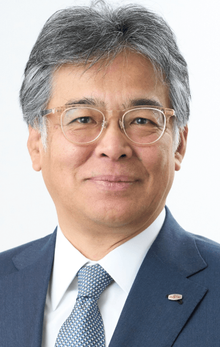
“The world is facing severe challenges, including geopolitical divisions, the growing impact of climate change and a shrinking workforce,” writes Takahito Tokita, Representative Director and CEO of Fujitsu.
“At the same time, rapid technology evolution, particularly around AI, is disrupting industrial structures and rewriting established rules and values.
“In these fast changing, unpredictable times, it’s challenging for any organisation to provide accurate growth forecasts.
"It’s therefore essential to reassure internal and external stakeholders by setting out a clear vision that describes the organisation’s growth strategy and its ongoing contribution to business and society.”
The shifting threat landscape
To understand the catalyst behind this roadmap, Fujitsu surveyed 1,000 CxOs across North America, Europe and APAC.
The findings show executives now regard the intensification of cyberattacks as the most significant threat to business, beating geopolitical tensions, financial market instability, natural disasters and declining labour forces.
Simultaneously, technology adoption is moving at a breakneck pace. The survey shows that the rate of AI adoption in office work already exceeds 40%, with over 90% of organisations planning to apply AI across their office operations within the next three years.
AI is also rapidly evolving into physical AI, which is capable of understanding and controlling operations in the real world. While the current adoption rate of AI and robotics sits at around 30%, nearly 90% of respondents plan to pursue automation using these technologies over the next three years.
To overcome these intersecting disruptions, Fujitsu notes organisations need to manage and execute based on continuous adaptation and learning, rather than rigid, long-term planning.
Furthermore, instead of using technology primarily for efficiency improvements, it must be leveraged as the foundation for value creation and decision-making.
Fujitsu identifies four key dynamics that will help organisations to drive this transformation:
- Enabling people and AI to collaborate during cycles of experimentation and learning to gain new knowledge
- Leveraging evolving computer power
- Applying physical AI to translate experimentation and learning into real-time frontline operations
- Leveraging security and trust technologies.
The five key technology pillars (2026 to 2035)
To support this vision, Fujitsu’s R&D efforts will concentrate across five foundational technology pillars over the next decade, including AI, physical AI, quantum, computing and security.
In the near term around 2026, Fujitsu’s AI strategy focuses heavily on LLMs, foundation models and domain-specific AI agents.
Over time, this will transition into orchestrating AI through agent collaboration alongside knowledge-sharing, federated learning and decentralised collaborative learning.
By 2035, this evolution culminates in the deployment of self-organising mission-critical AI agents.

The timeline for physical AI begins with establishing a robotics platform and developing spatial world models and affordances.
The next evolutionary phase introduces failure recovery, distributed experience sharing and active cooperation among heterogeneous robots. Ultimately, by 2035, the goal is to achieve fully autonomous coordination among multiple spaces and robots.
Meanwhile, Fujitsu’s quantum timeline starts with practical applications using Noisy Intermediate-Scale Quantum Computing and quantum-classical hybrid platforms.
As the roadmap progresses, the focus shifts toward early and full Fault-Tolerant Quantum Computing alongside practical quantum applications.
This trajectory is set to successfully extend quantum supremacy by 2035.

Near-term computing efforts focus on accelerating and optimising AI inference with CPUs, alongside safeguarding data through confidential computing.
Fujitsu will then bridge into AI supercomputing by driving the convergence of high-performance computing and AI.
By 2035, this leads to a large leap in AI processing performance powered by advanced semiconductor technology.
Finally, with security, initial milestones address securing agentic and physical AI while mounting a strong defence against cognitive warfare and information attacks.
The mid-term roadmap introduces AI threat hunting and next-generation threat intelligence, while the long-term vision concludes in 2035 with the realisation of fully self-evolving security.