Why OpenAI is Venturing into Health Technology
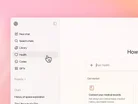
OpenAI's newly-unveiled ChatGPT Health serves as a dedicated space for AI-powered health support, combining user data from medical records and wellness apps in encrypted chats designed to assist with personal healthcare management.
With more than 230 million users turning to ChatGPT for health-related queries each week, OpenAI bills the tool as a natural extension of how people already use conversational AI.
ChatGPT Health runs separately from general ChatGPT conversations, keeping health-related data isolated with enhanced privacy features and encryption. It works alongside – not instead of – medical professionals and offers users a streamlined space to understand test results, make diet and fitness plans, and ask day-to-day health questions.

Health data in one encrypted space
OpenAI says it created ChatGPT Health to address the fragmentation of health information. Instead of users juggling details across wearables, apps and medical records, this tool gathers those sources in one location, keeping the information secure and compartmentalised.
Health chats live in a separate part of the platform with their own memory and do not mix with general AI conversations. If a user brings up a medical issue in a standard ChatGPT chat, the system prompts a switch to the Health section for extra protection. These chats stay visible in conversation history but remain locked within the health space.
Users can connect data from external services including Apple Health, MyFitnessPal and Function. In the US, medical record integration runs through b.well, a network that links users to healthcare providers and adheres to strict privacy and security standards. Users can remove access to any connected app or health record through Settings at any time.
Although ChatGPT Health can pull limited context from a user’s general chat, such as noting a lifestyle change, it never allows health data to exit its secure environment.
OpenAI has confirmed that files, conversations and memory entries inside the Health space will remain locked there unless deleted or edited directly by the user.
Built with medical input and security standards
ChatGPT Health applies the same security model used across ChatGPT but includes further protections for sensitive health information. It uses encrypted data transmission and storage, adds custom-built encryption layers and isolates systems handling health data.
The platform does not use health-related conversations to train its foundation models. It includes features like memory deletion and temporary chats, giving users more control over what is stored. Multi-factor authentication (MFA) adds an additional layer of protection.
Integrated third-party apps must undergo an extra level of security scrutiny. These apps are allowed to access only the minimum amount of data necessary. Users receive clear, upfront information on what each app accesses and can revoke access at any time.
Physicians shape how the system works. OpenAI works with over 260 doctors across 60 countries and medical disciplines. These professionals evaluate model responses more than 600,000 times using scoring systems developed by clinicians. Their feedback helps determine how the AI responds, when it flags urgency and how it manages safety-related topics.
ChatGPT Health uses a test platform called HealthBench to assess the quality of its responses. Built with physician input, HealthBench checks the AI's performance against clinical expectations. It measures clarity, escalation of care where needed and relevance to the user’s context – without trying to diagnose conditions.
A shift in how users approach healthcare
The launch of ChatGPT Health has sparks widespread reaction across the healthtech sector. OpenAI’s direct competitor Anthropic recently entered the space with Claude for Healthcare, reflecting the rapid expansion of AI tools tailored for personal health use.
Max Jones, Chief AI Officer at RPNA and Non-Executive Director in the UK's NHS, calls ChatGPT Health "a platform that comes with real risks".
Writing on LinkedIn, he said: "The power rests not with clinicians, legislators or regulators; rather, the power is in the hands of the public through the decisions they take when confronted with a health uncertainty. Should they wait for authoritative human care or seek more immediate guidance from an LLM?
"Until the NHS recovers its service performance and public confidence, I suspect we will see the public drive LLM-based triage whether the professionals like it or not."
Max Sinclair, Founder and CEO of AI marketing company Azoma, told the BBC the tool was a "watershed moment" for agentic commerce.
Taking to LinkedIn, he added: "You would trust this more than a 15-minute assessment from an overworked GP who has been back-to-back all day before seeing you. Comparative diagnostic accuracy studies between ChatGPT and humans would prove you right to do so."
Ben Legg, Co-Founder and CEO of The Portfolio Collective, comments: "We are moving from using AI as a secretive second opinion to a primary triage tool. In the future, before you see a human, an agent will likely review your medical history, analyse your wearables data and summarise your symptoms for the consultant.
"This offers incredible efficiency and could solve the GP appointment backlog crisis overnight. But it fundamentally changes the patient-doctor relationship."
ChatGPT Health is currently available only to selected users on Free, Go, Plus and Pro plans. Users in the UK, Switzerland and the wider European Economic Area do not have access. Features including integration with electronic medical records and app connections are only available in the US. Apple Health compatibility requires iOS.
With ChatGPT Health, OpenAI places itself directly in the middle of a growing conversation about AI’s role in patient care. By framing the tool as a support system rather than a replacement for doctors, it attempts to offer a compromise between convenience and clinical responsibility.



Executives
Max Sinclair
Founder, CEO

Sam Altman