Inside Salesforce's US$300m Bet on Anthropic's AI Tokens
In 2025, Salesforce had shifted its approach to AI integration within engineering teams, announcing that it planned to cease hiring software engineers. The company now plans to spend US$300m on Anthropic tokens in 2026, with the majority allocated to coding-related workloads.
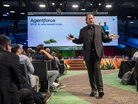
Salesforce CEO Marc Benioff described the company's deployment strategy during an appearance on the All-In podcast. He confirmed that AI coding agents are changing how engineers work rather than eliminating positions.
The enterprise software company operates with approximately 15,000 engineers. These teams currently use multiple AI development tools including Anthropic models, OpenAI Codex and Cursor.
Token allocation for development workflows
According to Marc, the US$300m investment in Anthropic tokens represents a technical bet on large language model capabilities for code generation and review. He describes AI coding agents as “awesome” and says the investment would lower software development costs while increasing output.
Salesforce has measured productivity gains of more than 30% across engineering teams using Agentforce and other AI technologies. Marc stated during a 2024 earnings call that the company would not add software engineers in 2025 due to these efficiency improvements.
"We're not adding any more software engineers next year because we have increased the productivity this year with Agentforce and with other AI technology that we're using for engineering teams by more than 30%," Marc says.
The company maintains that current AI capabilities have not reached a point where autonomous operation is possible. Engineers work alongside AI tools in what Marc characterised as a supervisory role over coding agents.
Model routing and operational efficiency
Salesforce is developing systems to route AI requests between larger and smaller models based on task complexity. This architectural approach could reduce operational costs by matching workload requirements to appropriate model capabilities.
The company reports that AI workloads currently account for between 30% and 50% of overall workload. This distribution could mean that enterprises are using AI for specific development functions rather than full stack replacement.
"When they start to use these models, they're now working not only with the AI but agents to help them code – and they can even become somewhat supervisory over these agents. But still, those engineers are needed. The model still cannot operate autonomously," Marc says.
Integration across product stack
The token investment aligns with Salesforce's expansion of AI capabilities across its product line. Agentforce, the company's AI-focused platform, has reached US$800m in annual recurring revenue according to company statements.

Slack has added AI capabilities powered by Anthropic's Claude models. The integration demonstrates how Salesforce is deploying the same underlying technology across multiple product surfaces.
Salesforce reportedly owns a 1% stake in Anthropic. The equity position is worth approximately US$1bn based on the AI startup's valuation.
Marc describes agentic AI as "a new labour model, new productivity model and a new economic model". The framing could indicate how the company positions AI capabilities to enterprise customers evaluating automation options.
Workforce allocation and tooling strategy
Salesforce increased hiring in non-engineering roles despite the engineering hiring pause. Marc previously stated the company planned to add between 1,000 and 2,000 salespeople to explain AI products and their technical capabilities to customers.
The hiring distribution could show how organisations are balancing technical implementation resources against customer-facing roles during AI deployment.
"Digital labour is a new horizon for business. How we architect our businesses and run our businesses and staff our businesses and think about our businesses will never be the same," Marc says.
Company portals

Executives
Marc Benioff
Chair & CEO