Tech Giants Use Software Expertise to Enter EV Manufacturing
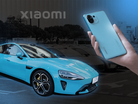
The convergence of consumer technology and automotive manufacturing has accelerated as smartphone markets face stagnation.
Tech companies are increasingly pivoting towards electric vehicle (EV) production, recognising the synergies between their existing capabilities and the demands of modern mobility.
The parallels between smartphones and EVs extend beyond surface-level comparisons. Both rely on software-defined architectures, lithium-ion battery technology and rapid innovation cycles that favour companies with deep technical expertise.
According to the International Data Corporation, worldwide smartphone shipments could decline by almost 1% in 2026, potentially driving manufacturers to seek alternative revenue streams in emerging sectors.
Xiaomi's software-first automotive approach
Xiaomi's Auto subsidiary represents a direct application of the company's smartphone and hardware expertise to vehicle manufacturing.
The SU7, which launched in March 2024, operates on Xiaomi HyperOS, creating an integrated ecosystem where the vehicle functions as an extension of the user's smartphone and smart home infrastructure.
The model achieves a top speed of 265km/h whilst embedding the same software integration philosophy that has defined Xiaomi's consumer electronics products.
Lei Jun, Founder, Chairman and CEO of Xiaomi Group, outlines ambitious plans: "Xiaomi has decided to invest tenfold, starting from the development of fundamental core technologies, committing to constructing an outstanding vehicle.
"Through 15 to 20 years of effort, Xiaomi aims to become one of the top five global automakers."
Unlike competitors who outsource manufacturing, Xiaomi has constructed its own EV facility with proprietary die-casting methods, suggesting a long-term commitment to vertical integration.
This approach mirrors the company's strategy in consumer electronics, where control over the entire production process enables tighter integration between hardware and software components.
Lei's vision extends beyond simply producing vehicles to creating a comprehensive mobility ecosystem that leverages Xiaomi's existing user base of more than 600 million connected devices globally.

Entertainment technology meets automotive engineering
Sony's partnership with Honda through their joint venture illustrates how complementary technical capabilities could reshape automotive development.
Formed in June 2022, the collaboration combines Honda's manufacturing and safety credentials with Sony's software, sensing, network and entertainment technologies.
The AFEELA brand will begin deliveries of its first model, AFEELA 1, in late 2026.
The vehicle incorporates advanced driver assistance systems and an interactive personal agent alongside an estimated range of up to 483km (300mi).
Its distinctive Media Bar – an external-facing screen – can display charging status, weather conditions or personalised messages, demonstrating how consumer technology thinking influences automotive design.
The partnership represents a strategic response to the automotive industry's transformation into a software-centric sector.
Sony's expertise in imaging sensors, already dominant in smartphone cameras, translates directly to autonomous driving systems that require sophisticated visual processing capabilities.
Honda's contribution extends beyond manufacturing to include its decades of safety engineering and regulatory compliance expertise, areas where technology companies typically lack experience.
This complementary relationship suggests that successful EV ventures may require hybrid models combining traditional automotive knowledge with digital innovation.
Platform strategies and supply chain positioning
Foxconn, the manufacturer behind Apple's iPhones, has pursued multiple strategies in the EV sector.
The company launched Foxtron as a joint venture with Yulon in October 2020, while simultaneously creating the MIH Open EV Platform, a standardised framework that enables other manufacturers to develop vehicles using its hardware and software foundation.
Young Liu, Chairman and CEO of Foxconn, explains the rationale: "Our vision at Foxconn is to work with leading customers around the world to create an interconnected world with smart technologies.
"We do that by providing next-generation technology solutions to our customers and partners, in turn supporting them to provide products with the highest value to their customers."
Technology firms not manufacture complete vehicles have positioned themselves as critical suppliers of advanced systems.
Huawei has developed HarmonyOS Cockpit featuring multi-screen displays, voice integration and connectivity with its intelligent driving systems.
Samsung produces camera modules, the Exynos Auto processor series and EV batteries.
LG manufactures powertrains through LG Magna e-Powertrain whilst supplying vehicle displays and digital cockpits.
OPPO has partnered with manufacturers, including MG, to integrate OPPO Intelligent Drive for phone-to-car connectivity, while Vivo offers Jovi InCar for dashboard integration and voice control.
These developments suggest technology companies view automotive manufacturing not as a departure from their core competencies but as a natural extension of their software and hardware capabilities into a sector increasingly defined by digital integration.