Top 10: Enterprise Storage Solutions
As organisations scale Gen AI and autonomous operations, the demand for high-velocity, low-latency infrastructure has hit an all-time high.
From Dell’s autonomous PowerStore arrays to the cloud-native dominance of Amazon S3, Technology Magazine’s Top 10: Enterprise Storage Solutions highlights the shift toward intent-driven storage.
10. ETERNUS
Company: Fujitsu
CEO: Takahito Tokita
HQ: Kawasaki, Japan
Employees: ~124,000

Fujitsu is a leader in the enterprise sector, particularly in EMEA and APAC markets. Its ETERNUS line is celebrated for seamless data management, offering high-performance disk and all-flash arrays that prioritise reliability.
Fujitsu’s strength lies in its ability to bridge the gap between traditional data centres and modern digital transformation projects, providing highly scalable solutions that integrate well with their broader digital services ecosystem.
As it pivots toward sustainable computing, its storage solutions focus increasingly on energy efficiency.
9. VSP One
Company: Hitachi Vantara
CEO: Sheila Rohra
HQ: California, USA
Employees: ~10,000

Hitachi Vantara has simplified its portfolio with VSP One, a unified data platform designed to eliminate silos across block, file and object storage.
By integrating cloud-native agility with Hitachi reliability, the company provides a cohesive single pane of glass management experience.
It is particularly strong in high-end industrial and financial sectors where 100% data availability is non-negotiable.
The company’s recent focus centres on automated data ops and sustainable infrastructure to reduce the carbon footprint of large-scale data centres.
8. Filestore
Company: Google Cloud
CEO: Thomas Kurian
HQ: California, USA
Employees: ~180,000 (Alphabet)

Google Cloud Filestore is a leading solution for enterprises requiring high-performance, fully managed NFS storage.
Designed for NoOps efficiency, Filestore provides sub-millisecond latency and massive throughput, making it ideal for data-intensive workloads like AI training, media rendering and genomic sequencing.
Its deep integration with Google Kubernetes Engine (GKE) allows multiple pods to share a common file system seamlessly.
With regional availability and automated snapshots, Filestore ensures mission-critical applications – like SAP and high-scale analytics – remain resilient and highly available across multiple zones.
7. FlashSystem
Company: IBM
CEO: Arvind Krishna
HQ: New York, USA
Employees: ~300,000
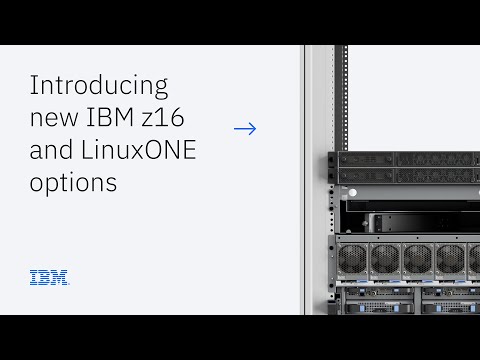
IBM has redefined the storage landscape with its 2026 launch of the autonomous FlashSystem portfolio – IBM FlashSystem 5600, 7600, and 9600.
Now co-run by agentic AI, these systems function as active cyber-control planes rather than passive repositories.
The core innovation lies in the fifth-generation FlashCore Modules (FCM), which provide hardware-accelerated ransomware detection in under 60 seconds.
By shifting from managed to intent-driven infrastructure, IBM allows enterprises to automate up to 90% of manual storage tasks, ensuring mission-critical data remains resilient, quantum-safe and optimised for high-velocity AI training.
6. Azure Arc
Company: Microsoft
CEO: Satya Nadella
HQ: Washington, USA
Employees: ~228,000

Microsoft has pivoted its storage strategy toward adaptive cloud, with Azure Arc serving as the central nervous system and core of this shift.
Azure Arc has evolved from a simple management layer into a robust hybrid storage orchestrator, allowing enterprises to deploy Azure Container Storage and data services on any infrastructure – whether in a private data center, on the edge or in rival clouds – while maintaining a single control plane.
This cloud-to-edge synchronisation enables features like Cloud Ingest, where local data is automatically tiered to Azure Blob storage, and Cloud Mirror, which distributes authoritative cloud data to local edge sites for low-latency access.
5. GreenLake
Company: HPE
CEO: Antonio Neri
HQ: Spring, Texas
Employees: ~61,000

HPE has transitioned to a platform-first strategy, with HPE GreenLake serving as the unified operating system for enterprise storage.
GreenLake has abstracted its Alletra hardware into cloud-native services, including GreenLake for Block Storage, which provides the industry’s first 100% data availability guarantee as a service.
Its disaggregated architecture allows enterprises to scale performance and capacity independently, eliminating over-provisioning.
With AI-driven insights and cyber-resilience, GreenLake provides a consistent, consumption-based experience from the data centre to the edge.
4. KeyStone
Company: NetApp
CEO: George Kurian
HQ: California, USA
Employees: ~12,00
NetApp has revolutionized data consumption through Keystone, its premier storage-as-a-service (STaaS) platform.
Keystone has seen a 76% surge in adoption as enterprises pivot to pay-as-you-grow models that span on-premises and all major public clouds.
It eliminates the burden of complex hardware refreshes, allowing businesses to reallocate up to 25% of their spend annually between environments.
With integrated AI-driven insights and a Ransomware Recovery Guarantee, Keystone delivers the agility of the cloud with the control of enterprise infrastructure.
3. Amazon S3
Company: AWS
CEO: Matt Garman
HQ: Washington, USA
Employees: ~1,550,000

AWS is a cloud storage leader, with its Amazon S3 an example of industry standard for object storage.
S3 has expanded its specialised offerings – notably with S3 Express One Zone – delivering 10 times faster performance for latency-sensitive AI and machine learning workloads.
Known for its eleven nines of durability, S3 now manages more than 350 trillion objects globally.
Its robust ecosystem – featuring automated Intelligent-Tiering and advanced security – provides the primary benchmark for scalable, secure and cost-effective enterprise data lakes.
2. FlashBlade
Company: Everpure
CEO: Charles Giancarlo
HQ: California, USA
Employees: ~5,600

Everpure’s flagship FlashBlade//EXA platform is purpose-built for the AI Factory era.
FlashBlade is a scale-out, all-flash solution designed to handle massive unstructured data at breakneck speeds.
It has become the gold standard for GPU-heavy workloads, offering parallel architecture that eliminates metadata bottlenecks in AI training and real-time analytics.
Its simplified, blade-based design allows enterprises to scale performance and capacity linearly, delivering cloud-like agility to the most demanding on-premises data environments.
1. PowerStore
Company: Dell
CEO: Michael Dell
HQ: Texas, USA
Employees: ~120,000

Dell’s PowerStore has evolved into the cornerstone of the company’s One Dell Way transformation.
PowerStore has transitioned to a fully autonomous, AI-driven architecture that automates 90% of manual storage tasks.
Designed for the AI Factory era, its software-defined, container-based design serves as the foundational storage platform for Dell Private Cloud, bringing full automation for multi-hypervisor deployments. #
This disaggregated approach delivers greater flexibility for enterprises supporting VMware, OpenShift Virtualization and Nutanix – with additional hypervisor support on the way – as part of Dell's broader efforts around the Dell Private Cloud and Dell Automation Platform.
With its industry-leading integration into the APEX consumption model, PowerStore provides the optimum balance of simplicity, performance and multi-cloud agility.