AWS Roadmap: What’s Next in 2026?
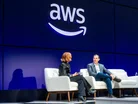
Reaffirming his prediction of a world populated by a billion AI agents, Matt Garman, CEO of AWS, opened the stage at ‘What’s Next with AWS’ saying we are firmly on track to hit that milestone.
Almost across every industry, agents are exploding and changing the way people do business.
Alongside leadership from OpenAI and Amazon‘s Applied AI divisions, Matt took the stage to outline a fundamental shift of moving away from “chatbots” and entering the era of agentic enterprise.
From an AI assistant that connects fragmented workflows to the launch of four specialised agentic solutions, the event‘s announcements showcased AWS transforming frontier AI into a practical engine for global business.
Amazon Quick: a new workmate
To address the chaos of work scattered across dozens of tools, AWS has launched Amazon Quick, a smart AI assistant available as a desktop app.
Quick connects one‘s work through multiple apps and tools, from Slack, Microsoft Teams and Outlook to CRMs, database and documents, bringing it all in one place. The product includes:
- Native Integration: The new desktop app connects directly to local files, calendars and communications without needing a browser
- Visual Generation: Infographics, polished presentations and documents can be generated directly within the chat, eliminating hours of tedious formatting
- Democratised Access: New Free and Plus pricing plans, allowing sign up via Google, Apple or GitHub, without needing an AWS account
- Expanding Ecosystem: Native integrations that expand to include Airtable, Zoom and Microsoft Teams, ensuring context is never lost
- Custom App Building: Create intelligent apps, dashboards and web pages using natural language, helping build tools deeply connected to a business without writing any code.

Support to strategy: Amazon Connect
What began as an engine powering Amazon‘s own retail customer service is evolving from a singular engagement tool into a suite of real-world AI solutions.
Amazon Connect is no longer a contact centre tool now. It is expanding into a suite of four specialized Agentic AI solutions designed to work within existing workflows. The new quadrant features:
- Amazon Connect Decisions: A supply chain powerhouse that uses 30 years of Amazon operational science to move teams from “firefighting” to proactive
- Amazon Connect Talent: This agentic hiring solution conducts AI-led interviews and science-backed assessments, helping recruiters find quality candidates while reducing human bias
- Amazon Connect Customer: The evolution of the original service, now featuring conversational AI that can be configured in weeks by non-technical staff
- Amazon Connect Health: A dedicated solution for patient verification, ambient documentation and medical coding, giving clinicians more time to actually treat patients.
The AI alliance: AWS and OpenAI
In perhaps the most significant announcement of the event, AWS and OpenAI have deepened their vows with a major expansion.
Giving “enterprises the frontier intelligence they want on the infrastructure they trust”, the partnership is bringing three offerings:
- OpenAI models on Amazon Bedrock: Latest OpenAI (including GPT-5.5 and GPT-5.4) models will be available through the same Amazon Bedrock APIs and controls customers already use. This means enterprises can use the world‘s most powerful models without learning new security protocols or reconfiguring their data governance
- Codex on Amazon Bedrock: OpenAI coding agent on Amazon Bedrock will bring OpenAI‘s premier coding agent into the AWS environment. Developers will be able to use their AWS credentials to power Codex via the CLI or VS Code, applying the usage directly toward their AWS cloud commitments
- Amazon Bedrock Managed Agents, powered by OpenAI: Builders will be able to create production-ready agents using an “OpenAI harness” designed for sharper reasoning and faster execution of long-running, complex tasks.
Following this, businesses will no longer have to choose between cutting-edge capability and operational safety, helping them navigate corporate data with ease.
One thing from the 2026 event that is as clear as Matt‘s prediction for the future AI world is that the agents haven‘t just arrived; they‘ have already started working.
Company portals


Executives
Matt Garman
Chief Executive Officer